IoT Sensors in Construction: How Smart Monitoring Is Changing Job Sites

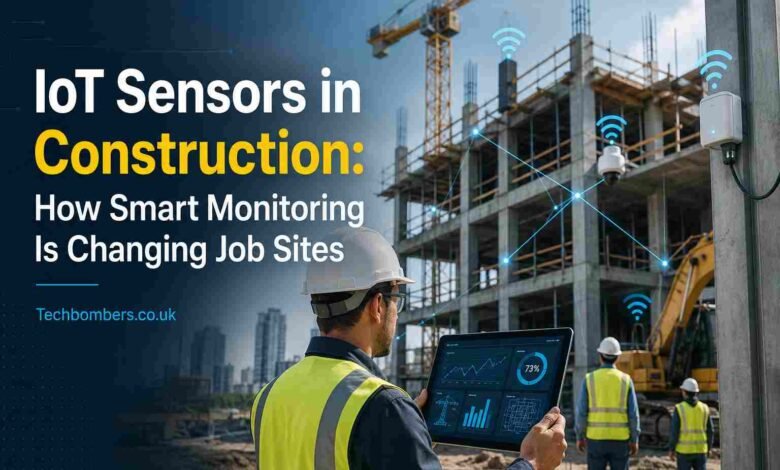
Construction sites used to rely on experience, walkarounds, and manual supervision. A site engineer would check equipment by ear, inspect materials by eye, and rely on reports that often came late. That model still exists in many places, but it’s slowly being replaced by something more direct: real-time data from sensors.
IoT sensors are not changing construction overnight, but they are changing how decisions are made. Instead of reacting to problems after they happen, teams can now see what is happening while it is happening. That shift is small in theory, but in practice it affects safety, cost, and project speed in a very real way.
What IoT Sensors Actually Mean in Construction
IoT sensors are small devices that collect information from the physical environment and send it to a digital system. On a construction site, that information can come from machines, workers, materials, or even the air around the site.
The purpose is simple: remove guesswork.
Instead of asking “Is the machine overheating?” or “Is the concrete curing properly?”, the system gives direct measurements. Temperature, vibration, humidity, gas levels, movement, and location are all tracked continuously.
This data is usually sent to a cloud dashboard where site managers can view everything in one place. If something goes wrong, alerts are triggered automatically.
Why Construction Sites Are Moving Toward Sensors
Construction projects are complex environments. Multiple teams work at the same time, heavy machinery moves constantly, and conditions change throughout the day.
In this type of environment, small issues can turn into expensive problems quickly:
- A crane operating with unnoticed vibration issues
- Concrete curing in the wrong temperature range
- Workers entering unsafe zones near machines
- Equipment sitting idle but still costing money
Sensors help reduce this uncertainty. They don’t replace workers or supervisors, but they give them better visibility.
The real shift is this: construction is moving from observation-based management to data-based management.
Types of IoT Sensors Used on Construction Sites
Different sensors serve different purposes. Most modern sites use a combination rather than a single system.
Worker Safety Sensors
These include wearable devices such as helmets, wristbands, or vests. They track:
- Heart rate and fatigue
- Body temperature
- Location on site
- Proximity to dangerous equipment
In some systems, alerts are triggered when a worker gets too close to a moving machine or enters a restricted zone.
According to the U.S. CDC/NIOSH, wearable technologies in construction are increasingly being studied for improving worker safety, including proximity detection and heat stress monitoring systems in high-risk environments. CDC NIOSH construction wearable safety guidance
Machine and Equipment Sensors
These sensors are attached to heavy machinery like excavators, cranes, and loaders. They measure:
- Vibration levels
- Engine temperature
- Fuel usage
- Operating hours
- Load stress
The goal is to detect early signs of failure. For example, abnormal vibration patterns often indicate mechanical wear long before a breakdown happens.
Environmental Sensors
Construction sites are heavily affected by environmental conditions. Sensors monitor:
- Dust levels
- Noise levels
- Air quality
- Temperature and humidity
- Gas leaks in confined spaces
This is especially important in urban projects where environmental regulations are strict.
The UK Health and Safety Executive highlights construction dust as a serious long-term health risk, particularly respirable crystalline silica, which can lead to lung diseases when exposure is not controlled. HSE construction dust health risks
Material and Structural Sensors
These sensors are often embedded directly into materials such as concrete or installed on structures. They measure:
- Concrete curing temperature
- Moisture levels in materials
- Structural strain and stress
- Crack formation or movement
This helps ensure the structure is developing correctly and safely over time.
Where Sensors Are Placed on a Construction Site
The placement of sensors depends on what needs to be monitored. Most smart construction setups follow a layered structure:
On Workers
Wearables such as helmets and vests track safety and movement.
On Machinery
Sensors are attached to engines, joints, hydraulic systems, and control units.
Inside Materials
Concrete slabs and foundations often include embedded temperature or moisture sensors.
Around the Site
Fixed sensors are placed on poles or site boundaries to monitor environmental conditions and movement.
In Storage Areas
RFID or tracking sensors monitor tools, equipment, and building materials.
Each layer adds a different type of visibility. Together, they form a complete picture of the site.
How Data Moves Through a Smart Construction System
A typical IoT construction setup follows a simple flow:
Sensor → Gateway → Cloud Platform → Dashboard → Action
Here’s what happens step by step:
- A sensor collects raw data (like vibration or temperature)
- The data is sent to a local gateway
- The gateway forwards it to a cloud system
- The cloud organizes and processes the data
- A dashboard displays real-time information
- Alerts are triggered if thresholds are crossed
For example, if a gas sensor detects unsafe levels in a confined space, the system can instantly notify supervisors and trigger evacuation procedures.
The value is not just data collection. It is fast decision-making.
Real Problems IoT Sensors Solve on Site
IoT sensors are not about technology for its own sake. They solve specific construction problems.
Hidden Equipment Failure
Machines rarely fail without warning. Small vibration or heat changes usually appear first. Sensors detect these early signals.
Safety Distance Violations
Workers and machines often operate in close proximity. Proximity sensors reduce collision risks.
Poor Material Conditions
Concrete that cures too fast or too slowly can lose strength. Sensors help maintain correct conditions.
Theft and Misplaced Equipment
Tools and materials can be tracked in real time, reducing loss and delays.
Environmental Hazards
Dust, gas, and noise levels can be monitored continuously instead of manually checked.
Benefits of IoT Sensors in Construction
The benefits are practical rather than theoretical.
Improved Safety
Real-time alerts reduce accidents caused by human error or delayed reaction.
Better Equipment Life
Predictive maintenance reduces breakdowns and extends machine lifespan.
Higher Quality Control
Materials like concrete can be monitored during critical curing stages.
Lower Project Delays
Early detection of issues prevents downtime.
Cost Efficiency
Less equipment failure, less material waste, and fewer delays directly reduce costs.
Challenges of Using IoT Sensors
Despite the benefits, adoption is not always simple.
Harsh Site Conditions
Dust, vibration, water, and impact can damage sensors or reduce accuracy.
Battery Limitations
Many sensors depend on battery power, which requires maintenance planning.
Connectivity Issues
Large or remote sites may struggle with stable internet coverage.
Setup Costs
Initial installation can be expensive for smaller contractors.
Data Overload
Without proper systems, too much data can become difficult to manage.
The Future of Smart Construction Sites
IoT sensors are only one part of a bigger shift.
Construction is moving toward systems where:
- AI predicts equipment failures before they happen
- Digital twins simulate entire construction projects
- 5G networks enable instant data transfer across large sites
- Machines adjust automatically based on sensor feedback
In the future, construction sites will not just be monitored. They will be continuously optimized.
The combination of IoT and AI is already being tested in predictive maintenance systems where sensor data feeds directly into machine learning models for early failure detection.
Conclusion
IoT sensors are quietly changing how construction sites operate. They are not replacing human expertise, but they are reducing uncertainty in environments where small mistakes can become expensive problems.
A construction site with sensors is not just “more modern.” It is more aware. Machines report their condition, materials show their quality status, and workers operate with better safety awareness.
The shift is gradual, but clear. Construction is moving from manual supervision toward continuous digital monitoring. And sensors are at the center of that change.
FAQs
What are IoT sensors used for in construction sites?
IoT sensors are used to collect real-time data from different parts of a construction site, including workers, machines, materials, and the environment. They help monitor safety conditions, track equipment performance, and improve overall site efficiency. For example, sensors can detect overheating in machinery, monitor concrete curing conditions, or alert managers when a worker enters a restricted area.
How do IoT sensors improve construction site safety?
IoT sensors improve safety by identifying risks before they turn into accidents. Wearable sensors can track worker location and body stress levels, while proximity sensors can warn when a worker is too close to heavy machinery. Environmental sensors also help by detecting hazards like toxic gases, excessive dust, or high noise levels. This allows supervisors to respond quickly instead of reacting after an incident happens.
Are IoT sensors expensive to use on construction projects?
The cost depends on the size of the project and the type of sensors used. Basic sensors like temperature or vibration monitors are relatively affordable, but full systems with real-time tracking, cloud dashboards, and AI integration can be expensive to install. However, many companies see long-term savings because sensors reduce equipment breakdowns, delays, and safety incidents, which are usually far more costly.
Can IoT sensors work in harsh construction environments?
Yes, most industrial IoT sensors are designed to handle tough conditions such as dust, rain, heat, and vibration. However, durability still depends on the quality of the device and proper installation. In real construction sites, regular maintenance is also important because extreme conditions can reduce sensor accuracy or battery life over time.
What is the future of IoT sensors in construction?
The future of IoT in construction is moving toward fully connected smart sites where sensors work together with AI and automation systems. Instead of just collecting data, future systems will predict failures, optimize machine usage, and even adjust operations automatically. Technologies like 5G and digital twins will make real-time monitoring even faster and more accurate, leading to safer and more efficient construction projects.