
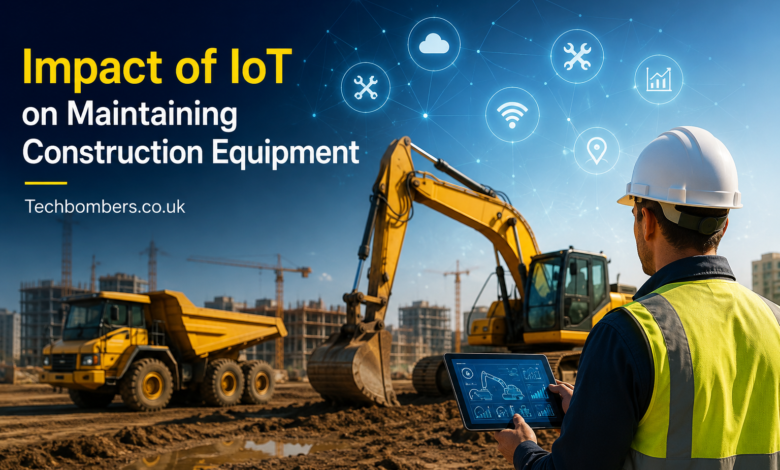
Construction equipment is expensive, hardworking, and often pushed through long operating hours in tough job site conditions. Excavators, cranes, loaders, bulldozers, graders, dump trucks, compactors, and generators all play a direct role in keeping a project moving. When one major machine breaks down, the effect is not limited to the repair bill. Work slows down, labor hours are wasted, deadlines become harder to meet, and project costs start rising.
This is where the Internet of Things, usually called IoT, is changing equipment maintenance in construction. IoT allows machines to collect and share real-time data through sensors, telematics devices, GPS systems, cloud platforms, and maintenance software. Instead of waiting for a machine to fail, construction teams can monitor its condition, detect early warning signs, and plan maintenance before small issues become expensive breakdowns.
The biggest impact of IoT on construction equipment maintenance is the shift from reactive maintenance to predictive and condition-based maintenance. Companies can track engine health, fuel use, operating hours, temperature, vibration, hydraulic pressure, fault codes, location, and operator behavior. This gives maintenance teams a clearer picture of how each machine is performing and when it needs attention.
What IoT Means in Construction Equipment Maintenance
IoT in construction equipment maintenance means connecting machines to digital systems that can collect, send, and analyze performance data. A traditional machine may only be checked when an operator reports a problem or when a scheduled service date arrives. An IoT-enabled machine can report its condition continuously.
For example, a sensor can track engine temperature, hydraulic pressure, oil condition, fuel level, battery health, tire pressure, or vibration. A telematics unit can send this data to a dashboard where fleet managers and maintenance teams can review machine performance. If something moves outside the normal range, the system can create an alert.
This does not mean IoT replaces mechanics, operators, or site managers. It supports them with better information. A skilled maintenance team still needs to inspect, diagnose, and repair equipment. IoT simply makes those decisions more accurate and timely.
Why Traditional Equipment Maintenance Is Often Not Enough
Many construction companies still depend on fixed maintenance schedules. A machine may be serviced after a set number of hours, after a certain period, or when a visible fault appears. This approach is useful, but it has limits.
Scheduled maintenance can sometimes lead to unnecessary servicing if the machine is still in good condition. On the other hand, it may not catch a developing issue between service intervals. A hydraulic hose, bearing, cooling system, or electrical component can begin failing long before the next planned inspection.
Reactive maintenance is even more costly. This happens when repairs are made only after the equipment stops working. In construction, a breakdown can affect the entire workflow. If a loader fails during material handling or an excavator stops during earthwork, other workers and machines may also sit idle.
IoT helps reduce these gaps by showing what is happening inside the machine while it is still working.
Real-Time Monitoring Improves Equipment Visibility
One of the most valuable benefits of IoT is real-time equipment monitoring. Construction sites are active, spread out, and often difficult to manage manually. A company may have machines working across multiple locations, and it is not always possible to physically inspect every asset each day.
IoT gives managers visibility from one platform. They can see which machines are active, where they are located, how many hours they have worked, and whether any warning signs are appearing. This is especially helpful for companies managing large fleets or remote job sites.
Real-time monitoring can track engine hours, idle time, fuel use, fault codes, oil pressure, coolant temperature, battery voltage, and other operating conditions. When this information is available in one place, maintenance planning becomes more organized. Teams can prioritize equipment that needs attention instead of treating every machine the same.
Predictive Maintenance Reduces Unexpected Breakdowns
Predictive maintenance is one of the strongest reasons construction companies invest in IoT. It uses equipment data to identify patterns that may indicate a future failure. Instead of relying only on fixed schedules, maintenance teams can act based on the actual condition of the machine.
For example, unusual vibration may suggest a bearing problem. Rising engine temperature may point to cooling system issues. Repeated fault codes may show an electrical or sensor-related problem. A drop in hydraulic pressure may signal a leak, worn pump, or failing component.
These signs may not be obvious during normal operation, especially in noisy and dusty job site conditions. IoT makes them visible earlier. Early detection allows companies to plan repairs during off-hours or low-impact periods instead of dealing with sudden downtime during critical work.
Predictive maintenance does not guarantee that breakdowns will never happen. Construction equipment works in harsh environments, and failures can still occur. However, IoT can reduce the chance of avoidable breakdowns and help teams respond faster when problems appear.
Condition-Based Maintenance Makes Servicing More Accurate
Condition-based maintenance is another important IoT benefit. Instead of servicing every machine at the same interval, companies can service equipment according to actual usage and condition.
Two machines of the same model may age differently. One may work lightly on flat ground, while another may run long hours in heavy material, extreme heat, dust, or uneven terrain. A fixed schedule treats both machines almost the same, but IoT data shows the difference.
A machine with heavy workload, high idle time, overheating events, or frequent fault codes may need earlier attention. A machine with lighter use and stable performance may not need unnecessary service before it is due. This helps companies use maintenance resources more wisely.
Condition-based maintenance can also improve parts planning. If data shows that a component is wearing down, the required part can be ordered before the repair is scheduled. This reduces waiting time and helps maintenance teams avoid delays caused by missing parts.
IoT Helps Lower Maintenance Costs
Construction equipment repairs can be expensive, especially when problems are ignored until failure. A small issue in the cooling system, lubrication system, hydraulic system, or electrical system can damage larger components if it is not handled early.
IoT helps lower maintenance costs by catching problems before they become severe. Replacing a worn belt, fixing a leak, cleaning a filter, or servicing a pump early is usually cheaper than repairing major engine or hydraulic damage.
It also reduces unnecessary maintenance. Without proper data, companies may replace parts too early or service equipment more often than needed. IoT helps maintenance teams decide what actually needs attention.
Another cost benefit comes from better labor planning. Instead of emergency repairs that disrupt the workday, teams can schedule inspections, service, and repairs in a more controlled way. This improves workshop productivity and reduces rushed decision-making.
Reduced Downtime Keeps Projects Moving
Downtime is one of the biggest problems in construction equipment management. A machine that is not working still costs money. It may delay the task it was assigned to, affect other machines, and slow down workers who depend on it.
IoT reduces downtime by improving fault detection, repair planning, and response speed. If a dashboard shows an alert before a breakdown, the team can inspect the equipment and decide whether it should continue working, be serviced soon, or be removed from operation.
This helps project managers avoid sudden surprises. If a machine is likely to need maintenance, they can adjust schedules, move another machine to the site, or complete urgent work before stopping the equipment.
Downtime cannot be fully removed from construction, but it can be managed better. IoT gives teams the information they need to make practical decisions before problems become critical.
Better Fuel Management and Lower Waste
Fuel is a major operating cost in construction. Heavy equipment consumes large amounts of fuel, and poor operating habits can increase waste. IoT can help monitor fuel use and identify patterns that cost money.
One common issue is excessive idling. Machines may sit running while waiting for materials, instructions, or site clearance. Over time, idle hours add fuel costs, increase engine wear, and reduce overall efficiency. IoT systems can show how much time each machine spends idling.
Fuel monitoring can also help detect unusual consumption. If a machine suddenly uses more fuel than normal, it may be due to poor maintenance, engine problems, operator behavior, or fuel leakage. GPS and fuel data can also support theft prevention and fuel accountability.
By reducing unnecessary fuel use, companies can lower operating costs and support cleaner job site practices.
Improved Equipment Lifespan
Construction equipment is a long-term investment. Companies want machines to perform well for many years, but lifespan depends heavily on maintenance quality, operating conditions, and usage habits.
IoT supports longer equipment life by helping teams maintain machines at the right time. When overheating, low pressure, abnormal vibration, or poor lubrication is detected early, damage can be prevented. When idle time and harsh usage are monitored, managers can correct habits that reduce machine life.
It also helps create better maintenance records. A complete history of service, alerts, repairs, and usage can show how well a machine has been cared for. This is useful for internal planning, resale value, and future buying decisions.
A machine that is maintained based on real condition is more likely to remain reliable and productive over time.
Stronger Fleet Management Across Multiple Sites
Many construction companies operate equipment across several projects at the same time. Without IoT, it can be difficult to know where each machine is, how often it is being used, and whether it is being used efficiently.
IoT improves fleet management by combining location tracking, usage data, and maintenance information. Managers can see which machines are underused, overused, or placed on the wrong site. This helps them move assets where they are needed most.
For example, if one project has an idle excavator while another project is waiting for one, GPS and usage data can support better allocation. If a machine is being used heavily every day, the maintenance team can prepare service before it affects the project.
Fleet visibility also helps reduce unauthorized use and theft risk. Construction equipment is valuable, and GPS tracking can help locate machines quickly if they are moved without approval.
Safer Construction Equipment Operation
Poorly maintained equipment can become a safety risk. Brake issues, hydraulic failures, overheating, electrical faults, tire problems, and unstable machine behavior can put operators and nearby workers in danger.
IoT supports safety by identifying equipment issues before they create unsafe conditions. Alerts can warn teams about overheating, low fluid levels, pressure problems, or fault codes that should not be ignored. Some systems can also monitor harsh braking, speeding, sudden movement, or unsafe operating patterns.
This does not replace proper training, inspections, or safety rules. Operators still need to complete daily checks and follow site procedures. However, IoT adds another layer of protection by giving teams more visibility into machine condition and usage.
A safer machine is not only better for workers. It also reduces the risk of project delays, legal problems, and repair costs linked to equipment-related incidents.
Better Operator Accountability and Training
Operator behavior has a major impact on equipment health. Two operators can use the same machine in very different ways. Harsh operation, long idle periods, overloading, aggressive braking, and poor handling can increase wear and maintenance needs.
IoT can help identify these patterns without relying only on guesswork. Managers can review data on idle time, fuel use, harsh events, operating hours, and machine stress. This information can be used to guide operator training.
The goal should not be to blame operators unfairly. Job site conditions can be difficult, and sometimes equipment is pushed because the project demands it. The real value is in understanding how machines are being used and helping operators improve performance where possible.
Good operators protect equipment. IoT helps companies recognize good practices and correct habits that increase costs.
Improved Maintenance Records and Compliance
Construction equipment maintenance requires accurate records. Service history, inspection notes, repair details, parts replacement, and operating hours all matter. Poor records can lead to missed service, repeated repairs, warranty issues, and confusion between teams.
IoT systems can improve recordkeeping by automatically logging equipment hours, alerts, fault codes, and service events. This makes maintenance history easier to track and review.
Better records also support compliance with internal safety policies, client requirements, rental agreements, and manufacturer recommendations. If a machine needs proof of service history, digital records can provide a clearer trail than scattered paperwork.
For rental companies, contractors, and large fleet owners, this can make equipment management more transparent and reliable.
IoT and Remote Diagnostics
Remote diagnostics is another practical benefit of IoT in equipment maintenance. When a machine shows a fault code or abnormal behavior, technicians may be able to review data before visiting the site.
This helps them understand the likely issue, prepare the right tools, and bring the correct parts. Without remote data, a mechanic may need to inspect the machine first, identify the problem, return for parts, and then complete the repair. That process wastes time.
Remote diagnostics can also help decide whether a machine should stop working immediately or can safely continue until scheduled service. This is especially useful for remote or large job sites where technician travel time is significant.
IoT Supports Smarter Equipment Replacement Decisions
Every machine eventually reaches a point where repair costs, downtime, and poor performance make replacement more practical than continued maintenance. IoT data can help companies make this decision based on evidence.
Managers can review repair frequency, fuel efficiency, operating hours, downtime, maintenance cost trends, and performance alerts. If a machine is becoming more expensive to maintain, the data can support a replacement plan.
This is better than relying only on age or general opinion. Some older machines remain productive if maintained well. Some newer machines may create problems if used in harsh conditions or poorly maintained. IoT gives a more complete view of asset health.
Smarter replacement decisions help companies avoid both early replacement and late replacement.
Challenges of Using IoT in Construction Equipment Maintenance
IoT offers strong benefits, but it also comes with challenges. The first challenge is cost. Sensors, telematics devices, software platforms, installation, training, and data management all require investment. For small contractors, this cost must be carefully planned.
Another challenge is data overload. Collecting data is not enough. Companies need people who can understand the information and turn it into action. Too many alerts or poorly organized dashboards can create confusion instead of clarity.
Connectivity can also be a problem. Some construction sites are located in areas with weak network coverage. If data cannot be transmitted reliably, real-time monitoring becomes limited.
Data security is another important concern. Connected equipment systems should be protected from unauthorized access. Companies need secure platforms, proper user permissions, and responsible data handling.
There is also a human challenge. Operators, mechanics, and managers may need time to trust and adopt IoT-based maintenance. Training and clear communication are essential.
How Construction Companies Can Start Using IoT Effectively
Construction companies do not need to connect every machine at once. A practical approach is often better. They can start with high-value or high-use equipment where downtime causes the most damage.
The first step is to identify the biggest maintenance problems. Are machines breaking down unexpectedly? Is fuel waste too high? Are service records incomplete? Are assets difficult to track? Once the main problem is clear, the right IoT solution becomes easier to choose.
Companies should also choose systems that are easy to use. A dashboard should provide clear alerts, useful reports, and simple maintenance insights. If the system is too complicated, teams may not use it properly.
It is also important to train operators and maintenance staff. They should understand what data is being collected, why it matters, and how it will improve equipment reliability.
Starting small, measuring results, and expanding gradually is usually the most practical path.
Future of IoT in Construction Equipment Maintenance
The future of IoT in construction equipment maintenance will likely include stronger use of artificial intelligence, machine learning, digital twins, and automated diagnostics. These technologies can help systems become better at identifying patterns and predicting failures.
Digital twins may allow companies to create virtual models of machines and monitor their condition more accurately. AI-based systems may help prioritize alerts and recommend maintenance actions. Integration with project management platforms may also connect equipment health directly with project schedules.
As construction becomes more data-driven, equipment maintenance will become less reactive and more planned. Companies that learn to use IoT well will have better control over downtime, costs, safety, and asset performance.
The main goal will remain simple: keep machines working safely, efficiently, and reliably.
Conclusion
IoT has a major impact on maintaining construction equipment because it gives companies better visibility, faster alerts, and more accurate maintenance decisions. It helps teams move away from waiting for breakdowns and toward preventing problems before they stop work.
With real-time monitoring, predictive maintenance, fuel tracking, GPS visibility, remote diagnostics, and better service records, IoT can reduce downtime, lower repair costs, improve safety, and extend equipment life. It also helps fleet managers understand how machines are being used across different job sites.
IoT is not a magic solution. It needs proper planning, reliable data, trained teams, and practical use. But when used correctly, it becomes a powerful tool for construction companies that want stronger equipment performance and fewer costly surprises.
For contractors, fleet owners, rental companies, and project managers, the message is clear: equipment maintenance is no longer just about fixing machines after they fail. It is about using data to keep them ready, reliable, and productive.
FAQs
How does IoT help in construction equipment maintenance?
IoT helps by collecting real-time data from construction equipment through sensors and telematics systems. This data shows machine health, fuel use, operating hours, temperature, pressure, vibration, location, and fault codes. Maintenance teams can use this information to detect problems early and plan repairs before major breakdowns happen.
What is predictive maintenance in construction equipment?
Predictive maintenance means using equipment data to predict when a machine or component may fail. Instead of servicing equipment only after a fixed time or after a breakdown, teams use real machine condition data to schedule maintenance at the right time.
Can IoT reduce equipment downtime?
Yes, IoT can reduce downtime by identifying warning signs before equipment fails. When maintenance teams receive early alerts, they can inspect the machine, order parts, and schedule repairs before the issue causes a full breakdown.
Which construction equipment can use IoT monitoring?
IoT can be used on excavators, bulldozers, cranes, loaders, dump trucks, graders, compactors, generators, forklifts, and other heavy equipment. Any machine with sensors or telematics support can provide useful maintenance data.
Is IoT only useful for large construction companies?
No, IoT can also help small and mid-sized contractors. Smaller companies may start with their most important machines instead of connecting the full fleet. Even tracking a few high-value assets can reduce downtime and improve maintenance planning.
How does IoT improve construction site safety?
IoT improves safety by detecting equipment problems such as overheating, pressure issues, fault codes, brake-related warnings, or abnormal machine behavior. It can also help monitor unsafe operating habits and support better operator training.
What data does IoT collect from construction equipment?
IoT systems may collect data such as engine hours, fuel use, GPS location, idle time, oil pressure, coolant temperature, hydraulic pressure, vibration, battery voltage, fault codes, and service history. The exact data depends on the machine and system used.
What are the main challenges of IoT in equipment maintenance?
The main challenges include setup cost, weak connectivity on some job sites, data security, staff training, and managing too many alerts. Companies need a clear plan to turn IoT data into useful maintenance actions.
Does IoT replace equipment mechanics?
No, IoT does not replace mechanics. It supports them by providing better information about equipment condition. Skilled technicians are still needed to inspect, diagnose, repair, and maintain machines properly.
What is the future of IoT in construction equipment maintenance?
The future will likely include more advanced predictive maintenance, AI-based fault detection, digital twins, remote diagnostics, and deeper integration with fleet and project management systems. These tools will help companies maintain equipment more accurately and efficiently.