Types of Heavy Construction Equipment: A Complete Practical Guide

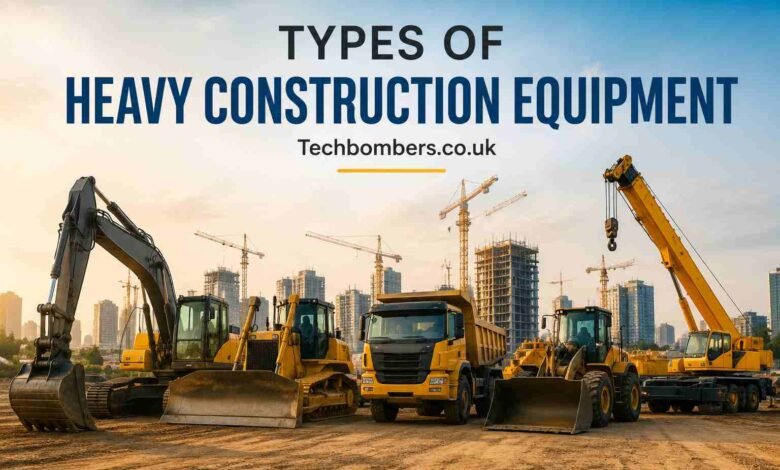
Construction projects don’t start with buildings or roads. They start with machines moving soil, lifting steel, and shaping the ground. Whether it’s a highway, a bridge, or a housing society, heavy construction equipment is what makes large-scale work possible.
Each machine has a specific role. Some dig, some carry, some lift, and some finish the surface with precision. When used together, they turn raw land into usable infrastructure.
This guide explains the main types of heavy construction equipment, how they are used, and why each one matters on a job site.
What Is Heavy Construction Equipment?
Heavy construction equipment refers to large machines designed to perform construction tasks that cannot be done efficiently with manual labor or small tools. These machines are built for strength, durability, and continuous operation under tough conditions.
They are commonly used in:
- Road construction
- Building projects
- Mining and quarry work
- Infrastructure development
- Industrial site preparation
The main purpose of this equipment is simple: reduce time, reduce human effort, and improve accuracy in large projects.
Excavators
Excavators are one of the most widely used machines in construction. They are designed for digging and material handling.
A typical excavator has a long arm, a bucket at the end, and a rotating cabin. This allows it to move in almost any direction without repositioning the base.
Common uses:
- Digging foundations
- Trenching for pipes and cables
- Demolition work
- Loading soil and debris into trucks
Excavators are also available in different sizes. Mini excavators are used in tight spaces, while large crawler excavators are used in mining and large infrastructure projects.
What makes excavators important is their flexibility. One machine can perform multiple tasks depending on the attachment used.
Bulldozers
Bulldozers are built for power, not precision. Their main job is to push large amounts of soil, sand, rubble, or debris across a site.
They have a heavy front blade and strong tracks that allow them to move on rough ground.
Common uses:
- Clearing land before construction
- Pushing soil during site preparation
- Removing debris after demolition
- Rough leveling of ground
Bulldozers are especially important in the early phase of construction when the land is still uneven and needs shaping.
They are not designed for fine work. Instead, they prepare the ground so other machines can follow.
Cranes
Cranes are used when materials need to be lifted vertically or moved across height. Without cranes, high-rise construction would not be possible.
They come in different types depending on the project.
Types of cranes:
- Tower cranes (used in tall buildings)
- Mobile cranes (mounted on trucks for mobility)
- Crawler cranes (for heavy lifting on uneven ground)
Common uses:
- Lifting steel beams
- Moving heavy construction materials
- Installing structural components at height
- Supporting high-rise building construction
Cranes require skilled operators because safety is critical. A small error in load calculation can create serious risks on site.
Dump Trucks
Dump trucks are responsible for transporting loose materials like sand, gravel, and soil from one place to another.
They are a key part of construction logistics.
Common uses:
- Transporting excavated soil
- Carrying construction materials
- Moving debris from demolition sites
- Supporting road construction projects
There are different types of dump trucks, including standard rigid trucks and articulated dump trucks used in rough terrain.
Without dump trucks, construction sites would face constant delays due to material movement issues.
Wheel Loaders
Wheel loaders are used for moving materials over short distances and loading them into trucks.
They have a large front bucket and are very efficient for repetitive loading tasks.
Common uses:
- Loading sand, gravel, and soil into dump trucks
- Stockpiling materials
- Clearing construction sites
- Quarry operations
Wheel loaders are valued for speed and efficiency. They reduce waiting time for transport vehicles by quickly loading materials.
Motor Graders
Motor graders are used for precision leveling. Unlike bulldozers, which perform rough grading, graders are used for finishing surfaces.
They have a long adjustable blade positioned between the front and rear wheels.
Common uses:
- Road construction and finishing
- Creating smooth surfaces for paving
- Maintaining gravel roads
- Airport runway preparation
Graders are essential in road construction because they ensure proper slope and smoothness before asphalt is laid.
Even a small error in grading can affect drainage and road durability.
Concrete Mixers and Pump Trucks
Concrete is one of the most important materials in construction, and it must be prepared and placed correctly.
Concrete mixers:
These trucks mix cement, sand, gravel, and water while transporting it to the site. This ensures the concrete does not harden before use.
Concrete pump trucks:
These machines help place concrete in areas that are hard to reach, especially in tall buildings.
Common uses:
- Building foundations
- Columns and slabs
- High-rise construction
- Bridge construction
Concrete equipment ensures consistency and speed in structural work. Without it, large-scale concrete placement would be slow and inconsistent.
How These Machines Work Together on a Project
Construction equipment is not used individually. Each machine plays a role in a sequence.
A typical workflow looks like this:
- Excavators dig and remove soil
- Bulldozers level and clear the land
- Dump trucks transport material away or bring new material
- Wheel loaders handle loading and stockpiling
- Cranes lift heavy materials into position
- Graders finish and smooth surfaces
- Concrete mixers and pumps complete structural work
Each stage depends on the previous one. If one machine is delayed, the entire project slows down.
Why Heavy Construction Equipment Matters
Heavy construction equipment is not just about speed. It directly affects project quality, safety, and cost.
Key benefits:
1. Faster project completion
Tasks that would take months manually can be completed in days or weeks.
2. Reduced labor risk
Machines handle dangerous tasks like lifting heavy loads and deep excavation.
3. Higher accuracy
Modern equipment allows precise control in grading, lifting, and placement.
4. Cost efficiency
Although machines are expensive, they reduce long-term labor and time costs.
5. Large-scale capability
Projects like highways, dams, and airports are not possible without machinery.
Modern Trends in Construction Equipment
Construction machinery is changing with technology.
GPS-based equipment
Machines now use GPS systems for accurate grading and positioning.
Automation
Some equipment can operate with minimal human input in controlled environments.
Electric and hybrid machines
There is a shift toward reducing fuel consumption and emissions.
Remote operation
Certain machines can be controlled from a distance, improving safety in risky environments.
These changes are slowly reshaping how construction sites operate.
Challenges in Using Heavy Equipment
Despite their advantages, heavy machines also come with challenges.
- High purchase and maintenance costs
- Need for skilled operators
- Fuel consumption and operating expenses
- Repair delays affecting project timelines
- Safety risks if not handled properly
Proper training and maintenance are essential to avoid downtime and accidents.
Conclusion
Heavy construction equipment is the backbone of modern infrastructure. Each machine plays a specific role, from digging and lifting to transporting and finishing.
Excavators shape the ground, bulldozers clear it, dump trucks move materials, cranes lift heavy loads, and graders finish surfaces with precision. Concrete equipment then brings everything together into a solid structure.
When these machines work in sequence, construction becomes faster, safer, and more efficient.
Without them, large infrastructure projects would not exist in their current form.
For more insights, read our article on: Impact of IoT on Maintaining Construction Equipment
FAQs
What are the most commonly used heavy construction equipment types?
The most commonly used machines in construction projects include excavators, bulldozers, cranes, dump trucks, wheel loaders, motor graders, and concrete mixer trucks. Each machine has a specific role, such as digging, lifting, transporting, or finishing surfaces. Most large projects rely on a combination of these machines working together rather than using a single type of equipment.
What is the difference between an excavator and a bulldozer?
An excavator is mainly used for digging, trenching, and loading materials using a rotating arm and bucket. It is more precise and flexible in movement. A bulldozer, on the other hand, is designed for pushing large amounts of soil, debris, or rubble across a site. It is used for rough land clearing and leveling rather than detailed digging work. Both machines are often used together during early construction stages.
Why is heavy construction equipment important in modern construction?
Heavy construction equipment is important because it allows large-scale projects to be completed efficiently, safely, and with better accuracy. Tasks like moving tons of soil, lifting steel beams, or leveling land cannot be done manually at the required speed. These machines reduce labor effort, improve productivity, and make it possible to build infrastructure like highways, bridges, and high-rise buildings.
What types of cranes are used in construction projects?
Construction projects use different types of cranes depending on the job requirement. Tower cranes are commonly used in high-rise building construction because they can reach great heights. Mobile cranes are used for flexible lifting tasks and can move between sites easily. Crawler cranes are designed for heavy lifting on rough or uneven ground. Each crane type is selected based on load capacity, height, and site conditions.
How do different construction machines work together on a project?
Construction machines are used in a coordinated sequence. Excavators start by digging and preparing the site. Bulldozers then level and clear the land. Dump trucks transport soil and materials. Wheel loaders assist in loading and handling materials. Cranes lift heavy structural components into place, while motor graders finish surface leveling. Finally, concrete mixers and pump trucks complete the structural work. This coordination ensures smooth progress and timely project completion.