
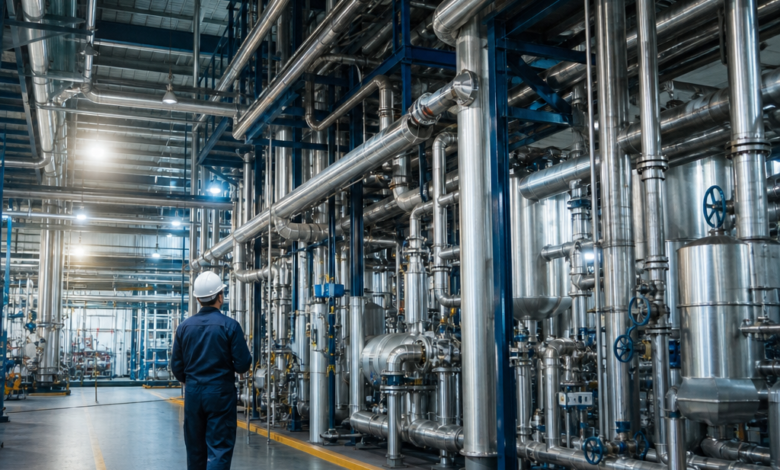
Modern manufacturing is undergoing a quiet but profound transformation. Across sectors ranging from chemical processing to plastics production, the demand for smarter, more efficient industrial infrastructure has never been greater. At the heart of this shift lies the industrial process plant — a complex ecosystem of equipment, systems, and expertise that determines whether a facility operates at peak performance or bleeds cost at every stage of production. Understanding how these plants function, what equipment they rely on, and how sourcing decisions affect long-term output is essential for any operations manager or procurement specialist working in today’s competitive landscape.
The Role of Process Plants in Industrial Operations
A process plant is more than a collection of machines. It is a carefully engineered environment where raw materials are transformed into finished or intermediate products through a series of controlled physical and chemical operations. Whether the facility handles petroleum refining, food processing, pharmaceutical manufacturing, or polymer extrusion, the underlying principle remains the same: efficiency, reliability, and safety must be built into every component and workflow.
The challenge for plant operators is that achieving this level of integration requires not only the right equipment but also the right sourcing strategy. Purchasing new machinery for every upgrade or expansion is rarely practical. The capital expenditure involved can be prohibitive, and lead times for new equipment often stretch into months or even years. This is where the secondary equipment market plays a critical role, offering access to high-quality, pre-owned machinery that can be deployed quickly and cost-effectively.
Equipment Selection and Its Impact on Plant Performance
Selecting the right equipment for a process plant is a decision that reverberates through every layer of operations. The wrong pump, heat exchanger, or reactor vessel can create bottlenecks that reduce throughput, increase energy consumption, and elevate maintenance costs. Conversely, well-matched equipment — properly sized and suited to the specific process conditions — can dramatically improve yield and reduce downtime.
One area where equipment selection has become particularly nuanced is in polymer and plastics processing. Extrusion lines, for example, depend on a precise balance between screw design, barrel temperature, and melt pressure to produce consistent, high-quality output. Recent developments in melt pump technology have addressed some of the most persistent challenges in this space. According to recent reporting on melt pump innovations for extruder efficiency and high-quality applications, modern gear pump systems can stabilize melt pressure and reduce extruder load, leading to measurable improvements in product consistency and energy efficiency. For plant managers overseeing extrusion operations, integrating such technology represents a meaningful step forward.
Balancing New and Pre-Owned Equipment
The decision between new and pre-owned equipment is rarely black and white. In many cases, a hybrid approach yields the best results. Critical, high-wear components may warrant new purchases to ensure warranty coverage and the latest engineering standards. Meanwhile, structural equipment — vessels, columns, heat exchangers, compressors — often retains its functional value long after its initial installation, making the secondary market an attractive option for cost-conscious procurement teams.
This calculus becomes even more favorable when the pre-owned equipment comes from a reputable, well-documented source. Provenance matters enormously in industrial procurement. Equipment with clear maintenance records, known operating histories, and verified specifications carries far less risk than machinery of uncertain origin. This is why working with established industrial equipment dealers and plant liquidators has become a standard practice among experienced procurement professionals.
Heavy Equipment and the Infrastructure of Process Plants
Beyond the process-specific machinery, every industrial facility depends on a foundation of heavy construction and support equipment. Cranes, forklifts, excavators, and material handling systems are essential not only during plant construction and commissioning but also throughout the operational lifecycle of the facility. Maintenance shutdowns, equipment replacements, and capacity expansions all require reliable access to heavy machinery.
Understanding the full spectrum of available equipment types is valuable for plant engineers and project managers alike. A comprehensive overview of heavy construction equipment types can help teams identify the right tools for specific tasks, from earthmoving and foundation work to structural installation and material transport. Matching the right equipment to the job not only improves safety but also reduces project timelines and associated costs.
Maintenance Planning and Equipment Lifecycle Management
Effective maintenance planning is one of the most underappreciated drivers of plant efficiency. A reactive maintenance culture — where equipment is repaired only after failure — leads to unplanned downtime, safety incidents, and accelerated asset degradation. By contrast, a proactive approach that incorporates regular inspections, predictive diagnostics, and scheduled overhauls can extend equipment life significantly and keep production running smoothly.
Lifecycle management also informs procurement decisions. When a piece of equipment approaches the end of its useful life, plant managers must weigh the cost of continued maintenance against the investment required for replacement. In some cases, refurbishment is the most economical path. In others, sourcing a replacement unit from the secondary market offers a faster and more cost-effective solution than ordering new. The key is having access to a broad inventory of quality equipment and the expertise to evaluate options objectively.
International Process Plants: A Trusted Source for Industrial Equipment
For companies seeking reliable access to pre-owned industrial process equipment, International Process Plants has established itself as a leading resource in the global marketplace. With an extensive inventory spanning chemical processing, pharmaceutical, food and beverage, and polymer industries, the company provides procurement teams with access to thoroughly evaluated equipment from decommissioned plants and facility upgrades worldwide. Their approach combines deep industry knowledge with a commitment to transparency, giving buyers the confidence they need to make informed purchasing decisions.
The breadth of their inventory is particularly valuable for companies managing complex, multi-stage processes that require a diverse range of equipment types. Rather than sourcing from multiple vendors with varying standards of documentation and quality assurance, procurement teams can consolidate their search through a single, experienced partner with a proven track record in the industry.
Looking Ahead: Efficiency as a Competitive Advantage
As energy costs rise and regulatory requirements tighten, operational efficiency is no longer just a financial metric — it is a competitive differentiator. Plants that invest in the right equipment, maintain it properly, and source intelligently are better positioned to respond to market changes, scale production, and meet evolving customer demands. The industrial process plant of the future will be leaner, more connected, and more adaptable than its predecessors.
Achieving that future requires a clear-eyed approach to every aspect of plant management, from equipment selection and procurement to maintenance strategy and lifecycle planning. The companies that get these fundamentals right will be the ones that thrive in an increasingly demanding industrial environment.
Conclusion
Industrial process plants sit at the intersection of engineering precision and operational strategy. The decisions made about equipment, sourcing, and maintenance have lasting consequences for productivity, cost, and safety. By combining a thorough understanding of process requirements with access to quality equipment — whether new or pre-owned — plant operators can build facilities that perform reliably and efficiently for years to come. In a global market where margins are tight and expectations are high, that kind of operational excellence is not optional. It is essential.