Why My London Architect Spent the First Meeting Talking About My Neighbours

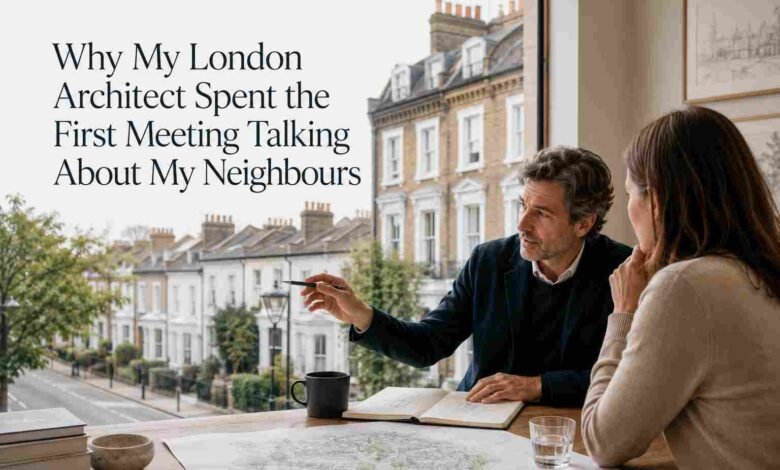
I expected the first meeting to be about my house. Instead, the architect for extension work I had hired spent most of it asking about the people next door. How well did I know them? Were we on good terms? Had I mentioned my plans yet. I was confused at the time. By the end of the project I understood it was the smartest place to start.
I had thought of my extension as my business, happening on my property. The architect saw it differently. On a London street, where homes sit close together, your neighbours are part of the project whether you like it or not. Their light, their privacy, their goodwill all shape what you can build.
She wasn’t being nosy. She was identifying the biggest risk to the whole scheme before drawing a single line. Neighbour objections derail more London extensions than almost anything else, and she wanted to design around that from the start.
Why Neighbours Shape a London Build
On a tight London street, your build affects the people beside you directly. A wall near the boundary, a window facing their garden, noise during construction. They notice all of it.
That gives them a voice. Through planning objections and party wall rights, neighbours can slow a project down or force changes. Ignore them and you invite trouble exactly when you can least afford it.
The architect understood this from experience. By asking about my neighbours first, she was mapping where the resistance might come from, so she could design a scheme that didn’t provoke it.
The Questions That Seemed Odd at First
How well did I know them? Were we friendly? Had I told them what I was planning. At the time these felt like small talk, not architecture.
They weren’t. She was working out whether my neighbours would be supportive, indifferent, or hostile, and how much care the design would need to keep them onside.
A friendly neighbour who feels consulted rarely objects. A surprised or ignored one often does. She was gauging which situation I was in, because it genuinely affected how she would approach the design and the planning.
How the Design Respected Them
Once she knew the lie of the land, the design reflected it. The extension stayed lower near the boundary so it wouldn’t loom over next door. Windows were positioned to avoid looking into their garden.
These weren’t compromises that hurt my home. They were sensible choices that removed reasons to object while still giving me everything I wanted. Good design respects the neighbours without sacrificing the client.
She also advised me to show them the plans before submitting, over a friendly chat. That small step turned potential objectors into supporters. They felt included rather than ambushed.
Why This Matters for Loft Projects Too
The same thinking applies upward, not just outward. When we later considered a london loft conversion, the neighbour’s question returned, because roof work near a shared wall triggers party wall obligations just as ground floor work does.
A loft on a terrace or semi often means notifying the adjoining owner and reaching an agreement. The architect flagged this early, the same way she had for the extension, so it never became a last minute crisis.
Whether building out or up, the neighbour relationship runs through the whole thing. She treated it as central from the first meeting, and it paid off both times.
What Happened Because She Started There
The application went in with no objections. Both neighbours had seen the plans, felt considered, and raised no concerns. The party wall side was sorted early and amicably.
Compare that to the horror stories. Friends who ignored their neighbours faced objections, delays, even forced design changes late in the process. All avoidable with an early conversation.
By starting with the people next door, my architect removed the single biggest risk to the project before it could grow. The meeting that confused me turned out to be the foundation of a smooth build.
What to Sort Before You Design
Think about your neighbours before you think about your dream design. Are you on good terms? Do they know your plans? How will the build affect them?
Tell them early, show them the plans, and let your architect design in a way that respects their light and privacy. A supported scheme sails through. An ambushed neighbour fights back.
Six to eight months from that neighbour focused first meeting to a finished project, with the people next door still waving over the fence. I thought architecture was about my house. The architect knew it was about the whole street. Start with the neighbours, and the rest goes far more smoothly.