
Will Robots Replace Humans in Warehouses? The Future of Automation

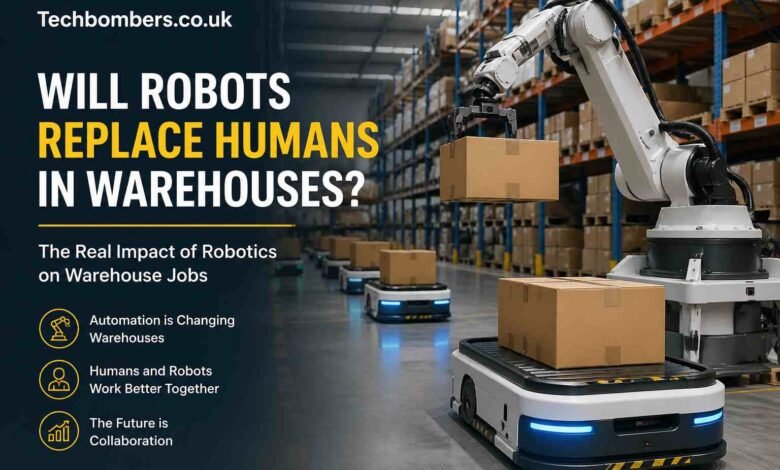
When you think of warehouses today, you might picture rows of workers packing boxes, loading goods, and operating forklifts. But with the rise of robotics, is the future of warehouses shifting toward machines doing it all? While robots have already made a noticeable impact in warehouses, it’s not a simple black-and-white situation. The reality is that robots are changing the landscape of warehouse operations, but they’re not necessarily replacing human workers entirely.
Instead, what we’re witnessing is a shift toward collaboration. Robots are handling repetitive, physically demanding tasks while humans focus on higher-level work that requires flexibility, creativity, and problem-solving. So, will robots eventually take over warehouses entirely? Let’s break it down and explore what’s really happening.
How Robots are Already Transforming Warehouses
Robots aren’t just a thing of the future—they’re already part of the present in many warehouses. If you’ve ever shopped at Amazon, you’ve likely interacted with a warehouse powered by robots. Amazon uses Kiva robots, for instance, to automate various tasks, from picking up goods to sorting them and moving them around large facilities. These robots are quick, efficient, and capable of doing a lot of the heavy lifting that would otherwise fall on human workers.
Automation in Action:
In many warehouses, robots are responsible for a range of tasks that were once done by people:
- Picking and Packing: Automated systems are now able to select items from shelves and prepare them for shipment without human intervention. This reduces human error, speeds up the process, and can handle items faster than human workers.
- Sorting: Robots are capable of sorting packages by destination, ensuring a faster and more organized flow of goods.
- Transporting Goods: Automated Guided Vehicles (AGVs) and Autonomous Mobile Robots (AMRs) move products around the warehouse, making the process faster and reducing the risk of human injury.
- Inventory Management: AI-driven systems help monitor stock levels, predict demand, and automatically restock shelves. This helps streamline operations and reduce human oversight.
These robotic systems excel at repetitive tasks that follow a predictable pattern, which is where their strength lies.
Where Robots Fall Short:
Despite all their advantages, robots still face some limitations. They might be fast, efficient, and tireless, but they’re not as adaptable as humans. Here are some tasks that robots still struggle with:
Dexterity and Handling Fragile Items:
- Robots are generally good at moving standard-sized, predictable items. However, when it comes to fragile products, irregular items, or objects that require delicate handling, humans still outperform machines. For example, robots struggle with things like picking up and packing fragile glassware or odd-shaped items. While robotic arms have gotten more precise, they still can’t replicate the flexibility and dexterity of a human hand.
Problem Solving and Adaptability:
- Warehouses aren’t always predictable. Inventory can shift, unexpected items may come in, and a lot can go wrong. Robots are great when things follow a routine, but if something unexpected happens—like a change in inventory, damaged items, or a logistical glitch—robots can’t always adapt on the fly. Humans, on the other hand, are excellent at solving problems in real-time and adjusting to new situations.
Complex Decision-Making:
- Warehouse operations aren’t just about moving things around; they also involve decision-making, especially when there are unplanned events. For instance, if two products get mixed up or something gets damaged, a human worker can quickly assess the situation, make decisions, and figure out a solution. Robots, however, are limited by their programming and can’t always make decisions beyond what they’ve been specifically designed to do.
The Rise of Collaborative Robots (Cobots)
Rather than replacing humans outright, robots are evolving to work alongside them. This collaboration between humans and robots is where the future of warehouse automation is headed.
What are Cobots?
Collaborative robots, or cobots, are designed to work directly with human workers, assisting them without the need for safety barriers or separate spaces. These robots are equipped with sensors, AI, and advanced algorithms, allowing them to interact with humans in a shared environment.
For example, a cobot might assist a worker by picking up heavy items, allowing the worker to focus on tasks that require judgment, such as quality control or packing the items in the best way. Cobots can also help with ergonomically challenging tasks, reducing the physical strain on workers.
How Cobots Improve Efficiency:
- Safety: By handling repetitive, strenuous, or hazardous tasks, cobots reduce the risk of workplace injuries.
- Speed and Precision: Cobots can help speed up repetitive tasks without compromising accuracy. They can do things like pick products or sort them faster than humans, leading to overall improved efficiency.
- Support for Workers: Cobots make it easier for workers to focus on higher-level tasks that require decision-making or problem-solving, boosting morale and making work less monotonous.
The Future of Robotics in Warehouses: What’s Coming Next?
While we’ve seen incredible progress in warehouse robotics, the future holds even more exciting possibilities.
Advanced AI for Smarter Robots:
- The combination of AI, machine learning, and robotics is pushing warehouse automation to new heights. AI allows robots to learn from their environment, adapt to new scenarios, and make real-time decisions. In the future, robots will be able to handle more complex tasks, such as quality control, sorting, and even inventory management, all with minimal human input.
Autonomous Robots with Enhanced Capabilities:
- The next generation of autonomous robots will be better at navigating unpredictable environments. They’ll be able to handle more intricate tasks, such as moving objects around in crowded spaces or dealing with new and unfamiliar products. Some of these robots will be able to communicate with each other, optimizing the warehouse’s overall workflow.
Integration with Other Technologies:
- Robotics will not exist in isolation. The future of warehouse automation will involve seamless integration between robotics, AI, IoT (Internet of Things), and data analytics. This integration will lead to smarter warehouses where robots not only move products but also track them, monitor their conditions, and even predict when to replenish stock.
Will Robots Replace Humans in Warehouses?
Here’s the million-dollar question: Will robots fully replace humans in warehouses? The answer, for now, is no. While robots are certainly replacing some manual labor in warehouses, they are not replacing humans entirely.
Robots are great at performing repetitive tasks that don’t require decision-making or human intuition. But for more complex, flexible, and problem-solving tasks, humans are still essential. The future of warehouse work will likely involve a blend of both human and robotic labor, with robots taking over the heavy lifting and mundane tasks, and humans focusing on the tasks that require higher-level thinking, adaptability, and supervision.
Why Humans Are Still Necessary in the Warehouse of the Future:
Adaptability and Problem-Solving:
- No machine can replicate the human brain’s ability to think critically and adapt to sudden changes in the workplace. If a robot encounters a problem, it might halt, but a human can step in and make a decision to get things back on track.
Quality Control and Oversight:
- While robots may handle many tasks, there will always be a need for human oversight to ensure that quality standards are met. After all, robots can’t always evaluate things like product defects or complex customer requirements the way a human can.
Creativity and Strategy:
- Warehouses are part of a larger supply chain, and humans will always play a role in strategic planning. Deciding on warehouse layouts, optimizing workflows, and managing human-robot collaboration will require human creativity and strategic thinking.
Conclusion: A Co-Existence of Robots and Humans
The warehouse of the future won’t be one where robots replace humans entirely—it will be a place where humans and robots work together to create more efficient, safer, and faster operations. While robots can handle repetitive tasks, humans will remain essential for tasks that require decision-making, flexibility, and adaptability. As technology advances, we can expect to see more collaborative environments where robots and humans complement each other’s strengths, resulting in a better, more efficient workplace for everyone.
The real question is not whether robots will replace humans, but how robots and humans will work together to shape the future of warehouses. And if we embrace this new reality, it’s clear that the future of warehouse operations is one that’s bright, efficient, and more human-centered than ever before.
For more insights, read our article on: Warehouse Robotics Trends & Innovations in 2026