
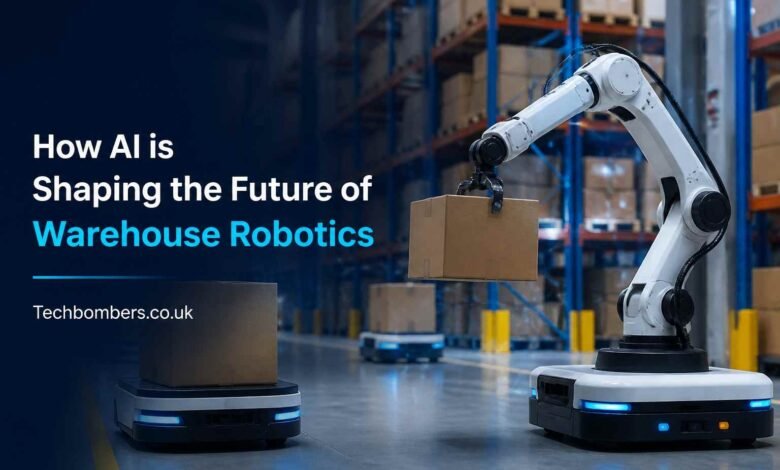
Artificial Intelligence (AI) is transforming warehouse operations by making robots smarter, faster, and more adaptable. AI-powered warehouse robotics help businesses automate processes, optimize logistics, reduce operational costs, and improve safety. From autonomous navigation to predictive maintenance, AI is enhancing every aspect of warehouse operations, making them more efficient and reliable than ever before.
In this blog, we’ll dive deep into the various ways AI integrates with warehouse robotics, what it means for businesses, and how it’s shaping the future of logistics.
What Are Warehouse Robotics?
Warehouse robotics refers to the use of robots in warehousing operations to automate various tasks such as picking, sorting, packing, and transporting goods. These robots are typically powered by AI technologies that allow them to work autonomously or collaborate with human workers to streamline operations.
AI in warehouse robotics improves efficiency by reducing human error, speeding up workflows, and lowering labor costs. Robots equipped with AI can make decisions on their own, adapting to real-time changes in the environment and optimizing their tasks based on real-time data.
How AI Enhances Warehouse Robotics
Autonomous Navigation and Smart Mapping
Autonomous robots equipped with AI are transforming the way warehouses operate. AI-enabled robots use algorithms like Simultaneous Localization and Mapping (SLAM) to navigate the warehouse without needing human intervention or external markers. This allows robots to find their way around the warehouse, create their own maps, and update them in real time.
Benefits:
- Cost Reduction: There is no need for costly infrastructure like guide rails or external beacons.
- Safety: These robots can safely navigate without colliding with obstacles or humans, avoiding common warehouse accidents.
- Efficiency: With AI, robots can plan their optimal paths, avoiding congestion and improving speed.
For example, companies like Amazon Robotics use AI-powered Kiva robots to navigate their fulfillment centers autonomously, improving the efficiency of their operations.
AI-Powered Smart Picking Systems
One of the most significant innovations in warehouse robotics is AI-powered smart picking systems. Traditionally, human workers would manually scan barcodes or use RFIDs to identify items for picking. With AI, robots can now identify objects on shelves without these traditional markers. By using computer vision, deep learning models, and sensor fusion, robots can see and understand the items in their environment.
How it works:
- Robots equipped with cameras and AI algorithms analyze the shape, size, and color of items.
- AI models train robots to pick up items based on real-time visual recognition, even if the object is irregularly shaped or hidden behind others.
Benefits:
- Higher Accuracy: Reduced human errors in picking and inventory management.
- Increased Speed: Robots can pick items more quickly than human workers.
- Flexibility: The system can handle different items, including those without barcodes.
For example, 6 River Systems offers AI-based smart picking solutions where robots assist human workers by directing them to the right product, optimizing speed and reducing mistakes.
Predictive Maintenance with AI
Warehouse robots need regular maintenance to ensure they operate efficiently. AI can significantly improve this process through predictive maintenance. By analyzing data collected from sensors on the robot, AI models can predict potential failures before they happen.
How it works:
- AI systems monitor factors like temperature, vibration, and motor performance.
- By spotting patterns and anomalies, AI can predict when a robot is likely to break down or require maintenance.
Benefits:
- Reduced Downtime: Predicting failures in advance allows for timely maintenance, preventing unexpected robot downtime.
- Cost Savings: Preventing major failures reduces repair costs and extends the life of the robot.
- Efficiency: AI helps companies plan maintenance in a way that doesn’t disrupt operations, maintaining optimal robot performance.
For instance, companies like GreyOrange use AI for predictive maintenance in their robotic systems, ensuring minimal downtime and keeping warehouse operations running smoothly.
Adaptive Task Scheduling and Optimization
Warehouse operations often involve multiple robots working together to complete various tasks. AI enhances task scheduling by dynamically allocating tasks based on real-time conditions, such as robot availability and warehouse congestion.
How it works:
- AI systems analyze data from various sources (e.g., inventory levels, order priorities) to optimize robot tasks.
- The system adapts on-the-fly, rerouting robots if necessary to maintain smooth operations.
Benefits:
- Higher Efficiency: Robots are always working on the most critical tasks, reducing idle time.
- Real-time Adaptation: AI systems can quickly adjust tasks based on changes in warehouse conditions, such as traffic or new orders.
- Scalability: As demand fluctuates, AI can adjust task allocations to keep the system scalable.
Companies like Locus Robotics have developed AI-driven fleet management systems that help manage the movement of robots within a warehouse, ensuring high throughput.
Collaborative Robots (Cobots) and AI Integration
Collaborative robots, or cobots, are designed to work alongside human workers in a shared environment. These robots can carry out repetitive tasks such as picking, packing, or sorting while humans focus on more complex duties. AI integration enables cobots to learn from their environment and interact safely with humans.
How it works:
- AI algorithms help cobots recognize human workers and adjust their behavior accordingly, ensuring safety and smooth collaboration.
- The AI system helps cobots improve their performance over time by learning from feedback.
Benefits:
- Improved Efficiency: Cobots handle the physical labor, freeing up humans to focus on higher-level tasks.
- Safety: AI ensures that cobots operate safely around humans, detecting obstacles and halting operations if necessary.
- Adaptability: Cobots can adapt to various warehouse environments and tasks with AI-driven learning.
Cobots from companies like Universal Robots are being used across various industries, including logistics, to collaborate with human workers and optimize processes.
The Business Impact of AI in Warehouse Robotics
Lower Operational Costs
AI-powered warehouse robotics can reduce costs in several ways. Automation replaces human labor for repetitive tasks, reducing the need for manual labor, while AI-based predictive maintenance helps avoid expensive repairs. Furthermore, AI-driven systems optimize warehouse layouts and task assignments, resulting in better use of resources and space.
Key Benefits:
- Reduced Labor Costs: Robots handle basic tasks, freeing workers for higher-value tasks.
- Longer Equipment Lifespan: Predictive maintenance reduces wear and tear on robots, cutting long-term costs.
- Improved Productivity: Optimized operations lead to faster order fulfillment and reduced inventory costs.
Increased Efficiency and Throughput
AI-driven robots are capable of performing tasks faster and with greater accuracy than humans, leading to an increase in warehouse throughput. Real-time decision-making capabilities help robots complete tasks quickly and without errors. This increased speed is particularly important for e-commerce companies like Amazon, where rapid order fulfillment is essential for customer satisfaction.
Key Benefits:
- Faster Operations: AI robots handle tasks like picking, packing, and sorting much faster than humans.
- Reduced Error Rates: AI eliminates the common errors associated with manual labor.
- Higher Scalability: With AI, robots can work in tandem to handle high-volume orders, making it easier to scale operations as needed.
The Future of AI in Warehouse Robotics
As AI technology continues to evolve, the capabilities of warehouse robots will only improve. We are already seeing trends like AI-powered drones for inventory tracking, autonomous mobile robots (AMRs), and even robots with advanced emotional intelligence to interact better with human workers. As AI continues to integrate with emerging technologies like 5G and the Internet of Things (IoT), warehouses will become even smarter, more efficient, and more connected.
Conclusion
AI is reshaping the future of warehouse operations by making them more efficient, cost-effective, and adaptive to changing conditions. By automating tasks, improving safety, and enhancing real-time decision-making, AI-driven warehouse robotics are paving the way for smarter logistics and supply chain management.
The integration of AI in warehouse robotics is not just a trend—it’s the future of logistics. Companies that embrace these technologies will not only streamline their operations but also gain a competitive edge in the fast-paced world of e-commerce and global supply chains.
As AI continues to evolve, warehouse robotics will only get smarter, more capable, and more integral to the success of logistics businesses worldwide. The time to adopt AI in warehouse operations is now—don’t get left behind.
For more insights, read our article on: Will Robots Replace Humans in Warehouses? The Future of Automation