
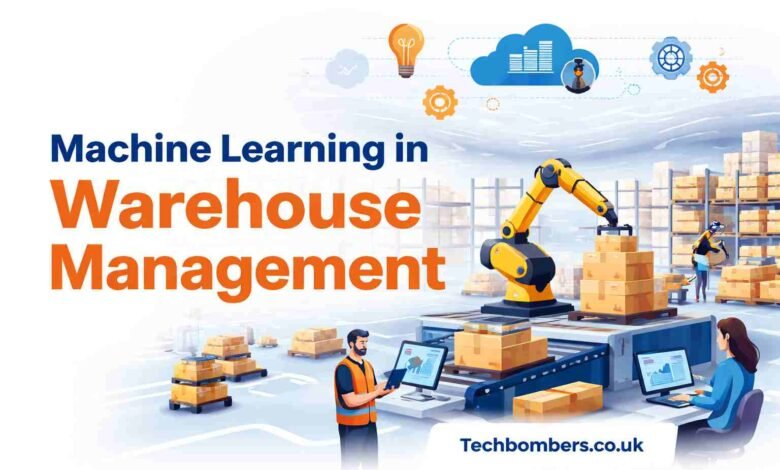
Gone are the days when warehouse management relied solely on paper, manual tracking, and traditional methods. The fast-paced world of logistics demands faster, more efficient systems. And that’s where machine learning (ML) comes in. By harnessing ML, warehouses can operate smarter, faster, and with fewer mistakes. This blog takes a closer look at how machine learning is reshaping warehouse operations, bringing greater efficiency, accuracy, and cost savings to the industry.
What Exactly is Machine Learning and Why Should It Matter in Warehouse Management?
To put it simply, machine learning is a type of technology that helps computers learn from data and make decisions on their own. The more data it gets, the smarter it becomes. Imagine having a system that constantly learns and improves, without needing constant human input. That’s exactly what ML brings to warehouses.
From predicting what products will be in demand to optimizing how goods are stored and picked, ML is playing a major role in making warehouses run more smoothly. For businesses, this means fewer errors, less wasted time, and a lot more efficiency in getting products from point A to point B.
How Machine Learning is Revolutionizing Warehouse Management
Inventory Management: Getting the Right Products at the Right Time
Managing inventory is no easy feat. It’s all about having enough stock to meet customer demand, but not too much that it eats up valuable space and capital. Machine learning is a game-changer here.
Demand Forecasting
Imagine being able to predict, with high accuracy, what items will be in demand next month or even next week. That’s the power of ML. By looking at past sales, market trends, and external factors like holidays or special events, machine learning algorithms can help businesses avoid stockouts and overstock situations. This way, you’re always ready to meet customer needs without drowning in excess inventory.
Automated Stock Replenishment
The best part? ML can automate the process of restocking. When stock reaches a certain level, the system can automatically reorder products before they run out. This helps maintain a smooth flow of inventory without manual intervention, reducing the chance of human error.
Efficient Product Organization
Not all products move at the same speed. ML can help warehouse managers categorize items based on their sales frequency and size. Fast-moving items can be stored in prime locations, allowing for quicker picking and faster fulfillment times.
Warehouse Optimization: Making Every Inch Count
Managing a warehouse isn’t just about moving products around; it’s about doing it efficiently. Machine learning can help optimize the layout, storage, and movement of goods.
Routing Optimization
If you’ve ever worked in a warehouse, you know that travel time adds up. Workers and robots alike spend a lot of time moving between different sections. ML helps find the shortest and fastest routes for picking and transporting goods. By reducing unnecessary travel time, warehouse efficiency goes through the roof.
Smarter Storage
Machine learning can determine the best way to organize a warehouse. Fast-moving items can be placed near picking areas, while slower-moving goods can be stored farther away. This reduces the time workers spend searching for products and boosts overall productivity.
Real-Time Tracking
With ML, warehouses can track inventory, workers, and equipment in real-time. Whether you’re looking for a product or checking the location of a forklift, you’ll always have the information you need at your fingertips. This visibility reduces downtime and helps spot issues before they become bigger problems.
Predictive Maintenance: Keeping Machines Running Smoothly
Equipment failure in a warehouse can bring everything to a halt. With ML, warehouses can predict when machines are likely to break down, ensuring they get fixed before a failure occurs.
Predicting Failures
Machine learning can analyze data from warehouse equipment (like forklifts and conveyor belts) to spot patterns that suggest when a machine might fail. By catching these issues early, ML helps prevent unexpected breakdowns, saving time and money.
Monitoring Wear and Tear
Just like predicting failures, ML can continuously monitor the condition of machines, detecting signs of wear and tear. This allows managers to schedule maintenance before things break down, reducing downtime and improving the lifespan of equipment.
Optimizing Order Picking and Packing: Speeding Up Fulfillment
In the fast-paced world of e-commerce, fast order fulfillment is essential. Machine learning is helping warehouses pick, pack, and ship orders with greater speed and accuracy.
Optimizing Picking Routes
When it comes to order picking, every second counts. ML analyzes past order data to determine the most efficient paths for picking products. Whether it’s a human worker or a robot, ML ensures that they take the shortest route, reducing unnecessary steps and speeding up the process.
Robotic Picking
Robots equipped with machine learning can identify, pick, and pack products with high precision. Over time, these robots get smarter, learning from each task to improve their picking efficiency. This not only speeds up the picking process but also reduces human error.
Supply Chain Efficiency: Improving Logistics from Start to Finish
Machine learning doesn’t just help inside the warehouse—it also plays a crucial role in the larger supply chain. By improving transportation, delivery, and forecasting, ML helps ensure that goods reach customers faster and at lower costs.
Optimizing Delivery Routes
ML can help logistics managers optimize delivery routes by considering variables like traffic patterns, weather, and road conditions. This reduces fuel consumption, improves delivery times, and cuts costs.
Supply Chain Forecasting
ML systems can predict potential disruptions in the supply chain, like delays or inventory shortages. This early warning allows warehouses and supply chains to adjust, keeping operations running smoothly.
Enhancing Warehouse Safety: Minimizing Risks
Warehouses can be dangerous places, with heavy machinery and large volumes of stock moving constantly. Machine learning can help improve safety by predicting potential hazards and alerting workers.
Predicting Safety Hazards
By analyzing data from cameras, sensors, and workers’ behaviors, ML can predict when accidents might happen. This allows warehouses to take proactive steps to avoid accidents before they occur.
Monitoring Worker Behavior
Machine learning can also be used to monitor whether workers are following safety protocols. If a worker forgets to wear safety gear or is operating equipment unsafely, the system can alert managers to take action.
The Key Benefits of Machine Learning in Warehouse Management
- Increased Efficiency: ML automates repetitive tasks and optimizes workflows, making warehouses run smoother and faster.
- Cost Savings: From reducing stockouts and overstocking to optimizing delivery routes, ML helps warehouses cut operational costs.
- Accuracy: With ML, human errors are minimized. Whether it’s picking the right item or predicting when a machine will break down, the result is a more accurate and reliable warehouse operation.
- Faster Order Fulfillment: By improving picking routes, automating stock replenishment, and increasing the accuracy of inventory management, ML speeds up the order fulfillment process, keeping customers happy.
Challenges of Implementing Machine Learning in Warehouse Operations
While ML offers numerous benefits, it does come with challenges, especially when it comes to implementation.
- Data Quality and Availability: To work effectively, ML requires access to clean, high-quality data. Inaccurate or incomplete data can lead to incorrect predictions and decisions.
- Integration with Existing Systems: Many warehouses still use older systems that may not be compatible with modern ML tools. Integration can be complex and costly.
- Initial Investment: Setting up machine learning systems requires an upfront investment in technology, software, and training.
The Future of Machine Learning in Warehouse Management
Looking ahead, the future of warehouse management is incredibly exciting. As machine learning continues to evolve, we can expect even more advanced solutions, including fully autonomous warehouses, AI-powered robots, and deeper integration with the broader supply chain.
As businesses embrace ML technologies, warehouses will become more agile and data-driven, making decisions in real time and adapting to customer demands faster than ever before.
Conclusion
Machine learning is no longer a distant future concept; it’s here, and it’s already transforming warehouse management. By improving inventory management, optimizing workflows, and enhancing predictive maintenance, ML is helping warehouses run smarter, faster, and with fewer errors. The future of warehousing is data-driven, and machine learning is leading the way.
For more insights, read our article on: Digital vs Traditional Warehouse: What’s the Real Difference?
FAQs
What machine learning algorithms are typically used in warehouse management?
Common algorithms include decision trees for demand forecasting, clustering for inventory management, and reinforcement learning for optimizing picking routes. Deep learning techniques are often used for robotics and image recognition.
How long does it take to see results from implementing machine learning in a warehouse?
While results can vary, many warehouses see improvements within a few months—especially in areas like inventory forecasting and order picking. More complex applications, like robotics, may take longer to fully implement.
Can machine learning be integrated with existing warehouse management systems?
Yes, it’s possible to integrate ML with existing systems, although the process might require some customization to ensure compatibility with older software.