
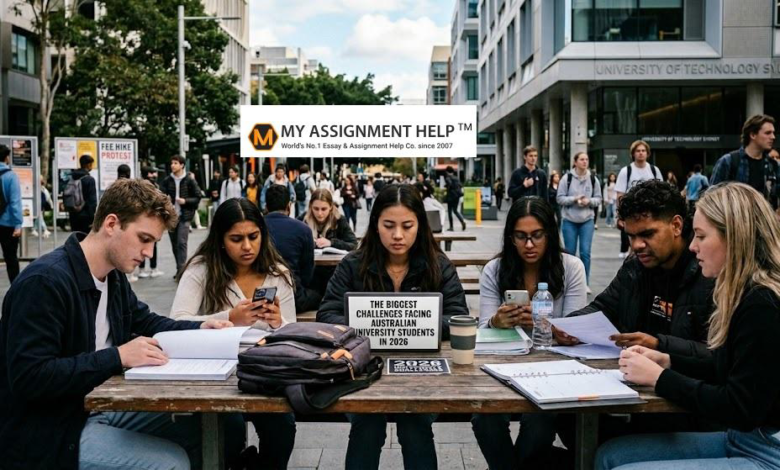
The Australian higher education landscape has undergone a monumental shift. Entering a university lecture theatre or logging into a digital campus portal in Sydney, Melbourne, Brisbane, or Perth in 2026 looks vastly different than it did even five years ago. While a tertiary qualification remains a powerful vehicle for upward mobility, social connection, and intellectual growth, the modern domestic and international student faces an unprecedented matrix of institutional and socioeconomic pressures.
From the compounding effects of a national housing crisis to the rapid, systemic integration of artificial intelligence in assessment design, navigating a degree today requires far more than traditional academic discipline. It demands extreme psychological resilience, proactive financial acumen, and high-level digital literacy. For high school school-leavers adjusting to university transition challenges and mature-age students balancing existing families, understanding these contemporary hurdles is the vital first step toward conquering them.
Here is an in-depth analysis of the primary Australian university student challenges in 2026—and the strategic, evidence-based blueprints required to overcome them.
1. The Cost-of-Living Crunch: How to Balance Work and Study at Australian Universities
The most immediate, continuous, and suffocating challenge for the average Australian student in 2026 is sheer financial survival. The compounding, multi-year rise in the cost of basic utilities, public transport, fuel, and daily groceries has forced a dramatic, structural redistribution of student time.
Historically, tertiary education was viewed as a primary, full-time commitment, supplemented marginally by a casual weekend shift or a few hours of retail work. In 2026, that classic script has completely flipped. A significant majority of domestic undergraduates and international postgraduates now work part-time or even full-time hours just to meet basic baseline living expenses.
This structural shift creates a destructive domino effect across the academic ecosystem:
Lecture and Tutorial Absenteeism: Students are consistently forced to prioritize paid, rigid workplace shifts over scheduled, interactive tutorials. They rely heavily on asynchronous, recorded digital playback, which severely diminishes the collaborative, peer-to-peer learning that defines a premium education.
Chronic Academic Fatigue: Juggling 20 to 30 hours of external employment with a full-time, rigorous course load leads to systemic cognitive burnout well before the mid-semester break arrives. This challenge becomes even more intense for students enrolled in demanding STEM disciplines that require extensive lab work and technical reporting, leading many to explore academic support options such as biochemistry assignment help to better manage workload and maintain academic consistency.
The HECS-HELP Debt Shadow: With indexation rates fluctuating significantly over recent fiscal cycles, domestic students are acutely, anxiously aware of the mounting financial debt awaiting them upon graduation. This economic weight causes heightened anxiety about their long-term financial security and career choices.
Survival Strategy: To survive this intense economic pressure, students must treat their degrees like strict project management exercises. It is essential to seek out institutions and faculties that actively offer highly flexible, asynchronous learning schedules, while using dedicated budgeting frameworks to optimize every single hour of the week.
2. Navigating the Student Housing Crisis in Sydney, Melbourne, and Major Academic Hubs
Closely tied to direct financial stress is the ongoing, historic Australian housing crisis. For students operating within major metropolitan areas, securing affordable, safe accommodation within a reasonable distance of campus has turned into a brutal, algorithmic lottery.
With historically low rental vacancy rates squeezing cities from Brisbane to Adelaide, students are facing skyrocketing rental prices, intense, cutthroat competition for simple share-houses, and exhausting commutes from distant outer suburban fringes. International students remain uniquely vulnerable within this landscape, frequently falling prey to sophisticated rental scams or being forced by economic necessity into overcrowded, substandard, and legally precarious living arrangements.
The academic fallout of this housing volatility cannot be overstated. When a student is required to commute ninety minutes each way to attend a single, mandatory one-hour laboratory session or seminar, their holistic academic performance suffers. The physical and emotional energy expended simply on maintaining stable, safe housing leaves very little cognitive reserve for advanced calculus, complex essay writing, rigorous scientific research, or location-based coursework where some students also turn to geography homework help to stay on track with deadlines and field-study expectations.
3. Evolving Academic Integrity Standards in Australian Higher Education
In 2026, generative Artificial Intelligence (AI) is no longer a novel tech trend or a simple writing assistant; it is deeply, permanently embedded into the operational fabric of academia. However, this rapid technological evolution has outpaced traditional guidelines, creating an atmosphere of intense confusion, shifting policies, and deep academic anxiety.
Under strict guidance from regulatory bodies like Australian universities have drastically re-engineered their entire assessment models to counter the systemic misuse of automated tools. The era of the simple, unmonitored “take-home essay” is largely extinct. In its place, Australian institutions have aggressively reintroduced a series of high-stakes, authentic assessment methodologies:
- High-Stakes Invigilated Exams: A massive return to traditional pen-and-paper examinations or highly monitored, locked-down digital testing environments inside physical campus spaces.
- Viva Voce (Oral Examinations): Interactive sessions where students must verbally defend their research methodologies, source choices, and core ideas directly to tutors and professors to explicitly prove authorship.
- Complex Interactive Assessments: Academic tasks that require hyper-local, real-time data analysis or live problem-solving that external AI models cannot easily replicate or predict.
For students, this means the benchmarks for proving authentic, independent understanding have risen exponentially. Academic integrity policies are stricter than they have ever been in the history of Australian education. Navigating this environment requires keeping meticulous track of early draft histories, document version controls, and ideation logs.
When the pressure of adapting to these rapidly shifting guidelines becomes overwhelming, seeking tailored assignment support for Australian university students can provide the necessary structural formatting, reference validation, and conceptual clarity needed to succeed honestly, transparently, and confidently.
4. Mental Health Realities and the Isolation of Hybrid Learning Environments
While hybrid, remote, and fully online learning models offer much-needed, invaluable scheduling flexibility for working students, they have introduced a profound, secondary institutional crisis: profound student isolation.
The traditional, foundational “university experience”—historically characterized by vibrant, packed campus clubs, spontaneous lawn conversations, and organic, peer-to-peer study groups—has become highly fragmented. Many modern students report feeling like a disconnected, anonymous face on a digital grid rather than an active, valued member of a living academic community.
This distinct lack of belonging, heavily compounded by daily financial stress and mounting academic pressure, has accelerated a youth mental health crisis across Australia. Rates of clinical anxiety, depression, and severe psychological distress among tertiary students remain alarmingly high. While universities continue to expand their on-campus counseling services, the sheer volume of student demand frequently outstrips institutional supply, leaving vulnerable individuals to navigate complex psychological burdens largely independently.
5. Bridging the Skills Gap and Managing Graduate Employability Anxiety
The Australian job market in 2026 is incredibly dynamic, hyper-competitive, and rapidly evolving, driven by industrial automation, green energy transitions, and advanced digital economies. Consequently, current undergraduates face intense, structural anxiety regarding whether their chosen degree will actually result in a viable, long-term career path.
There is a distinct, growing perception among contemporary undergraduates that traditional, multi-year university curricula lag significantly behind fast-paced, real-world industry demands. Students frequently fear graduating with an excellent theoretical framework but lacking the practical, hands-on technical skills that modern corporate employers expect on day one of employment.
The Employability Mandate: To successfully bridge this gap, modern students are effectively forced to double the workload. They must maintain competitive Grade Point Averages (GPAs) while simultaneously hunting for external internships, industry placements, and micro-credentials to make their resumes viable.
The added pressure to constantly network on professional digital platforms like LinkedIn while managing a heavy weekly study load is a distinct, exhausting 2026 pressure point.
6. The Unique Socioeconomic Plight of International Students in Australia
International education remains one of Australia’s premier global sectors, yet international students face a unique, highly amplified version of every single challenge mentioned above.
Strict national visa regulations strictly limit their lawful working hours, making them highly susceptible to financial exploitation in the casual, undocumented workforce as they struggle to stay afloat against Australia’s high cost of living. Furthermore, recent federal regulatory changes, shifting macro-policies, and changing caps on international student visas have created a volatile climate of profound policy uncertainty, causing deep stress regarding their post-study work pathways.
Language barriers, complex cultural adjustments, and the absolute absence of localized, immediate family support networks mean that when an international student falls behind academically, emotionally, or financially, the drop is much steeper. The available institutional safety nets are often smaller and harder to navigate than those available to domestic students.
Strategic Blueprints: How High School Leavers and Undergraduates Can Thrive in 2026
Despite this formidable matrix of systemic challenges, achieving true academic excellence, maintaining personal well-being, and securing premium graduate employment in Australia is entirely possible. It requires moving away from passive, old-school studying habits and adopting an active, highly strategic, and modern approach to higher education.
A. Optimize High-Level Time and Resource Management
Treat your degree exactly like a professional project management exercise. Utilize advanced digital calendars, cross-platform task-management applications, and strict, unyielding boundaries to balance your employment hours with your dedicated study blocks. Do not leave complex assignments to the final week; the multi-stage, invigilated assessment models of 2026 do not favor or reward last-minute cramming.
B. Cultivate an Active, Consistent Campus Footprint
Actively and intentionally combat hybrid learning isolation by forcing yourself onto a physical campus at least two to three days a week. Join active student societies, participate in Peer-Assisted Study Sessions (PASS), and interact directly, face-to-face, with your lecturers and tutors. Building a resilient human network provides an invaluable psychological buffer against daily stress and opens vital doors to collaborative, deep learning opportunities.
C. Master Advanced Academic Literacy and Integrity
To succeed against modern, highly vigilant academic integrity protocols, you must thoroughly master the core fundamentals of academic research, critical analysis, and flawless referencing (such as APA 7th or Harvard systems).
If you find yourself falling behind due to heavy work commitments, or if you are struggling to decipher highly complex assignment rubrics, do not suffer in silence. Utilizing reputable, professional educational support services can help clarify complex grading criteria, guide your initial research frameworks, and give you the practical tools to submit high-caliber work that meets strict Australian university standards.
D. Proactively Engage Institutional Well-being Services
Do not wait for a crisis to occur before seeking help. Familiarize yourself with your university’s student guild, financial equity grants, emergency housing funds, and mental health counseling pathways during your very first orientation week. These resources are funded specifically to be used; seeking professional, structured help early can prevent a minor academic slip from turning into a total, costly withdrawal from your course.
Conclusion: Turning Contemporary Challenges into Career Stepping Stones
The journey through an Australian university campus in 2026 is undeniably challenging, demanding, and complex. It is no longer a path paved solely with quiet library reading, simple essays, and casual campus social life. Instead, it is a high-stakes environment that demands rapid adult responsibility, financial grit, emotional resilience, and constant digital adaptability.
However, challenges naturally forge profound capability. The students who are successfully navigating this complex landscape right now are developing unparalleled, real-world skills in problem-solving, stress management, digital agility, and project execution.
By acknowledging these systemic hurdles head-on, stepping forward with proactive operational strategies, and utilizing professional academic support networks whenever necessary, high school leavers adjusting to their university transition challenges and current undergraduates can transform these hurdles into powerful stepping stones for a brilliant, resilient career. The modern Australian degree is hard work—but for those who learn to navigate its currents, the personal and professional reward remains profoundly worth it.
Frequently Asked Questions
Q.1 What are the biggest academic challenges for international students in Australia in 2026?
The primary challenges for international students center around navigating Australia’s high cost of living while managing strict student visa work-hour limitations. Academically, adapting to the rapid shift toward invigilated (supervised) exams and oral viva voce assessments poses a significant hurdle, particularly for those balancing language barriers and adjusting to strict Australian referencing styles (like APA 7th or Harvard).
Q.2 How are Australian universities changing exams to prevent AI cheating?
To combat the misuse of generative AI tools, Australian tertiary institutions have largely phased out unmonitored take-home essays. In 2026, assessment models heavily feature traditional pen-and-paper invigilated exams, supervised digital testing environments, and oral examinations (viva voce), where students must verbally defend their research to prove authentic authorship.
Q.3 What university transition challenges do high school leavers face in Australia?
High school leavers transitioning to university often struggle with the sudden shift from highly structured secondary school classrooms to independent, self-directed tertiary learning. Managing hybrid or online learning modules, avoiding isolation, understanding complex academic integrity rules, and balancing part-time work with full-time study workloads are the most common adjustment hurdles.
Q.4 How can university students balance full-time study and part-time work without burning out?
The key to balancing work and study is strict project management. Students should treat their degree like a job by scheduling dedicated, non-negotiable study blocks using digital calendars. Additionally, choosing asynchronous or flexible learning streams, attending peer-assisted study sessions (PASS), and addressing academic bottlenecks early can prevent last-minute cramming and burnout.
Q.5 Where can Australian students get help if they are struggling with assignment requirements?
Students can access on-campus resources such as student guilds, academic skills workshops, and peer tutoring networks. When structural guidance, formatting clarity, or referencing assistance is required to meet strict university rubrics under tight deadlines, utilizing reputable online assignment support for Australian students can provide the necessary external framework to succeed confidently and honestly.
Stay connected with our educational page for more such tech education information