
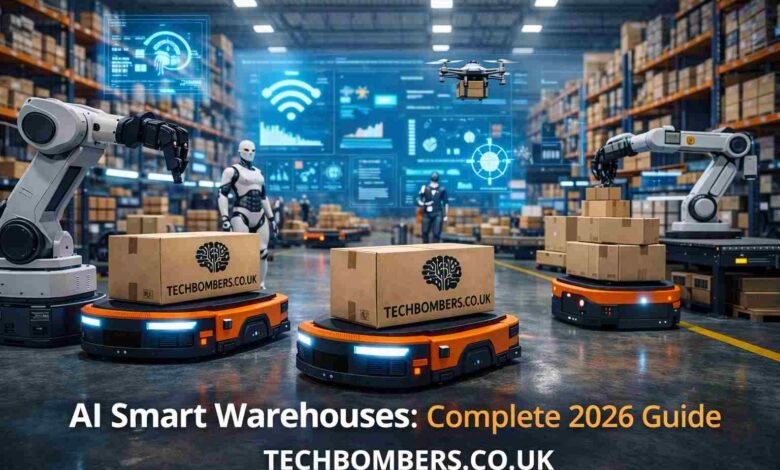
Warehouses are no longer just storage spaces filled with shelves and forklifts. In 2026, they are becoming intelligent environments where software, machines, and data work together to make decisions in real time.
Instead of reacting to problems, modern warehouses are starting to predict them. Instead of relying only on manual labor, they are combining human workers with automation and artificial intelligence.
This shift is not just about technology. It is about speed, accuracy, and staying competitive in a market where customer expectations are higher than ever.
In this guide, you will learn what an AI-powered smart warehouse really is, how it works, what technologies are involved, and how businesses are using it in real-world operations.
What Is an AI-Powered Smart Warehouse?
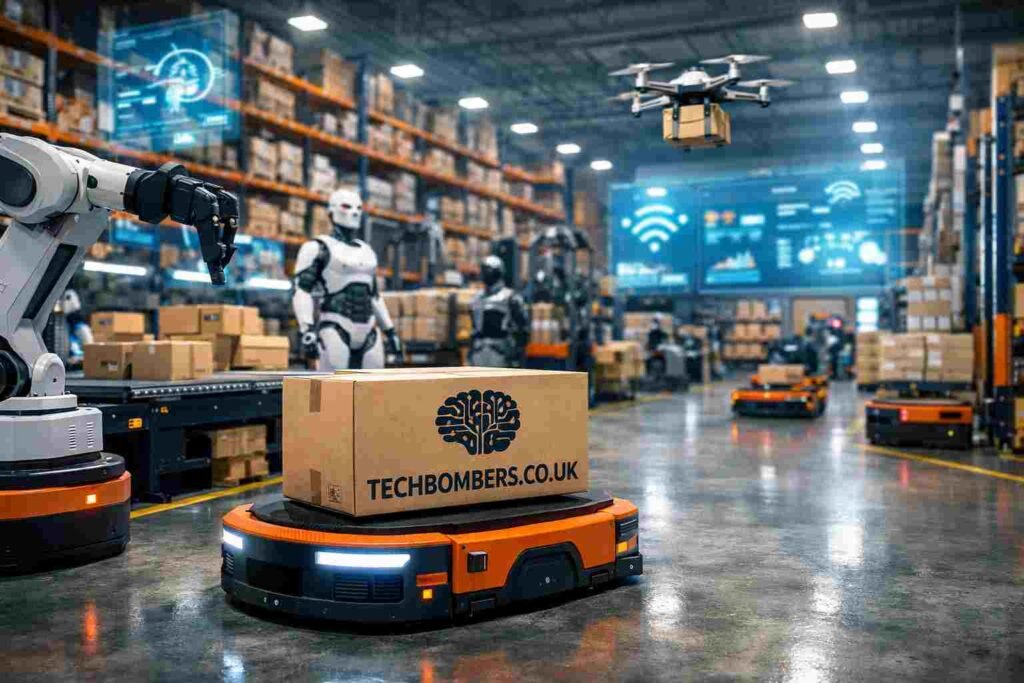
An AI-powered smart warehouse is a facility where artificial intelligence is used to improve how goods are stored, tracked, and moved.
Unlike traditional warehouses that depend heavily on manual processes, smart warehouses use data to make decisions automatically. These decisions can include where to place inventory, how to pick orders faster, and when to restock products.
Traditional vs Automated vs AI-Powered
- Traditional warehouse
Relies on human workers and basic systems. Processes are slower and more error-prone. - Automated warehouse
Uses machines like conveyors and robots, but follows fixed rules. It does not adapt easily. - AI-powered warehouse
Learns from data, adapts to changes, and continuously improves performance.
For example, instead of following a fixed picking route, an AI system can adjust routes based on real-time order volume, worker availability, and traffic inside the warehouse.
You Might Also Check: Digital vs Traditional Warehouse: What’s the Real Difference?
Core Technologies Behind Smart Warehouses
AI-powered warehouses are not built on a single tool. They combine several technologies that work together.
Artificial Intelligence (AI)
AI is the brain of the operation. It processes large amounts of data and makes decisions that improve efficiency.
It can answer questions like:
- Which products should be stored closer to packing stations?
- Which orders should be prioritized?
- When is demand likely to increase?
Machine Learning (ML)
Machine learning allows the system to improve over time. Instead of relying on fixed rules, it learns from past data.
For example:
- Predicting demand based on seasonal trends
- Identifying slow-moving inventory
- Improving picking accuracy over time
Robotics and Automation
Robots handle repetitive and physically demanding tasks such as:
- Picking items from shelves
- Moving goods across the warehouse
- Sorting packages
Autonomous mobile robots (AMRs) are especially common. They navigate independently and adjust routes without human control.
Internet of Things (IoT)
IoT devices include sensors, scanners, and connected equipment that collect real-time data.
They help track:
- Inventory location
- Temperature and storage conditions
- Movement of goods inside the warehouse
Warehouse Management Systems (WMS)
A modern WMS acts as the control center. When integrated with AI, it becomes much more powerful.
It connects data from all systems and ensures smooth coordination between:
- Inventory management
- Order processing
- Shipping operations
How AI Works in a Smart Warehouse
To understand the real value of AI, it helps to look at how it operates step by step.
Data Collection
Data is collected from multiple sources:
- Order history
- Inventory levels
- Sensors and scanners
- Worker activity
Data Analysis
AI systems analyze patterns in this data. For example:
- Which products are frequently ordered together
- Peak order times
- Storage inefficiencies
Decision Making
Based on analysis, the system makes decisions such as:
- Optimal storage locations
- Efficient picking routes
- Restocking schedules
Execution
These decisions are executed through:
- Warehouse software
- Robots and automated systems
- Instructions sent to workers
Continuous Learning
The system keeps learning from new data. If something changes, such as demand patterns, it adapts without needing manual reprogramming.
Key Benefits of AI-Powered Warehouses
Businesses are adopting AI in warehouses because it delivers measurable improvements.
Faster Order Fulfillment
AI optimizes picking routes and reduces delays. Orders can be processed and shipped much faster.
Reduced Errors
Manual errors in picking and packing are common in traditional setups. AI systems reduce these errors by guiding processes with data.
Better Inventory Accuracy
Real-time tracking ensures that stock levels are always updated. This reduces issues like overstocking or stockouts.
Lower Operational Costs
Although the initial investment can be high, long-term savings come from:
- Reduced labor costs
- Fewer errors
- Better space utilization
24/7 Operations
Automation allows warehouses to operate continuously, even outside normal working hours.
Real-World Examples
AI-powered warehouses are already being used by some of the largest companies.
Amazon
Amazon uses robots to move shelves and assist workers. Their systems analyze order data to optimize storage and picking.
This allows them to process millions of orders quickly and maintain high delivery speeds.
Alibaba
Alibaba has developed smart logistics systems that use AI for route optimization and inventory management.
Their warehouses rely heavily on automation and real-time data tracking.
Ocado
Ocado operates highly automated warehouses where robots move across grids to pick items.
AI coordinates these robots to avoid collisions and maximize efficiency.
Challenges and Limitations
While the benefits are clear, AI-powered warehouses are not without challenges.
High Initial Investment
Setting up AI systems, robotics, and infrastructure can be expensive. Small businesses may find it difficult to adopt at scale.
Technical Complexity
These systems require expertise to implement and maintain. Integration with existing systems can also be challenging.
Workforce Adaptation
Employees need training to work alongside new technologies. There may also be concerns about job roles changing.
Data Security
With increased reliance on data, protecting sensitive information becomes critical.
Future Trends in Smart Warehousing
The evolution of smart warehouses is far from over. Several trends are shaping the future.
Digital Twin Technology
Digital twins create a virtual model of the warehouse. Businesses can test changes in a simulated environment before applying them in real life.
Fully Autonomous Warehouses
Some facilities are moving toward full automation, where human involvement is minimal.
Human and Robot Collaboration
Instead of replacing workers, many systems are designed to assist them. This improves productivity without removing the human element.
Predictive Logistics
AI will increasingly predict demand, delays, and disruptions before they happen, allowing businesses to act early.
You Might Also Check: RaaS in Warehousing: Benefits, Use Cases & Trends
How to Implement AI in Your Warehouse
If you are considering adopting AI, it is best to start with a practical approach.
Step 1: Assess Your Current Operations
Identify inefficiencies in your current warehouse processes. Focus on areas where delays or errors are common.
Step 2: Define Clear Goals
Decide what you want to achieve:
- Faster delivery
- Better inventory accuracy
- Cost reduction
Step 3: Start Small
Begin with a pilot project, such as AI-based inventory tracking or route optimization. This reduces risk and helps you learn.
Step 4: Choose the Right Tools
Select systems that integrate well with your existing setup. Avoid overly complex solutions in the beginning.
Step 5: Train Your Team
Ensure that employees understand how to use new systems. Proper training improves adoption and results.
Step 6: Scale Gradually
Once the initial system proves effective, expand to other areas of the warehouse.
Conclusion
AI-powered smart warehouses are changing how logistics and storage operations work. They are faster, more accurate, and more adaptable than traditional systems.
The shift toward intelligent warehouses is not just a trend. It is becoming a necessity for businesses that want to stay competitive in a rapidly evolving market.
The key is not to adopt everything at once, but to start with clear goals and scale gradually. With the right approach, even small improvements can lead to significant results.
Now is the right time to move from manual processes to smarter, data-driven operations.
For more insights, read our article on: Warehouse Robotics Trends & Innovations in 2026
FAQs
What is a smart warehouse?
A smart warehouse uses advanced technologies like AI, automation, and IoT to improve efficiency and accuracy in operations.
Is AI expensive for small warehouses?
It can be costly initially, but starting with small solutions can make it more affordable over time.
What is the difference between automation and AI?
Automation follows fixed rules, while AI learns from data and adapts to changes.
Can small businesses use AI in warehouses?
Yes. Many tools are now available that allow smaller businesses to adopt AI in a limited and cost-effective way.