
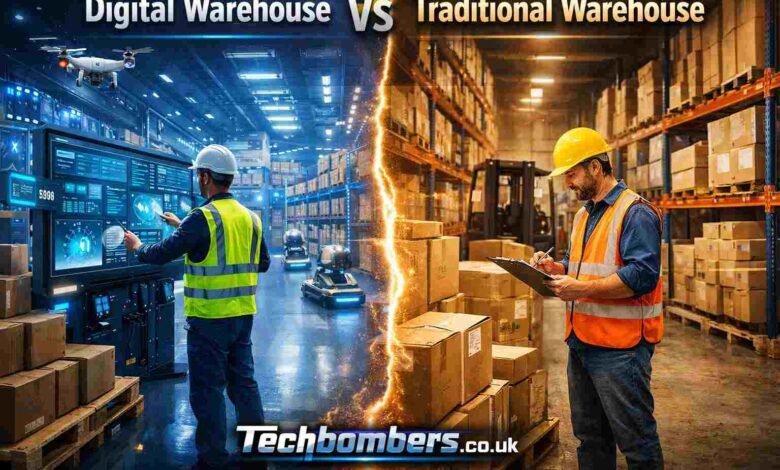
Warehousing is no longer just about storing goods. It has become a critical part of supply chains, directly affecting speed, accuracy, and customer satisfaction. Businesses today face a clear choice: continue with traditional warehouse methods or move toward digital warehousing.
This decision is not just about technology. It’s about efficiency, cost, scalability, and long-term growth.
In this guide, you’ll learn the real differences between digital and traditional warehouses, how each works, where they fit best, and which one makes more sense for your business.
Quick Comparison: Digital vs Traditional Warehouse
Before diving deeper, here’s a simple overview:
| Feature | Digital Warehouse | Traditional Warehouse |
| Operations | Automated & software-driven | Manual & paper-based |
| Accuracy | High (real-time tracking) | Lower (human errors common) |
| Labor | Reduced dependency | High labor requirement |
| Cost | High initial, lower long-term | Low initial, higher long-term |
| Scalability | Easy to scale | Difficult to scale |
| Speed | Fast processing | Slower operations |
What is a Traditional Warehouse?
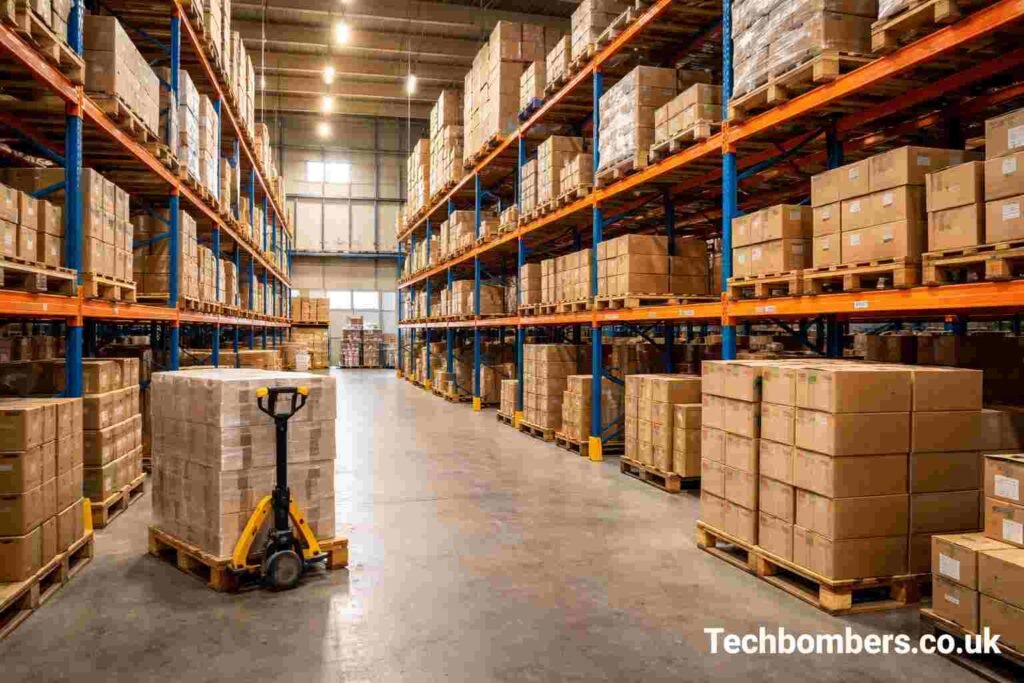
A traditional warehouse relies on manual processes and basic systems to manage inventory and operations.
In most cases, workers handle tasks such as receiving, storing, picking, packing, and shipping without advanced automation. Some warehouses may use spreadsheets or simple software, but the core operations remain human-driven.
How it Works
A typical workflow in a traditional warehouse looks like this:
- Goods arrive and are recorded manually
- Items are stored based on worker judgment or fixed layouts
- Workers pick items using printed lists
- Inventory updates happen after tasks are completed
This system has been used for decades and still works for many businesses.
Where It’s Still Used
Traditional warehouses are common in:
- Small businesses with limited budgets
- Local distribution centers
- Low-volume operations
- Industries with minimal need for real-time tracking
Limitations
While traditional warehousing is simple and affordable upfront, it often leads to:
- Inventory mismatches
- Slower order processing
- Higher labor costs
- Limited scalability
What is a Digital Warehouse?
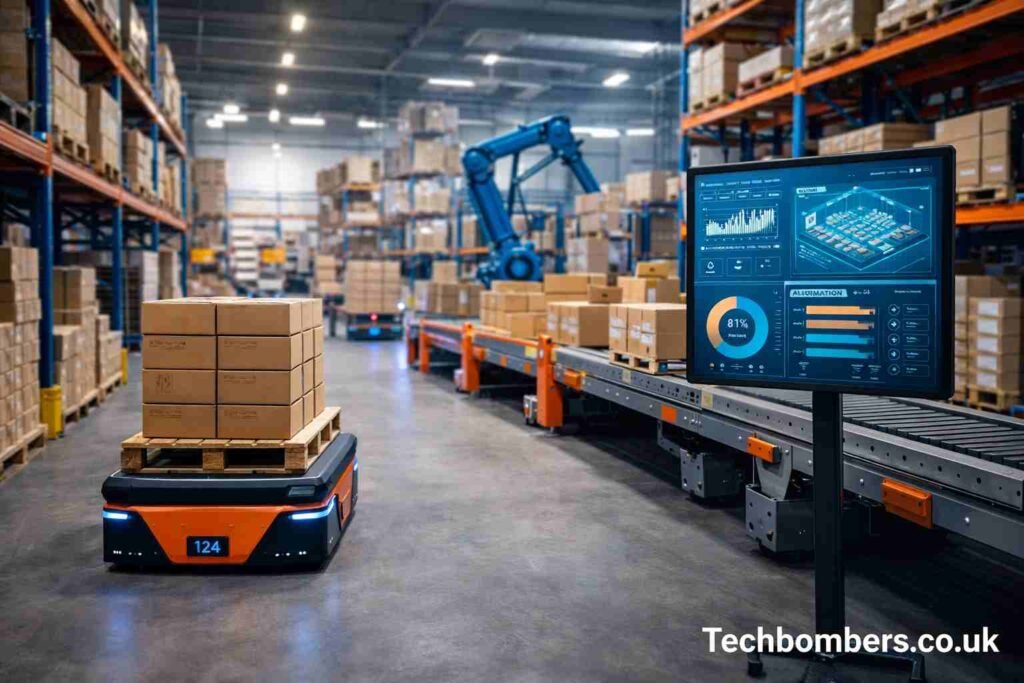
A digital warehouse uses advanced technologies to manage operations in real time. It replaces manual tasks with automated systems, software, and data-driven processes.
This setup often includes:
- Warehouse Management Systems (WMS)
- IoT devices for tracking
- Barcode or RFID scanning
- Automation tools like conveyors or robots
How it Works
In a digital warehouse:
- Inventory is tracked in real time
- Systems assign optimal storage locations
- Workers receive digital picking instructions
- Data updates instantly after every action
Instead of relying on memory or paperwork, everything is controlled through software.
Real-World Example
Large e-commerce companies use digital warehouses to process thousands of orders daily. Items are tracked from entry to shipment, reducing delays and errors.
Key Technologies Involved
- WMS (Warehouse Management System)
- AI-based forecasting tools
- Automated picking systems
- Cloud-based inventory tracking
You Might Also Check: What is a Digital Warehouse? The Ultimate Guide to Smart Logistics in 2026
Key Differences Between Digital and Traditional Warehouses
The difference is not just about technology—it affects how the entire operation runs.
Efficiency
Digital warehouses operate faster because systems guide every step. Traditional warehouses depend on human speed and accuracy.
Accuracy
Manual handling increases the risk of errors. Digital systems track inventory in real time, reducing mistakes.
Labor Dependency
Traditional warehouses require more workers for daily operations. Digital warehouses reduce labor needs by automating repetitive tasks.
Visibility
Digital warehouses offer real-time insights. Managers can track inventory, orders, and performance instantly. Traditional systems often lack this visibility.
Scalability
Expanding a traditional warehouse requires more space and workers. Digital warehouses scale more easily with software and automation.
Advantages and Disadvantages
Digital Warehouse
Advantages
Digital warehouses improve speed and accuracy. They reduce manual work and provide better control over operations. Businesses can process more orders with fewer errors.
They also offer better data insights, helping managers make informed decisions.
Disadvantages
The biggest challenge is cost. Setting up a digital warehouse requires investment in software, hardware, and training.
There is also a learning curve. Staff must adapt to new systems, which can take time.
Traditional Warehouse
Advantages
Traditional warehouses are simple and affordable to set up. They don’t require advanced technology or specialized training.
They work well for businesses with low order volumes.
Disadvantages
Manual processes increase the risk of errors and delays. Over time, labor costs rise, and efficiency becomes a problem.
Scaling operations becomes difficult without major changes.
Cost Comparison
Cost is often the deciding factor when choosing between digital and traditional warehousing.
Initial Cost
Traditional warehouses are cheaper to start. You mainly invest in space, shelves, and labor.
Digital warehouses require investment in:
- Software systems
- Automation tools
- Training
Operational Cost
Traditional warehouses have ongoing labor costs. As operations grow, these costs increase.
Digital warehouses reduce labor expenses over time. Automation handles repetitive tasks, lowering long-term costs.
Long-Term Value
While digital warehouses cost more upfront, they often deliver better returns in the long run through:
- Faster processing
- Fewer errors
- Lower operational costs
Use Cases
Different businesses have different needs. The right choice depends on your scale and goals.
Small Businesses
Traditional warehouses may work better due to limited budgets. However, small businesses can still adopt basic digital tools like inventory software.
E-commerce Businesses
Digital warehouses are ideal. Fast order processing and real-time tracking are essential for online sales.
Large Enterprises
Large companies benefit from full digital transformation. Automation helps manage high volumes efficiently.
Specialized Industries
Industries like pharmaceuticals or food storage often require precise tracking. Digital systems help maintain compliance and accuracy.
When Should You Choose Each?
Choosing the right warehouse type depends on your situation.
Choose a Digital Warehouse If:
- You handle high order volumes
- You need real-time inventory tracking
- You want to scale quickly
- You aim to reduce long-term costs
Choose a Traditional Warehouse If:
- Your operations are small
- Your budget is limited
- You don’t need advanced tracking
- Your processes are simple
Future of Warehousing
The warehouse industry is moving toward digital transformation. Businesses are adopting smarter systems to stay competitive.
Key Trends
- Increased use of automation
- AI-driven inventory management
- Real-time data tracking
- Integration with e-commerce platforms
Digital warehouses are becoming the standard, especially in fast-growing industries.
However, traditional warehouses will not disappear. They will continue to serve smaller operations and specific use cases.
You Might Also Check: What Is a Digital Twin Warehouse?
Common Mistakes to Avoid
Many businesses make poor decisions when choosing a warehouse model.
Investing Too Early in Automation
Not every business needs a fully automated system. Start with tools that match your current needs.
Ignoring Scalability
A system that works today may fail as your business grows. Plan for future expansion.
Poor Layout Planning
Even digital warehouses fail without proper layout design. Efficiency depends on both technology and structure.
Lack of Training
Technology is only effective if staff know how to use it. Training is essential for success.
Final Thoughts
The choice between a digital warehouse and a traditional warehouse depends on your business goals, budget, and scale.
Traditional warehouses offer simplicity and low initial costs. They are suitable for smaller operations with limited complexity.
Digital warehouses, on the other hand, provide speed, accuracy, and scalability. They require investment but deliver long-term benefits.
If your business is growing or planning to expand, moving toward digital warehousing is a practical step. It not only improves efficiency but also prepares you for future demands.
In the end, the best approach is not always choosing one over the other. Many businesses start with traditional methods and gradually adopt digital tools as they grow.
That balance often leads to the best results.
For more insights, read our article on: What Are Self-Healing Warehouses? The Next Big Thing in Logistics
FAQs
What is a digital warehouse?
A digital warehouse uses technology like software, automation, and real-time tracking to manage inventory and operations efficiently.
Is digital warehousing expensive?
It requires higher upfront investment, but it often reduces long-term operational costs.
Can small businesses use digital warehouses?
Yes. Small businesses can start with basic tools like inventory management software and scale gradually.
Is traditional warehousing outdated?
Not completely. It still works for small-scale operations, but it lacks efficiency compared to digital systems.
Which is better for e-commerce?
Digital warehousing is better because it supports fast order processing and real-time tracking.