
What Is a Warehouse Execution System (WES) and Why It Matters in 2026?

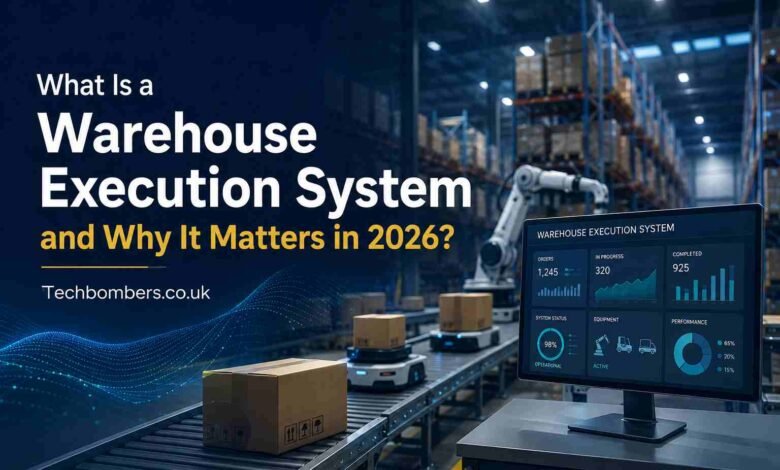
A warehouse can have a modern WMS, advanced robotics, automated conveyors, and skilled workers, yet still struggle with delays, bottlenecks, and inefficient order processing. The reason is often simple: all these systems are working, but they are not working together efficiently.
As warehouses become more automated, managing day-to-day execution has become more challenging. Orders arrive from multiple sales channels, robots move inventory across facilities, and customer expectations continue to rise. Businesses need a way to coordinate every moving part in real time. This is where a Warehouse Execution System (WES) comes into the picture.
A Warehouse Execution System acts as the operational layer that connects planning systems with warehouse activities. It helps warehouses make faster decisions, prioritize work, allocate resources, and keep operations running smoothly throughout the day.
For companies investing in warehouse automation, understanding WES is no longer optional. It has become one of the most important technologies behind modern fulfillment operations.
What Is a Warehouse Execution System?
A Warehouse Execution System (WES) is software that manages and optimizes warehouse activities in real time. Its primary role is to coordinate people, equipment, automation systems, and inventory movement to improve operational efficiency.
Unlike a traditional Warehouse Management System (WMS), which focuses on inventory control and planning, a WES focuses on execution. It continuously monitors warehouse activity and makes real-time decisions to keep work flowing efficiently.
Think of a WES as the traffic controller of a warehouse. It evaluates incoming orders, available labor, automation capacity, and inventory locations, then determines the most efficient way to complete work.
Modern warehouses often contain multiple technologies working simultaneously. These may include automated storage and retrieval systems, conveyor networks, robotic picking systems, autonomous mobile robots, and warehouse management software. A WES helps coordinate all these components from a single operational perspective.
Why Was a Warehouse Execution System Developed?
Warehouse technology has evolved significantly over the past decade. Many facilities have invested heavily in automation to improve speed and reduce labor dependency. While these investments bring benefits, they also introduce complexity.
Traditional warehouse software was not designed to coordinate large numbers of automated systems working together. A Warehouse Management System can determine what needs to be done, but it may not be able to decide the most efficient way to execute tasks every minute of the day.
For example, imagine a warehouse receiving thousands of orders during a sales event. Some orders are high priority, some require robotic picking, and others need manual handling. Without real-time orchestration, bottlenecks can quickly develop.
A Warehouse Execution System was created to solve this challenge. It provides dynamic decision-making that adapts continuously to changing warehouse conditions.
Where Does WES Fit in the Warehouse Technology Stack?
Many warehouse professionals struggle to understand where a WES fits within existing warehouse software. The easiest way to understand it is by looking at the responsibilities of each system.
A Warehouse Management System manages inventory, order processing, receiving, putaway, and overall warehouse planning. It focuses on what work needs to be completed.
A Warehouse Control System focuses on controlling equipment such as conveyors, sorters, and automated machinery. It focuses on how individual machines operate.
A Warehouse Execution System sits between these two layers. It focuses on how work should be prioritized and executed across the entire operation.
The WES receives information from the WMS, monitors real-time warehouse activity, and coordinates resources accordingly. It ensures that labor, robots, and equipment work together efficiently to achieve operational goals.
This position makes WES especially valuable in highly automated warehouses where multiple systems must work together without delays.
How a Warehouse Execution System Works
A Warehouse Execution System operates by collecting data from multiple sources and continuously making operational decisions.
The process begins with real-time visibility. The system gathers information from inventory systems, automation equipment, warehouse workers, order management platforms, and sensors throughout the facility.
Once data is collected, the WES evaluates current warehouse conditions. It identifies workload levels, available resources, equipment status, and order priorities.
The system then assigns work dynamically. Instead of following a fixed sequence, it adapts to changing conditions. If one area becomes overloaded, tasks can be redirected. If an urgent order enters the system, resources can be reassigned immediately.
The WES also monitors execution continuously. When delays occur, it identifies bottlenecks and adjusts workflows automatically whenever possible.
This constant optimization helps warehouses maintain productivity even during periods of high demand.
WES vs WMS vs WCS: Understanding the Difference
One of the most common questions warehouse operators ask is whether they actually need a Warehouse Execution System if they already have a Warehouse Management System.
The answer depends on operational complexity.
A Warehouse Management System is designed for inventory control, order management, receiving, shipping, and planning activities. It serves as the system of record for warehouse operations.
A Warehouse Control System manages automation equipment at the machine level. It communicates directly with conveyors, sorters, sensors, and automated storage systems.
A Warehouse Execution System focuses on operational orchestration. It bridges the gap between planning and execution.
| System | Primary Focus | Main Purpose |
| WMS | Inventory and planning | Manage warehouse processes and inventory |
| WCS | Equipment control | Operate automation hardware |
| WES | Real-time execution | Coordinate people, systems, and workflows |
A warehouse can operate successfully with only a WMS when automation levels are low. However, as facilities become more automated, a WES becomes increasingly important because it helps coordinate all operational activities in real time.
Key Features of a Modern Warehouse Execution System
Modern Warehouse Execution Systems include a wide range of capabilities designed to improve operational efficiency.
Real-Time Order Orchestration
A WES prioritizes orders based on urgency, service levels, shipping deadlines, and operational capacity. This helps ensure that critical orders receive immediate attention.
Dynamic Labor Management
The system can distribute work based on employee availability, skill levels, and workload conditions. This helps maximize labor productivity throughout the facility.
Automated Workload Balancing
Warehouse activity rarely remains consistent throughout the day. A WES balances workloads across different zones to prevent congestion and delays.
Resource Optimization
The system continuously evaluates available equipment, robots, and labor resources to determine the most efficient task assignments.
Inventory Flow Optimization
A WES improves inventory movement by reducing unnecessary travel, minimizing waiting times, and improving coordination between warehouse zones.
Exception Management
Unexpected events occur regularly in warehouse operations. Equipment failures, labor shortages, and urgent customer requests can disrupt workflows. A WES identifies these situations quickly and adjusts operations accordingly.
Performance Visibility
Warehouse managers gain access to real-time performance data that helps them identify operational bottlenecks and improve decision-making.
Why Warehouse Execution Systems Matter More in 2026
The importance of Warehouse Execution Systems continues to grow because warehouse operations are becoming increasingly complex.
E-commerce growth has created higher order volumes and greater customer expectations. Businesses are expected to process orders faster while maintaining high levels of accuracy.
At the same time, labor shortages continue to affect warehouse operations in many regions. Companies are investing in automation to reduce dependency on manual labor, but automation requires effective coordination.
Warehouses are also becoming more connected. Robotics, sensors, artificial intelligence tools, and advanced software platforms generate enormous amounts of operational data. Without a system that can manage execution in real time, much of this potential value remains unused.
In 2026, competitive warehouses are no longer focused only on inventory management. They are focused on execution efficiency. This shift is one of the main reasons why Warehouse Execution Systems are becoming a critical part of modern warehouse technology strategies.
Benefits of Implementing a Warehouse Execution System
The benefits of a Warehouse Execution System extend beyond simple operational improvements.
One of the most noticeable advantages is faster order processing. By optimizing workflows continuously, the system reduces delays and helps orders move through the warehouse more efficiently.
Labor productivity also improves. Employees spend less time waiting for work assignments and more time performing productive tasks.
Warehouse throughput often increases because resources are utilized more effectively. Equipment, automation systems, and workers operate with greater coordination.
Inventory visibility improves as well. Managers gain better insight into operational performance, helping them make informed decisions and respond quickly to changing conditions.
Customer satisfaction benefits indirectly from these improvements. Faster order fulfillment, improved accuracy, and reduced delays contribute to a better customer experience.
How WES Supports Warehouse Automation
Warehouse automation is one of the strongest drivers behind WES adoption.
Modern facilities frequently use autonomous mobile robots, automated storage and retrieval systems, robotic picking solutions, and conveyor networks. Each technology may perform efficiently on its own, but overall performance depends on coordination.
A Warehouse Execution System helps synchronize these technologies.
For example, a WES can determine which robot should perform a task, when inventory should be moved, and how workloads should be distributed across automation assets.
This coordination prevents bottlenecks and ensures automation investments deliver maximum value.
Conclusion
A Warehouse Execution System is no longer a niche technology used only by highly automated fulfillment centers. It has become an essential operational layer that helps warehouses coordinate inventory movement, labor, robotics, and automation systems in real time.
While Warehouse Management Systems focus on planning and Warehouse Control Systems focus on equipment, a WES focuses on execution. It ensures that all parts of the warehouse work together efficiently, even during periods of high demand and operational complexity.
As warehouses continue to adopt automation, artificial intelligence, and advanced fulfillment strategies, the importance of Warehouse Execution Systems will only increase. Businesses that want faster operations, better resource utilization, and improved customer service should understand how WES fits into their warehouse technology strategy.
FAQs
What is a Warehouse Execution System?
A Warehouse Execution System is software that coordinates warehouse activities in real time by optimizing labor, inventory movement, automation systems, and operational workflows.
How is a WES different from a WMS?
A WMS focuses on inventory management and warehouse planning, while a WES focuses on executing work efficiently in real time.
Does every warehouse need a WES?
Not necessarily. Smaller warehouses with limited automation may operate successfully without a WES. However, larger facilities with advanced automation often benefit significantly from one.
Can a WES work with warehouse robots?
Yes. Modern Warehouse Execution Systems are designed to coordinate robotic systems, conveyors, automated storage systems, and other automation technologies.
What are the main benefits of a Warehouse Execution System?
Common benefits include faster order fulfillment, improved labor productivity, better resource utilization, higher throughput, and enhanced operational visibility.