
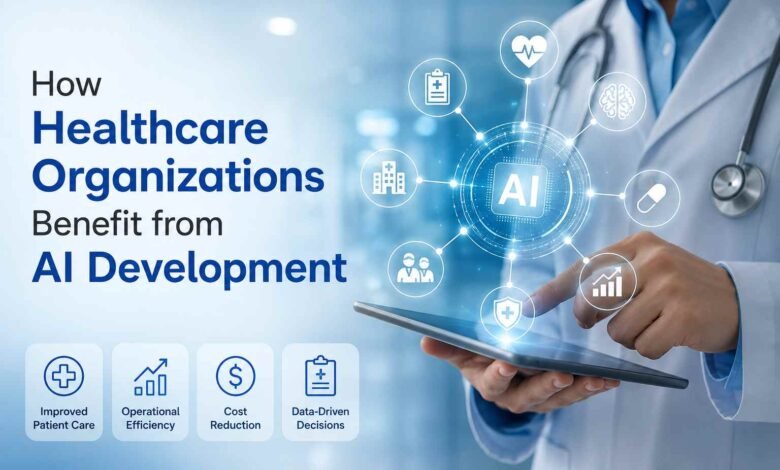
The healthcare industry is undergoing a significant digital transformation, and Artificial Intelligence (AI) is at the center of this evolution. Healthcare organizations worldwide are embracing AI development to improve patient outcomes, streamline operations, reduce costs, and deliver more personalized care. As medical systems become increasingly data-driven, AI technologies are helping healthcare providers make faster, smarter, and more accurate decisions.
From predictive analytics and medical imaging to virtual health assistants and remote patient monitoring, AI is reshaping how healthcare services are delivered. Hospitals, clinics, insurance providers, and healthcare startups are investing heavily in AI-powered solutions to address growing patient demands while maintaining high-quality care standards.
In this article, we explore how healthcare organizations benefit from AI development and why AI is becoming an essential component of modern healthcare systems.
The Growing Role of AI in Healthcare
Healthcare organizations generate vast amounts of data every day through electronic health records (EHRs), diagnostic tests, wearable devices, patient portals, and medical imaging systems. Managing and extracting valuable insights from this information can be challenging using traditional methods.
AI development enables healthcare providers to analyze complex datasets quickly and accurately, leading to improved decision-making and better patient care. Advanced machine learning algorithms can identify patterns, predict outcomes, and automate tasks that would otherwise require significant human effort.
As technology advances, AI is becoming a critical tool for healthcare organizations looking to improve efficiency and patient satisfaction.
Why Healthcare Organizations Are Investing in AI Development
The healthcare industry faces numerous challenges, including rising operational costs, workforce shortages, increasing patient expectations, and growing volumes of medical data. AI offers practical solutions to many of these challenges.
Key reasons healthcare organizations invest in AI include:
- Improving diagnostic accuracy
- Enhancing patient care
- Reducing administrative workload
- Streamlining hospital operations
- Supporting remote healthcare services
- Improving treatment planning
- Enhancing healthcare accessibility
These benefits make AI development a strategic investment for healthcare providers seeking long-term growth and sustainability.
1. Improved Diagnostic Accuracy
One of the most valuable applications of AI in healthcare is diagnostic support.
AI-powered systems can analyze medical images, laboratory reports, and patient records with remarkable speed and precision. Machine learning models trained on extensive medical datasets can identify abnormalities that may be difficult to detect during manual reviews.
AI in Medical Imaging
AI assists radiologists and healthcare professionals by analyzing:
- X-rays
- CT scans
- MRI scans
- Mammograms
- Ultrasound images
By highlighting potential issues and providing diagnostic recommendations, AI helps healthcare providers make more informed decisions and improve patient outcomes.
Early Disease Detection
AI algorithms can identify early signs of conditions such as:
- Cancer
- Heart disease
- Diabetes
- Neurological disorders
Early detection allows healthcare professionals to begin treatment sooner, increasing the likelihood of successful outcomes.
2. Enhanced Patient Care and Personalization
Modern patients expect personalized healthcare experiences tailored to their unique needs.
AI development enables healthcare organizations to analyze patient histories, treatment responses, genetic information, and lifestyle data to create customized care plans.
Benefits include:
- Personalized treatment recommendations
- Better patient engagement
- Improved medication management
- More accurate risk assessments
- Enhanced long-term health monitoring
AI helps providers deliver patient-centered care while improving overall satisfaction and treatment effectiveness.
3. Streamlined Administrative Operations
Administrative tasks consume a significant portion of healthcare resources.
Healthcare organizations often spend substantial time managing:
- Patient scheduling
- Medical billing
- Insurance claims
- Documentation
- Data entry
AI-powered automation reduces administrative burdens by handling repetitive tasks efficiently and accurately.
Benefits of Administrative Automation
- Faster appointment scheduling
- Reduced paperwork
- Improved billing accuracy
- Lower operational costs
- Increased staff productivity
This allows healthcare professionals to dedicate more time to patient care rather than administrative responsibilities.
4. Remote Patient Monitoring and Telehealth
Telemedicine has become an essential healthcare service, particularly for patients in remote locations or those requiring ongoing care.
AI enhances telehealth platforms through:
- Intelligent symptom assessment
- Automated triage systems
- Virtual healthcare assistants
- Real-time patient monitoring
Wearable devices equipped with AI capabilities can continuously monitor:
- Heart rate
- Blood pressure
- Blood glucose levels
- Sleep patterns
- Physical activity
Healthcare providers can receive alerts when unusual patterns are detected, enabling early intervention and reducing hospital admissions.
Organizations partnering with a Healthcare Mobile App Development Company in UAE are increasingly integrating AI-powered telehealth features into mobile healthcare platforms to improve patient accessibility and engagement.
5. Predictive Analytics for Better Healthcare Outcomes
Predictive analytics is one of the most transformative applications of AI in healthcare.
AI systems analyze historical and real-time patient data to forecast future health outcomes and identify potential risks.
Healthcare providers use predictive analytics to:
- Predict disease progression
- Assess patient readmission risks
- Forecast resource requirements
- Identify high-risk patients
- Improve preventive care strategies
By proactively addressing potential health issues, organizations can improve outcomes while reducing healthcare costs.
6. Faster Drug Discovery and Research
Developing new medications is a complex and time-consuming process that traditionally requires years of research and testing.
AI is accelerating drug discovery by:
- Analyzing biological datasets
- Identifying promising compounds
- Predicting treatment effectiveness
- Optimizing clinical trial designs
Pharmaceutical companies and research institutions are leveraging AI development to reduce research timelines and bring new treatments to market more efficiently.
This innovation has the potential to improve healthcare outcomes worldwide while reducing development costs.
7. Improved Hospital Resource Management
Efficient resource allocation is critical for healthcare organizations.
AI-powered systems help hospitals optimize:
- Staff scheduling
- Bed management
- Equipment utilization
- Emergency department operations
- Supply chain logistics
By analyzing operational data, AI can predict patient volumes and resource requirements, helping healthcare facilities improve service delivery and reduce bottlenecks.
This leads to better patient experiences and improved organizational efficiency.
8. AI-Powered Virtual Assistants and Chatbots
Healthcare organizations are increasingly using AI-powered virtual assistants to enhance patient communication and support.
These intelligent systems can:
- Answer patient questions
- Schedule appointments
- Send medication reminders
- Provide health education
- Guide patients through healthcare processes
AI chatbots offer 24/7 support while reducing the workload on administrative and customer service teams.
Patients benefit from faster responses and convenient access to healthcare information.
9. Enhanced Healthcare Data Security
Healthcare organizations manage highly sensitive patient information, making cybersecurity a top priority.
AI development strengthens security through:
- Threat detection
- Fraud prevention
- Access monitoring
- Anomaly detection
- Automated security responses
AI-powered cybersecurity solutions help organizations identify suspicious activities and respond to potential threats before significant damage occurs.
This is especially important as healthcare systems become increasingly digitized.
10. Better Population Health Management
Population health management focuses on improving health outcomes across entire communities.
AI enables healthcare organizations to analyze large-scale health data and identify trends affecting specific populations.
Benefits include:
- Disease outbreak prediction
- Community health monitoring
- Preventive care planning
- Risk stratification
- Public health optimization
By understanding broader health patterns, organizations can allocate resources more effectively and improve public health initiatives.
11. Reducing Healthcare Costs
Healthcare costs continue to rise globally, creating pressure on providers, insurers, and patients.
AI development helps reduce costs through:
- Process automation
- Predictive maintenance
- Efficient resource utilization
- Improved diagnostics
- Reduced medical errors
By improving operational efficiency and preventing costly complications, AI contributes to long-term financial sustainability.
Healthcare organizations can provide higher-quality services while controlling expenses.
12. Supporting Healthcare Mobile Applications
Mobile healthcare applications are becoming essential tools for patient engagement and care management.
AI-powered healthcare apps offer features such as:
- Symptom checkers
- Virtual consultations
- Medication tracking
- Health monitoring
- Appointment management
Many healthcare providers collaborate with a mobile app development company to build intelligent healthcare applications that improve accessibility and patient experiences.
AI integration enables these apps to deliver personalized insights and real-time support, making healthcare more convenient and effective.
Challenges Healthcare Organizations Must Address
While AI offers substantial benefits, successful implementation requires careful planning.
Organizations should consider:
Data Privacy and Security
Patient information must be protected through strong cybersecurity and regulatory compliance measures.
Regulatory Compliance
Healthcare AI systems must comply with industry standards and legal requirements.
Data Quality
AI performance depends on accurate, complete, and well-structured healthcare data.
Staff Training
Healthcare professionals should receive proper training to use AI-powered tools effectively.
Addressing these challenges ensures responsible and successful AI adoption.
The Future of AI in Healthcare
AI will continue to play an increasingly important role in healthcare innovation.
Future advancements may include:
- More advanced diagnostic systems
- Personalized medicine based on genetic data
- Fully integrated virtual healthcare platforms
- Enhanced robotic surgery capabilities
- Smarter healthcare automation
As AI technologies evolve, healthcare organizations that invest in intelligent solutions will be better positioned to deliver exceptional patient care and improve operational efficiency.
Conclusion
Artificial Intelligence is transforming healthcare by improving diagnostics, enhancing patient care, automating administrative processes, and enabling more informed decision-making. Healthcare organizations are investing in AI development because it provides practical solutions to some of the industry’s most pressing challenges.
From predictive analytics and remote patient monitoring to intelligent healthcare applications and cybersecurity improvements, AI is helping providers deliver better outcomes while reducing costs and increasing efficiency.
As the healthcare industry continues its digital transformation journey, organizations that embrace AI development will gain a significant advantage in delivering high-quality, patient-centered care. Whether through advanced analytics, telehealth platforms, or mobile healthcare solutions, AI is shaping the future of modern healthcare.