Scaling ROI with real-time forklift fleet management systems

Scaling a high-velocity industrial facility is a brutal test of your existing infrastructure. Most operations directors try to grow by simply throwing more capital at the problem. They lease more square footage, buy more trucks, and hire more drivers. But if you do not have a handle on your current fleet, you are just scaling your mess.
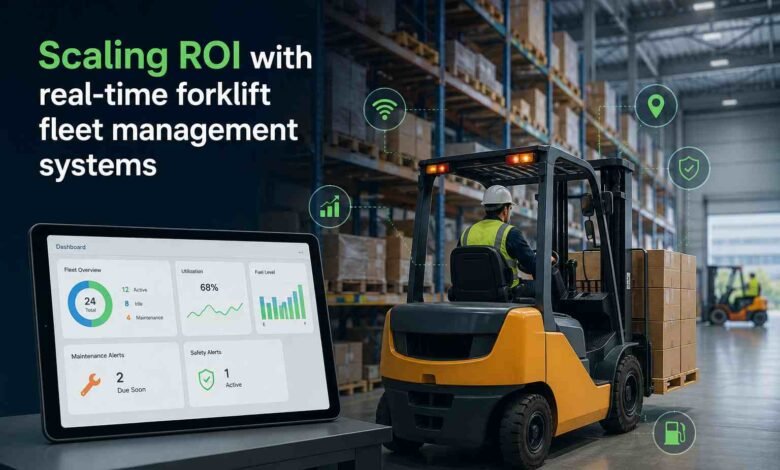
High-growth environments require absolute visibility into every moving piece of heavy machinery. You cannot manage a hundred trucks the same way you managed ten. Implementing enterprise-grade forklift fleet management is the only way to ensure your capital isn’t sitting idle in a dead zone at the end of an aisle. You need to know which trucks are actually moving product and which are just burning battery life.
Scaling without a data-driven foundation leads to immediate congestion and plummeting throughput. You end up with more machines on the concrete but less actual work getting done. This disconnect between your software and the physical floor is a primary driver of wasted margins.
ROI Loss Due to Forklift Idle Time or Downtime
When you scale, idle time becomes a massive financial sinkhole. A few minutes of downtime per truck doesn’t look like much on a single shift. But across a fleet of fifty or a hundred, it represents thousands of dollars in wasted labor every single day. Your drivers will naturally find the path of least resistance, which often includes hiding in blind spots to avoid difficult picks.
This invisible downtime looks exactly like a vehicle shortage to the front office. Plant managers see a backlog of orders and assume they need more equipment. This reactionary spending destroys your capital budget and clutters your active aisles with unnecessary trucks. You end up paying for assets you don’t need just to cover up a lack of location intelligence.
Additional Cost of Forklift Maintenance and Repairs
As your fleet grows, the frequency of unreported impacts skyrockets. In a busy plant, operators often clip a steel rack or another vehicle and keep driving to hit their quotas. These mystery repairs hit the maintenance budget hard and create a culture of zero accountability.
Without active monitoring, you have no way to pinpoint who caused the damage. You just pay the bill and hope it doesn’t happen again. This cycle of reactive maintenance kills your shift efficiency and puts your entire workforce at risk. Scaling requires a system that locks down the forklift the moment an impact occurs.
Escaping the OEM Vendor Lock-In Trap with LocaXion
One of the biggest hurdles to scaling is the massive trap of hardware lock-in. Most equipment manufacturers force you to use their proprietary tracking software. If you run a mixed fleet of different brands, you end up with fragmented data silos that don’t talk to each other.
Operations directors refuse to tolerate this lack of flexibility anymore. You need a platform that doesn’t care if the chassis is orange, red, or yellow. You need the freedom to scale with the best technology for the specific job without paying extortionate integration fees to an OEM. Open architecture ensures your infrastructure grows with your floor, not the vendor’s sales quota.
No More Stale Data, Only Real-Time Live Data with RTLS
Legacy scaling strategies rely heavily on passive portals. You wait for a truck to cross a painted line to get a location update. This is ancient history in a modern facility. It gives you a historical snapshot, not an active strategy for growth.
Shift supervisors suffer from severe dashboard fatigue because the data is always ten minutes behind the reality on the concrete. Floor staff need immediate coordinates to clear an active bottleneck at the loading dock. If your data isn’t live, it is functionally useless for real-time operational control. This is why RTLS Forklift Fleet Management Systems always rely on precise real-time data from the floor to predict and prevent any accidents.
Fleet Management Systems End Buffer Hoarding
When your fleet efficiency drops during a scaling phase, your internal supply chain starves. To compensate for the lag, department heads start hoarding inventory. They order extra pallets of raw materials just to make sure they don’t run out when a truck goes missing or a driver gets lost in the racking.
This panic hoarding ties up your capital and physically chokes your aisles. You end up suffocating your own facility with “just-in-case” stock that the building wasn’t designed to hold. Scaling your operations shouldn’t mean turning your warehouse into a stagnant storage unit. It should mean increasing the velocity of every asset you own.
Building a Digital Twin for Real Growth
True scaling requires a digital twin that mirrors the gritty physical reality of your floor. You need to see the traffic patterns, the bottlenecks, and the high-risk intersections in real time. This is the only way to optimize your routing and protect your racking from constant impacts.
You stop reacting to yesterday’s missed quotas and start engineering tomorrow’s throughput. By mapping the exact physical coordinates of your fleet, you eliminate the blind spots that destroy your ROI. You finally align your software records with the actual work happening on the concrete.
LocaXion is the world’s first pure-play RTLS & Digital Twin systems integrator. We engineer systems for your business outcomes-not just “tracking.”
That means less risk, less integration of guesswork, and faster time-to-value. And because we’re not locked to one technology stack, you get the freedom to scale with the right technology – not the technology we happen to sell.
RTLS tracks your assets. LocaXion transforms how your operation runs.
That’s the difference … and it’s not a small one.
Stop scaling your inefficiencies and wasted margins and engineer your outcomes today at https://locaxion.com/
For more insights, read our article on: What is Warehouse Fleet Management and Why It Matters?