
The laboratory information system market has moved faster in the past two years than it did in the prior ten. Pressure on turnaround times, the rise of digital pathology, regulatory shifts on reimbursement, and a generational change in the pathology workforce have all pushed labs to rethink what they want from their core software. Vendors have responded, and the result is a noticeably different conversation than the one labs were having even a few years ago.
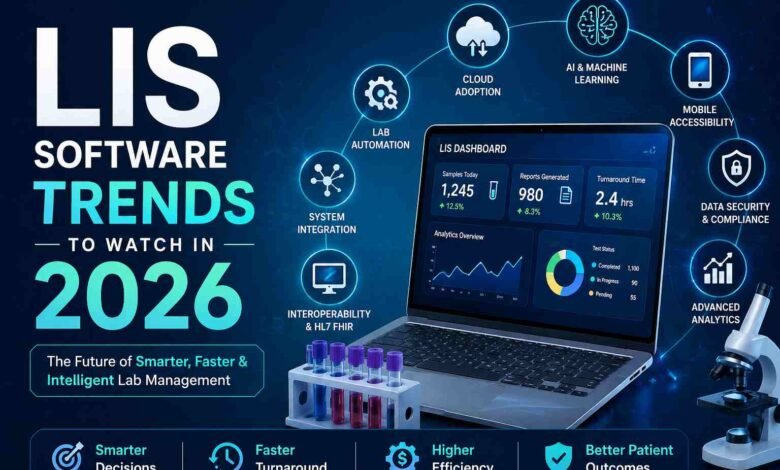
Here are the trends shaping LIS evaluations and roadmaps in 2026.
The Shift From Cloud-Hosted to True SaaS
For a long time, “cloud” in the LIS market meant a vendor took an existing on-premise product and ran it on AWS or Azure for the customer. That model solved a few problems, especially around server maintenance, but it left a lot of the old constraints in place. Each customer was on their own version. Upgrades still required project plans and downtime. New features rolled out unevenly across the customer base.
True SaaS is structurally different. It means a multi-tenant architecture, a single shared codebase, and a release cadence measured in weeks rather than years. Labs choosing platforms in 2026 are increasingly asking pointed questions about which model a vendor actually offers, because the operational difference is significant:
- New features arrive automatically rather than through paid upgrade projects
- Security patches and compliance updates apply to everyone at once
- Support staff are working with one version of the product rather than dozens
- Integration partners can build against a known surface area rather than a per-customer mess
This is the single biggest architectural shift happening in the LIS market right now, and it is reshaping which vendors are positioned for the next decade.
AI Inside the Workflow, Not Alongside It
AI in pathology has graduated from research projects to commercial products in specific use cases. Algorithms that flag suspicious areas in prostate biopsies, quantify HER2 in breast cancer, or pre-screen cytology specimens are in routine use at a growing number of labs. Foundation models trained on H&E slides are starting to infer biomarkers without dedicated stains.
The interesting part for LIS vendors is what labs are demanding from these tools. Recent industry research has been blunt: integration is not optional. Pathologists will not log into a separate system, run an algorithm there, and copy results back into their case. AI has to function as a native component of the diagnostic workflow, with outputs captured as part of the official record and routed alongside everything else the pathologist is reviewing.
This puts the LIS in a central role it did not used to occupy. The platform supplies case context to the AI tool, captures the output, governs which findings require human review, and ensures the audit trail is complete. Vendors that have built clean integration patterns for AI are finding themselves in a stronger position with new customers than they were eighteen months ago.
Digital Pathology Crossing Into Routine Operations
Digital pathology has been the trend that was always almost here. In 2026 it is finally becoming routine in a meaningful share of labs, even though overall US adoption is still in the early innings.
Several forces are pushing it forward at once:
- FDA clearances for primary diagnosis have removed the regulatory uncertainty that held some labs back
- Pathologists trained on digital tools during residency expect them in practice and are factoring them into job decisions
- Subspecialty workflows benefit substantially from digital sign-out, especially in groups serving multiple sites
- Whole slide images are increasingly seen as reusable assets for research, AI training, and clinical trials, not just documentation
Most labs going digital are running hybrid workflows for now, with glass slides still preferred for certain complex cases. The LIS sits at the center of that hybrid, keeping cases coherent regardless of whether a given slide was read on a microscope or a monitor.
The LIS as the Hub of a Larger Data Ecosystem
Pathology is generating more data than ever, and that data is increasingly valuable beyond the immediate diagnosis. Whole slide images get reused to discover predictive biomarkers, train AI models, and support clinical trial enrollment. Synoptic reports feed cancer registries and quality programs. Outcomes data flows back into the lab to validate algorithms and refine workflows.
All of this depends on the LIS being able to act as a hub rather than an island. The trend in 2026 is toward platforms that:
- Use open APIs and standards like DICOM for pathology images, allowing vendor-neutral storage and analytics
- Connect cleanly to image management systems, AI vendors, and digital pathology viewers without locking labs into a single ecosystem
- Provide structured data exports and warehouse connections that research and informatics teams can actually use
- Support de-identification and governance workflows for secondary data use
Labs that picked monolithic, closed systems years ago are finding those decisions harder to live with as the data ecosystem expands around them.
Operations and Revenue Cycle Converging
A second architectural trend has been building quietly: the convergence of LIS and revenue cycle management on the same platform. Some vendors have made this a deliberate strategy, embedding billing logic into the lab workflow so that demographic gaps, eligibility issues, and coding errors get caught upstream rather than surfaced as denials weeks later.
The 2026 reimbursement environment is making this more relevant. Medicare’s pathology fee schedule shifts modestly this year, but the larger story is the set of digital pathology add-on codes that labs need to capture accurately in order to demonstrate utilization. CMS is watching that data closely as it considers future reimbursement policy. Labs whose LIS automates the identification and coding of digitally-read cases are positioned much better than labs trying to do it manually after the fact.
Workforce Expectations Shaping Selection
The hiring market for pathologists has tightened, and software is part of that story. Pathologists coming out of training expect modern tools, including digital pathology, intuitive worklists, and the ability to work from anywhere with a secure connection. Groups still running twenty-year-old client-server LIS installations are finding it harder to recruit, and labs evaluating new platforms in 2026 are increasingly factoring this in.
Remote sign-out in particular has shifted from a pandemic-era accommodation to a permanent expectation. The LIS has to support it cleanly, including subspecialty case routing across multiple sites, secure access from outside the lab network, and consistent performance regardless of location.
Cybersecurity Becoming a First-Class Requirement
Healthcare has been one of the most heavily targeted sectors for cyberattacks, and labs have not been spared. Ransomware events that take an LIS offline for days are operationally catastrophic, and the regulatory consequences of a breach involving patient data are serious. Lab directors and CIOs in 2026 are scrutinizing LIS security postures in ways they were not used to.
The questions that come up most often in evaluations include SOC 2 certification, encryption practices, identity management, breach notification procedures, and disaster recovery time objectives. Vendors that treat security as a feature to demonstrate, with audits and documentation to back it up, have a meaningful advantage over those who treat it as a checkbox.
What This Adds Up To
Labs making LIS decisions in 2026 are doing so against a backdrop that did not exist a few years ago. SaaS economics, native AI integration, digital pathology going mainstream, evolving reimbursement, a younger workforce with different expectations, and rising security stakes are all reshaping what a competitive system looks like. The vendors that have anticipated these shifts are pulling away from the ones that have not, and the gap is likely to widen further over the next two years.
For labs in evaluation cycles right now, the practical advice is to look past the feature checklists and ask harder questions about architecture, integration patterns, and roadmap. The technology stack a lab picks this year will shape its operations well into the next decade.
For more insights, read our article on: Top Patient Engagement Strategies Using AI Chatbots in 2026