Modern Material Handling Equipment: A Practical Guide for Efficient Industrial Operations

In today’s fast-paced industrial environment, efficiency and precision are critical to staying competitive. One of the key elements driving productivity in warehouses, manufacturing plants, and logistics hubs is material handling equipment. From moving raw materials to storing finished goods, the right systems can significantly reduce labor costs, minimize damage, and improve operational safety.
As global supply chains become more complex, businesses are increasingly investing in advanced handling solutions that improve workflow automation and reduce downtime. However, many organizations still struggle with selecting the right equipment that aligns with their operational needs.
This guide explores the importance of modern material handling equipment, its benefits, and how industries can leverage it to streamline processes and boost productivity. Whether you are upgrading your facility or starting from scratch, understanding these systems is essential for long-term success.
Understanding Material Handling Equipment in Modern Industry
Material handling equipment plays a vital role in moving, controlling, protecting, and storing materials throughout manufacturing, warehousing, distribution, and disposal processes. It includes everything from conveyors and forklifts to automated storage systems and robotic transport solutions.
Modern industries rely heavily on automation and efficiency, and this is where advanced systems make a significant difference. For businesses looking to explore reliable industrial solutions, platforms like at XFD provide a wide range of equipment designed to meet diverse operational needs.
The evolution of material handling equipment has shifted from manual labor to semi-automated and fully automated systems. This transformation helps reduce human error and increases throughput. Companies today prioritize systems that not only move goods but also integrate with warehouse management software for real-time tracking and optimization.
As supply chain demands grow, investing in advanced handling systems is no longer optional—it is a strategic necessity for maintaining competitiveness in the global market.
Key Types of Material Handling Equipment Used Today
Material handling equipment can be broadly categorized into several types, each serving a specific purpose within industrial operations. These include storage equipment, engineered systems, industrial trucks, and bulk handling machinery.
Storage systems such as racks, shelves, and automated storage and retrieval systems (AS/RS) are essential for maximizing warehouse space. Industrial trucks like forklifts and pallet jacks are used for short-distance movement of goods. Conveyor systems streamline repetitive transport tasks, reducing manual effort and improving speed.
Engineered systems, including robotic arms and automated guided vehicles (AGVs), are becoming increasingly popular in smart factories. These systems reduce dependency on human labor while improving precision and consistency.
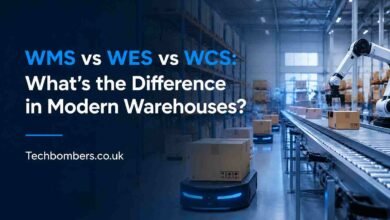
Image: Automated warehouse conveyor system with robotic arms
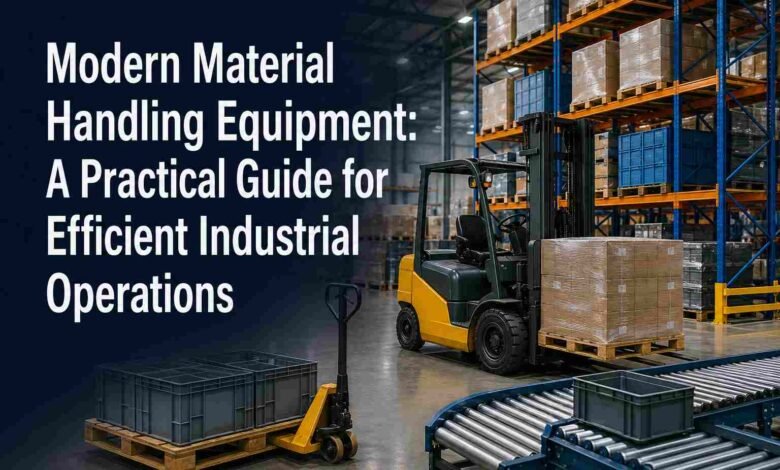
Image: Forklift operating in a modern industrial warehouse
Each of these systems plays a crucial role in improving operational efficiency. Businesses that strategically combine multiple types of equipment often achieve higher productivity and lower operational costs. The key is selecting equipment that aligns with workflow requirements and scalability goals.
Benefits of Investing in Advanced Material Handling Equipment
Investing in modern material handling equipment brings several long-term advantages to industrial operations. One of the most significant benefits is increased efficiency. Automated systems reduce manual handling time, allowing employees to focus on higher-value tasks.
Safety is another major advantage. Proper handling systems reduce workplace injuries caused by lifting heavy loads or repetitive strain. This leads to a safer work environment and fewer operational disruptions.
Additionally, modern equipment enhances accuracy in inventory management. With integrated tracking systems, businesses can monitor goods in real time, reducing errors and improving order fulfillment rates.
Cost savings also play a major role. Although initial investment may be high, long-term operational costs are significantly reduced due to lower labor requirements and improved productivity.
For companies aiming to improve material handling efficiency Improve your material handling efficiency, adopting advanced systems is a strategic move that directly impacts profitability and customer satisfaction.
Industry Trends Shaping the Future of Material Handling Equipment
The material handling industry is rapidly evolving, driven by automation, artificial intelligence, and smart logistics systems. One of the most prominent trends is the adoption of Industry 4.0 technologies, which integrate IoT sensors and real-time data analytics into warehouse operations.
Robotics is also transforming the industry. Automated robots can now perform complex tasks such as sorting, picking, and packing with high accuracy. This reduces dependency on manual labor and increases operational speed.
Sustainability is another growing trend. Companies are investing in energy-efficient equipment and eco-friendly warehouse solutions to reduce their environmental footprint.
Predictive maintenance is also gaining popularity. By using sensor data, companies can identify potential equipment failures before they occur, minimizing downtime and repair costs.
These innovations highlight how material handling equipment is no longer just about transportation—it is about creating intelligent, connected, and efficient industrial ecosystems.
Choosing the Right Material Handling Equipment for Your Business
Selecting the right material handling equipment requires careful planning and analysis. Businesses must first evaluate their operational needs, including the type of materials handled, warehouse size, and workflow complexity.
Scalability is another important factor. Equipment should be able to grow with the business to avoid frequent replacements or upgrades. Integration capabilities with existing systems should also be considered, especially for companies using warehouse management software.
Reliability and maintenance requirements play a key role as well. Choosing durable equipment reduces downtime and ensures long-term performance.
Partnering with experienced suppliers can also help businesses make informed decisions. Manufacturers like XFD Machinery offer a wide range of industrial solutions designed to support different operational environments and industry requirements.
Conclusion
Material handling equipment is the backbone of modern industrial operations, enabling businesses to move goods efficiently, safely, and cost-effectively. From basic storage systems to advanced robotic solutions, these technologies continue to reshape how industries operate.
As automation and digital transformation accelerate, companies that invest in modern handling systems will gain a significant competitive advantage. The key lies in choosing the right equipment that aligns with operational goals and future growth plans.
To explore advanced industrial solutions and upgrade your operations, take the next step today. Investing in the right material handling equipment is not just an operational decision—it is a long-term strategy for success.
For more insights, read our article on: Warehouse Robotics Trends & Innovations in 2026