
The construction industry has long been known for its complexity and inefficiency. Projects often suffer from delays, cost overruns, miscommunication, and safety risks. Despite advancements in tools and materials, many processes still rely heavily on manual coordination and fragmented information.
In recent years, however, a shift has begun. Construction is moving toward a more data-driven approach, where decisions are based on real-time insights rather than assumptions. One of the most important technologies driving this shift is the digital twin.
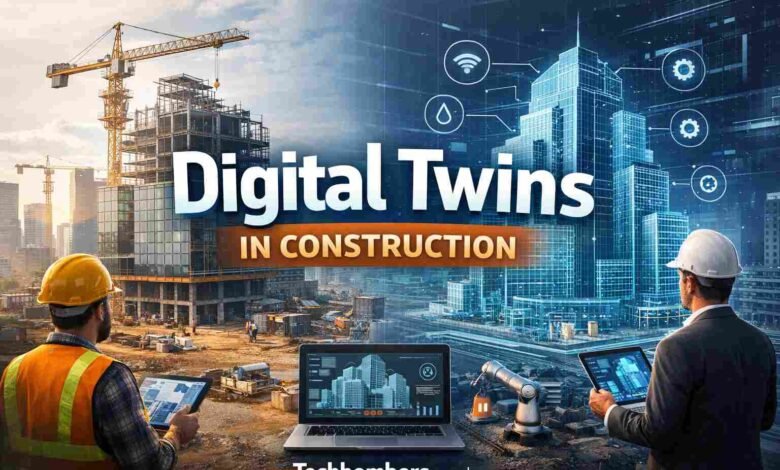
A digital twin allows construction professionals to understand, monitor, and manage projects in a way that was not possible before. It connects the physical project with a continuously updated digital model, offering a deeper level of control and visibility.
What Is a Digital Twin in Construction?
A digital twin in construction is a digital representation of a physical asset that is continuously updated using real-world data. Unlike traditional models, it is not limited to visualization. Instead, it reflects how a building or infrastructure behaves in real conditions.
This model is connected to the physical asset through sensors, devices, and data systems. As conditions change on-site, the digital twin updates accordingly. This allows engineers, project managers, and stakeholders to observe the current state of the project without being physically present.
Key Characteristics of a Digital Twin
- It is connected to real-time data sources
- It updates continuously instead of remaining static
- It supports analysis, simulation, and prediction
- It exists throughout the entire lifecycle of a project
These characteristics make digital twins far more useful than traditional design tools.
You Might Also Check: What Is a Digital Twin Warehouse?
Digital Twin vs BIM: Understanding the Difference
Although digital twins are often associated with Building Information Modeling (BIM), they serve different purposes.
BIM focuses on creating detailed digital models during the design and planning stages. It helps teams visualize the structure, coordinate designs, and avoid clashes before construction begins. However, BIM models are usually static unless manually updated.
A digital twin builds on BIM by introducing real-time connectivity. Once construction begins, the digital twin continues to evolve alongside the physical asset. It uses live data to reflect actual conditions rather than planned assumptions.
Comparison at a Glance
| Aspect | BIM | Digital Twin |
| Purpose | Design & planning | Monitoring & management |
| Data Type | Static or periodic | Real-time continuous |
| Lifecycle | Limited | Full lifecycle |
| Function | Visualization | Analysis & prediction |
This distinction is important because it shows that digital twins are not replacing BIM but extending its capabilities.
How Digital Twin Technology Works in Practice
Digital twins operate through a continuous cycle of data collection, processing, and decision-making. Each part of this system plays a specific role in ensuring accurate and useful insights.
Data Collection from the Physical Environment
The process begins with gathering data from the construction site or building. This is done using various technologies such as sensors, IoT devices, drones, and scanning tools. These tools capture information related to structural performance, environmental conditions, and operational activity.
Data Transmission and Integration
Once collected, the data is transmitted to a centralized platform, often hosted in the cloud. This platform integrates data from multiple sources and ensures it is organized for further analysis. Reliable connectivity is essential at this stage to maintain accuracy and consistency.
Real-Time Model Updating
The digital model receives the incoming data and updates itself accordingly. If there is any change in the physical asset, such as movement, temperature variation, or progress updates, it is reflected in the digital twin almost immediately.
Analysis and Interpretation
Advanced software tools analyze the updated data to identify patterns and anomalies. These tools can detect inefficiencies, highlight risks, and predict future performance based on current trends.
Decision-Making and Action
The final step involves using these insights to make informed decisions. Project teams can adjust plans, resolve issues early, and optimize performance based on accurate information.
You Might Also Check: How Construction Tech Impacts Equipment Management
Applications of Digital Twins Across the Construction Lifecycle
Digital twins provide value at every stage of a construction project. Their ability to integrate data and provide insights makes them useful beyond just one phase.
Pre-Construction Phase: Improving Design Accuracy
During the planning stage, digital twins allow teams to simulate different scenarios and evaluate how a structure will perform. Engineers can test environmental conditions, structural loads, and design alternatives before construction begins.
This reduces uncertainty and helps identify potential issues early, which ultimately leads to better design decisions.
Construction Phase: Enhancing Site Management
During construction, digital twins serve as a real-time monitoring tool. Project managers can track progress, compare planned schedules with actual performance, and identify delays as they occur.
This level of visibility improves coordination between teams and allows faster responses to problems. It also helps maintain quality standards by ensuring that work aligns with design specifications.
Post-Construction Phase: Supporting Operations and Maintenance
After the project is completed, the digital twin continues to provide value. Facility managers can use it to monitor building systems, track performance, and plan maintenance activities.
For example, if a system shows signs of wear or inefficiency, the digital twin can detect it early and suggest corrective actions. This reduces downtime and extends the lifespan of the asset.
You Might Also Check: Top 8 Construction Facility Management Softwares in 2026
Key Benefits of Digital Twins in Construction
The adoption of digital twins brings several practical benefits that directly address industry challenges.
Improved Project Efficiency
With real-time monitoring and accurate data, teams can make quicker decisions and avoid unnecessary delays. This leads to smoother project execution and better time management.
Better Cost Control
By identifying issues early and reducing rework, digital twins help control project costs. Resources can be allocated more effectively, and waste is minimized.
Enhanced Safety Management
Digital twins can monitor site conditions and identify potential hazards. This allows teams to take preventive measures and reduce the risk of accidents.
Stronger Collaboration
All stakeholders have access to the same updated information, which improves communication and coordination. This reduces misunderstandings and ensures that everyone is aligned.
Long-Term Asset Performance
Digital twins continue to support the building after completion. They help maintain performance, improve energy efficiency, and reduce operational costs over time.
Real-World Examples of Digital Twin Implementation
Digital twins are already being used in major projects around the world.
In Singapore, a digital twin of the city has been developed to support urban planning and infrastructure management. This allows planners to simulate different scenarios and make informed decisions.
Large infrastructure projects, such as railways and highways, use digital twins to manage complex systems and monitor construction progress. These projects benefit from improved coordination and reduced risk.
Commercial buildings also use digital twins for energy management and maintenance planning. This helps reduce costs and improve building performance.
Challenges in Adopting Digital Twin Technology
Despite its advantages, digital twin technology comes with certain challenges that organizations must address.
High Initial Investment
Setting up a digital twin requires investment in sensors, software, and infrastructure. This can be a barrier for smaller companies.
Data Complexity
Managing large volumes of data can be challenging. Organizations need proper systems and expertise to handle and interpret this data effectively.
Integration Issues
Connecting different tools and systems into a single platform is not always straightforward. This can create technical difficulties during implementation.
Skill Requirements
Digital twins require skilled professionals who understand both construction and data systems. Training and adaptation are necessary for successful use.
Security Risks
As digital twins rely on connected systems, there is a need to protect data from potential threats.
Future of Digital Twins in Construction
The future of digital twins is closely linked to advancements in technology. As artificial intelligence improves, digital twins will become more predictive and capable of suggesting solutions rather than just identifying problems.
Improved connectivity, including faster networks, will make real-time data transfer more reliable. This will enhance the accuracy and usefulness of digital twins.
In the long term, digital twins will expand beyond individual projects to entire cities. This will support better planning, sustainability, and resource management at a larger scale.
Who Should Pay Attention to Digital Twins?
Digital twins are relevant for a wide range of professionals in the construction industry.
- Contractors can use them to manage projects more efficiently
- Project managers can rely on real-time data for decision-making
- Engineers can improve design and performance
- Developers can increase asset value
- Facility managers can optimize operations
Understanding this technology is becoming increasingly important for anyone involved in construction.
Conclusion: A Necessary Step Toward Smarter Construction
Digital twins are changing how construction projects are planned, executed, and managed. They provide a clear connection between the physical and digital worlds, allowing for better understanding and control.
This technology does not remove challenges completely, but it provides the tools needed to handle them more effectively. As the industry continues to evolve, digital twins will play a central role in improving efficiency, reducing risk, and delivering better outcomes.
Construction is no longer just about building structures. It is about managing them intelligently from the very beginning and throughout their entire lifecycle.
For more insights, read our article on: Top Construction Robotics Trends to Watch in 2026