
The Leaking Sink Cabinet That Can Put Hidden Timber at Risk Beneath Stone Benchtops

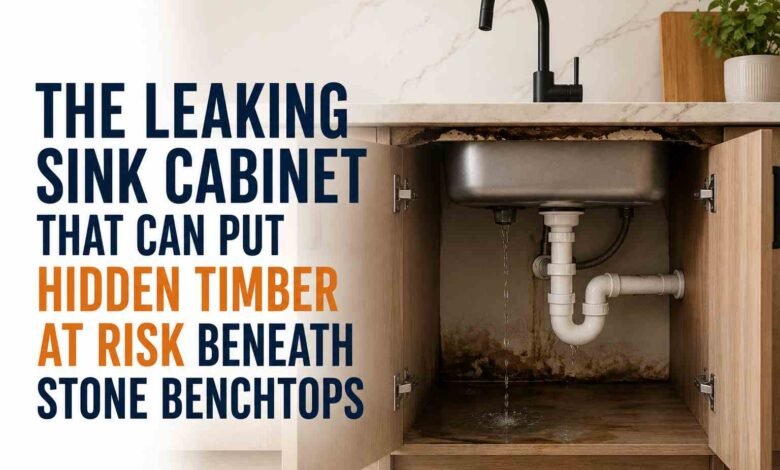
A small leak under the kitchen sink rarely feels urgent at first. You wipe up a damp patch, notice a faint musty smell, or spot swelling around the cabinet base and assume it can wait another week. The problem is that slow leaks beneath sinks often stay hidden for months, quietly damaging the timber structure supporting your kitchen. When heavy stone benchtops are involved, that hidden damage can become far more serious than many homeowners realise.
Under-sink cabinets are one of the most common areas for concealed moisture problems because plumbing connections, condensation, and poor ventilation all combine in a tight enclosed space. Even minor leaks can gradually weaken timber panels, cabinet framing, and support structures beneath the surface.
Why Sink Cabinets Are Vulnerable to Hidden Damage
Most kitchen sink cabinets contain timber, particleboard, plywood, or wood-based materials hidden beneath laminates and finishes. While these surfaces may look durable externally, the material underneath is highly vulnerable to prolonged moisture exposure.
Leaks often develop slowly around drain fittings, tap bases, supply lines, or sink seals. Because the water drips gradually, it may never create an obvious puddle. Instead, moisture builds quietly inside the cabinet structure.
In many Australian homes, clutter stored under the sink also hides early warning signs. Cleaning products, bins, and storage containers block airflow and prevent homeowners from noticing dampness until visible swelling or odours appear. By the time visible damage appears, the timber underneath may already be deteriorating.
Why Stone Benchtops Increase the Risk
Heavy stone benchtops rely on the cabinetry beneath them for structural support. Even engineered stone or granite installations depend heavily on the integrity of cabinet frames and timber backing.
When water damage weakens the cabinet beneath the sink, the risk extends beyond cosmetic swelling. Timber can soften, warp, or crumble over time, reducing its ability to support the weight above.
This becomes particularly concerning around sink cut-outs, where cabinetry already carries additional structural stress. Prolonged moisture exposure can compromise support areas beneath the benchtop, increasing the risk of movement, cracking, or instability.
Moisture and the Risk of Hidden Termite Activity
Persistent moisture beneath sink cabinets can also attract termites. Termites thrive in damp, concealed environments where timber remains consistently moist. Kitchens and bathroom cabinetry provide ideal conditions because plumbing, humidity, and enclosed timber structures create protected feeding zones.
This is particularly dangerous because termite activity often remains hidden behind cabinetry, inside wall cavities, or beneath flooring. Softened timber damaged by moisture becomes easier for termites to penetrate and consume.
In some cases, homeowners initially assume swelling or crumbling timber is purely water damage, only to later discover termite activity has contributed to the deterioration. Where termite activity is suspected, professional inspection and appropriate termite treatment become essential to prevent further structural damage.
Common Signs Something Is Wrong
The first signs are usually subtle rather than dramatic. You may notice a musty smell when opening the cabinet doors, swelling around the cabinet base, bubbling laminate, discoloured timber, or soft sections beneath stored items. Cabinet floors can feel spongy or uneven under pressure.
In more advanced cases, hinges loosen, cabinet doors stop aligning properly, or visible mould appears around corners and pipe penetrations. Sometimes the only clue is recurring moisture despite repeated cleaning.
These signs should never be ignored because water damage rarely stays confined to one small area. Moisture can spread into adjacent cabinetry, flooring, wall framing, and support structures over time.
Why Delaying Repairs Makes the Problem Worse
One of the biggest mistakes homeowners make is focusing only on visible damage while ignoring the source of the moisture. Replacing swollen panels or covering damaged timber without fixing the leak simply traps moisture inside the structure. Over time, the damage continues spreading beneath the surface.
Small leaks are particularly deceptive because they feel manageable. A slow drip may not seem urgent, but months of repeated exposure can destroy cabinet materials completely. Once timber begins deteriorating, repairs become more expensive because sections of cabinetry, benchtop supports, flooring, or wall materials may eventually require replacement.
Early intervention is almost always cheaper than waiting.
What Homeowners Should Do First
The first priority is identifying and stopping the source of the leak. Check supply lines, drain connections, sink seals, and tap fittings carefully. In some cases, condensation from uninsulated pipes may also contribute to ongoing dampness.
After fixing the leak, remove stored items and allow the cabinet to dry fully. Inspect the timber closely for swelling, softness, mould, or signs of pest activity. If the timber feels soft, crumbles easily, or shows evidence of termites, professional assessment is strongly recommended.
Structural deterioration beneath heavy benchtops should never be treated as a purely cosmetic issue.
Preventing Future Damage
Preventative maintenance makes a significant difference in kitchens. Regularly checking beneath sinks for moisture, repairing small leaks early, improving airflow inside cabinets, and avoiding cluttered storage all help reduce long-term risk.
Moisture-resistant cabinet liners and leak detectors can also provide additional protection. Most importantly, homeowners should treat even minor dampness seriously.
Water damage beneath sink cabinets rarely resolves itself. When ignored, a slow leak can quietly compromise the hidden timber structure supporting your kitchen for months before obvious signs appear.
FAQs
1. Can a small sink leak really damage cabinetry beneath stone benchtops?
Yes. Even slow leaks can weaken timber supports over time, especially beneath heavy stone surfaces.
2. Why are under-sink cabinets so vulnerable to water damage?
They contain multiple plumbing connections, limited airflow, and timber materials that absorb moisture easily.
3. Can moisture under the sink attract termites?
Yes. Damp timber creates ideal conditions for termite activity and hidden infestations.
4. What are the early signs of hidden cabinet water damage?
Common signs include swelling, musty smells, soft timber, bubbling laminate, and mould growth.
5. Is replacing damaged cabinet panels enough?
No. The leak source must be fixed first, or moisture damage will continue spreading internally.
6. When should I seek professional help?
Professional assessment is recommended if timber feels soft, mould appears, structural supports are affected, or termite activity is suspected.