How are AI Dash Cams Integrated into Construction Technology Systems?

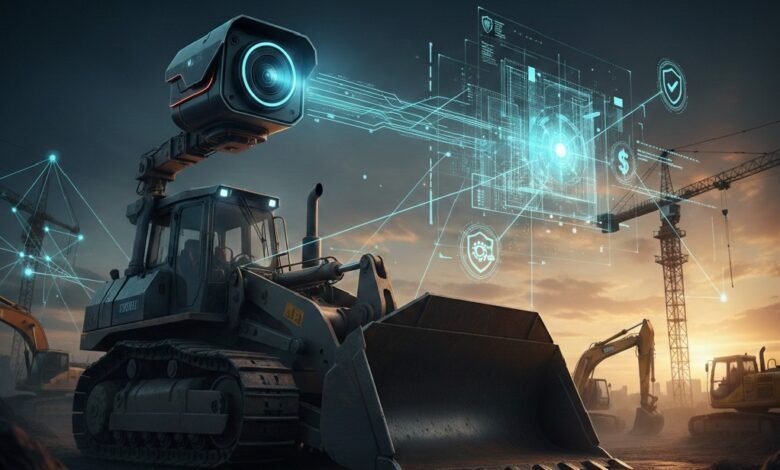
AI dash cams stop accidents before they happen by connecting directly to your site’s digital ecosystem. They are no longer just recording devices; they are the “eyes” of your project that sync with your management software in real-time.
For contractors in 2026, this integration is the fastest way to protect your profit and your crew.
I’ve seen too many site managers treat dash cams like a simple camera. In reality, if it’s not integrated, you’re just documenting a disaster after it happens, not preventing it.
The Architecture of Integration: Sensor Fusion & Edge AI
Unlike basic cameras, integrated systems use Sensor Fusion. This technology merges video data with a vehicle’s CAN-bus signals (internal computer data) and G-sensors.
- Edge Processing (The “Eyes”): The integration starts at the “Edge.” AI processors inside the camera analyze 100% of the footage locally. This allows for Zero-Lag Voice Coaching, alerting drivers to fatigue or proximity hazards in milliseconds.
- Data Fusion (The “Brain”): The raw video is then “fused” with GPS coordinates and telematics. This creates a complete story—not just that a truck braked hard, but why it happened (e.g., a worker entered a blind spot).
Strategic Integration Points: BIM and Telematics
The true power of AI dash cams lies in their ability to “talk” to existing construction software suites like Procore, Autodesk BIM 360, or Samsara.
BIM (Building Information Modeling) Sync
Advanced systems are now integrating video feeds directly into BIM models. As vehicles move around the site, the AI dash cam captures progress data, comparing the live site against 3D blueprints. This ensures inventory accuracy and project timeline precision.
Telematics & API Connectivity
Through open APIs, dash cam alerts automatically trigger actions in your management software:
- Automatic Incident Tagging: A “near-miss” video clip is automatically attached to a safety report.
- Geofencing Integration: Systems trigger a “Red Alert” if a machine enters a hazardous zone without authorization.
Why Construction Telematics Technology is Changing
The “New” in construction telematics technology is the move toward real-time visual validation. By combining visual AI with engine data, managers can now see exactly what caused a mechanical alert.
Watch: Real-Time AI Integration in Action
The Business Case: ROI and Insurance Savings
For US and UK contractors, the most compelling reason for integration is the financial impact.
| Metric | Standalone Camera | Integrated AI System |
| Insurance Premiums | Minimal Change | 21% – 30% Reduction |
| Legal Protection | Basic Video | “Nuclear Verdict” Defense (HD + Data Proof) |
| Operational Costs | High (Manual Review) | Low (AI-Filtered Alerts) |
| Maintenance | Reactive (After break) | Predictive (Based on behavior data) |
Navigating the 2026 Vendor Landscape
Choosing the right integration path depends on your existing “Tech Stack.”
- All-in-One Suites (e.g., Samsara, Motive): Best for fleets wanting a “ready-to-use” system where the dash cam, GPS, and ELD are natively connected.
- Agnostic Platforms (e.g., Spot AI, Hubble): Best for contractors who already have cameras but need them to “talk” to project management software like Procore.
- Specialized AI (e.g., viAct): Focused on high-risk compliance, such as detecting if workers are wearing proper PPE (Hard hats, Vests).
Overcoming Challenges: Culture & Privacy
Integration is not just technical; it’s human. To avoid “Big Brother” resistance:
- Safety Scorecards: Use dash cam data to reward the safest drivers, turning monitoring into an Incentive Program.
- Transparent Policies: Clearly define that data is used for Coaching, not Catching.
Expert Verdict: The Connected Site
Integrating AI dash cams into your construction technology systems is the most significant ROI-driver in 2026 because it moves your operation from documenting mistakes to preventing disasters. It is the final piece of the puzzle that connects your field workers, your equipment, and your office into one intelligent network.
I believe that true site efficiency only happens when your data flows freely. If your dash cam catches a safety risk, don’t just record it—use that information to trigger an RFI or update your dispatch software to avoid future delays. When your hardware and software talk to each other, your project stays on schedule and your profit stays protected.
To get the full picture of how tracking technology is changing the field, make sure to read our guide on the role of GPS in modern construction to see how satellite data and AI work together on the jobsite
FAQs
How do AI dash cams work in construction vehicles?
AI dash cams use advanced computer vision algorithms to analyze video footage in real-time. Unlike standard cameras, they detect specific hazards like workers in blind spots, distracted driving, or near-misses. They then sync this data via APIs to a central construction management platform for instant review.
Can AI dash cams integrate with my existing construction software (e.g., Procore or Autodesk)?
Yes, most enterprise-grade AI dash cams are “API-agnostic.” This means they can be programmed to send incident reports, safety scores, and video clips directly into your existing project management tools, creating a unified safety dashboard.
What is the typical ROI (Return on Investment) for integrated AI dash cams?
On average, construction firms see a return within 13 to 18 months. This is achieved through:
25% – 30% reduction in insurance premiums.
60% fewer collisions on-site.
Significant savings in legal fees by exonerating drivers with HD video evidence.
Do AI dash cams require a monthly subscription?
Yes. Since these cameras provide “connected” features like cloud storage, real-time alerts, and LTE connectivity, most vendors (like Samsara or Motive) charge a monthly service fee. This covers the data transmission and the AI software updates.
Is worker privacy affected by AI dash cams?
This is a common concern. Most modern systems are designed for “Coaching, not Catching.” Features like Privacy Lens Caps and selective recording (only uploading event-based clips) help balance site safety with worker privacy. Transparent company policies are key to successful implementation.