Commercial Cabinet Sandblaster: Controlled Abrasive Cleaning for Parts Restoration

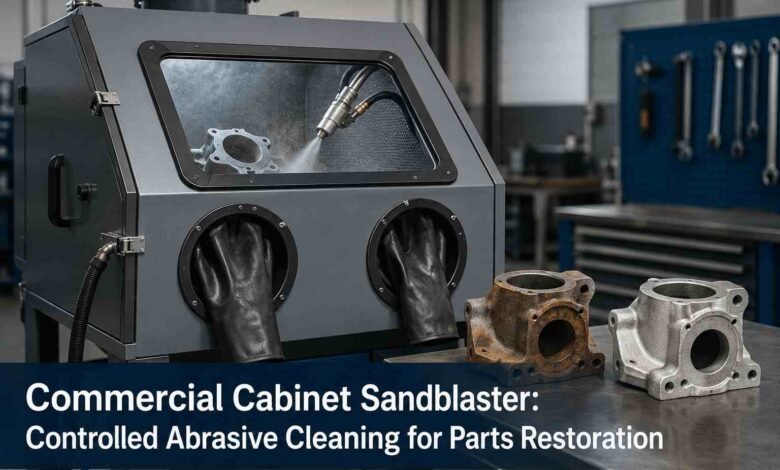
Across American automotive repair shops, manufacturing facilities, and restoration businesses, removing rust, paint, and corrosion from metal parts is routine work. Open blasting creates hazardous dust clouds and requires extensive cleanup. A commercial cabinet sandblaster contains abrasive media and dust within a sealed enclosure, protecting workers and the environment. American mechanics, restorers, and industrial maintenance crews use these cabinets for efficient, safe surface preparation.
Common Applications and Blasting Method
Cabinet sandblasters are commonly used for:
· Removing rust from automotive components
· Stripping paint from machinery parts
· Cleaning corrosion from industrial equipment
· Surface preparation before coating or welding
· Restoration of antique tools and parts
Containment and Worker Safety
Open blasting with sand or other media creates airborne dust that can cause respiratory illness. Silica sand, once commonly used, is now recognized as a health hazard. Cabinet blasting contains the abrasive and the material being removed, preventing dust from reaching the operator’s breathing zone.
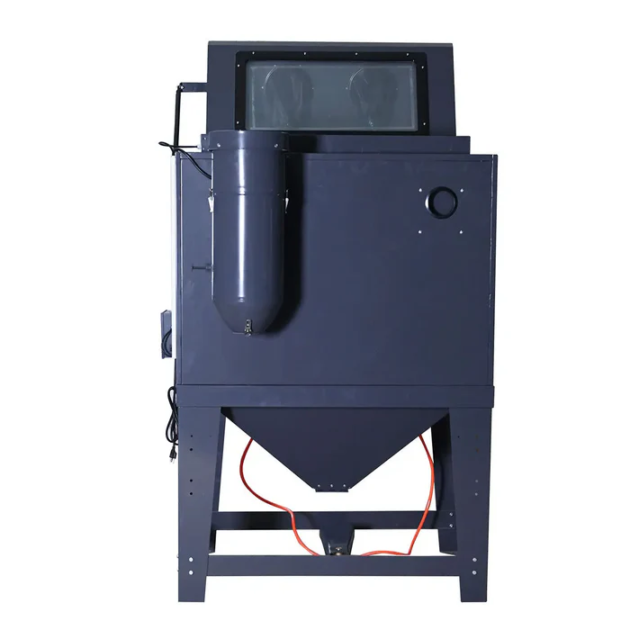
The sealed rubber gloves protect hands from abrasive impact and from contact with sharp parts. The large 22 inch by 16 inch viewing window with replaceable protective underlay provides clear visibility while protecting the glass from abrasive wear. Three LED lights illuminate the work area, improving visibility for detailed work.
Efficiency and Media Management
The 265 gallon tank holds a large volume of abrasive media, reducing the frequency of refills. The vacuum filtration system removes dust from the cabinet, maintaining visibility and preventing dust from escaping when doors are opened. The foot pedal operation allows the operator to control blasting without moving hands from the workpiece, improving productivity.
Key performance specifications include:
· Working pressure range of 90 to 125 pounds per square inch
· Air consumption of 5 to 24 cubic feet per minute
· Compatibility with various abrasive materials
· Multiple nozzle sizes included
· 265 gallon tank capacity for extended operation
Safety Practices and Operational Guidelines
Safe sandblaster operation requires several key practices:
· Wear appropriate respiratory protection when opening cabinet
· Inspect gloves for holes before each use
· Check window underlay for wear and replace when needed
· Empty dust collector regularly to maintain suction
· Use only approved abrasive media for the material being cleaned
Different abrasive materials produce different results. Aluminum oxide cuts aggressively for rust removal. Glass bead produces a smoother finish for delicate parts. Plastic media strips paint without damaging underlying metal. Walnut shells clean soft surfaces without etching. Operators should select media based on the part material and desired finish.
Advantages and Limitations
Advantages:
· 265 gallon tank for extended operation
· Enclosed design contains dust and media
· Sealed rubber gloves protect operator hands
· Large 22 by 16 inch viewing window
· LED lighting for improved visibility
· Foot pedal operation for hands-free control
· Vacuum filtration system for dust control
Limitations:
· Requires compressed air supply of 5 to 24 cubic feet per minute
· Large footprint requires shop floor space
· Limited to parts that fit inside cabinet
· Window underlay requires periodic replacement
· Heavy at 415 pounds shipping weight
Real-World Application Example
An American automotive restoration shop in Arizona restored classic cars. Removing rust from suspension components, brackets, and small parts was done with wire brushes and chemical strippers, taking hours per component. The shop purchased a 265 gallon cabinet sandblaster. Technicians placed rusty parts inside, sealed the doors, and blasted them clean in minutes. The vacuum filtration system kept dust contained, and the LED lights illuminated the work area clearly. The shop reduced parts cleaning time by 80 percent and eliminated chemical stripper disposal costs.
Conclusion and Future Outlook
TMG Industrial Commercial cabinet sandblasters enable American repair shops and manufacturing facilities to clean parts efficiently while protecting workers from dust exposure. The combination of a large 265 gallon tank, vacuum filtration, and sealed gloves makes these cabinets essential for high-volume parts cleaning. As environmental and worker safety regulations continue to tighten, demand for contained blasting equipment will likely increase. Future designs may include automated media recycling and dust collection systems that further reduce maintenance requirements.
Shop managers should evaluate cabinet sandblasters for any facility regularly removing rust, paint, or corrosion from metal parts. The 265 gallon capacity and enclosed design make this cabinet suitable for diverse American industrial and automotive applications.