

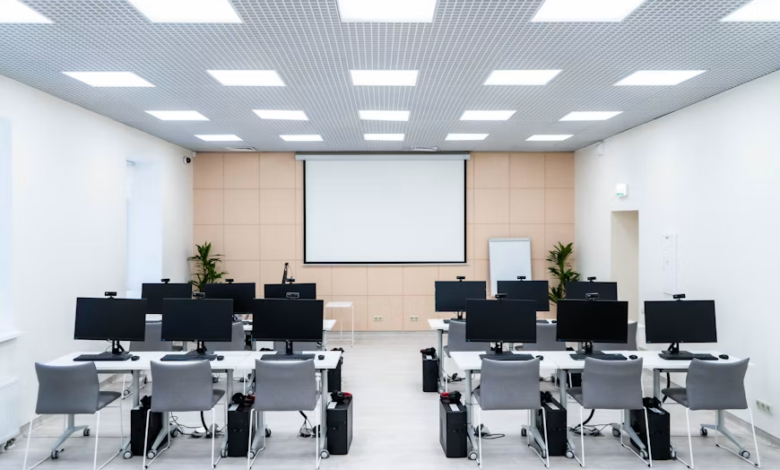
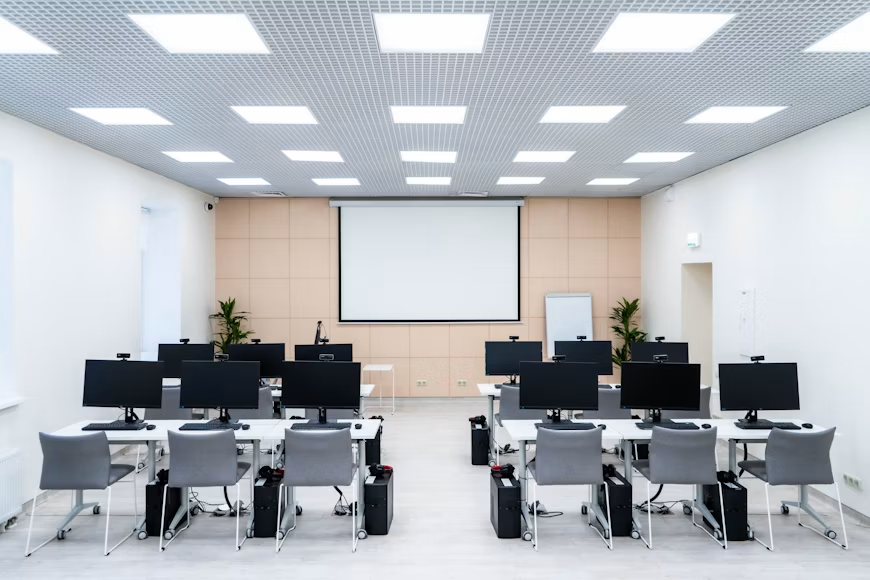
Want to create a classroom where students actually thrive?
Did you know that classroom design directly influences how children learn? Design the space, storage, and atmosphere correctly — and students will pay better attention, concentrate for longer, and even achieve higher grades.
But here’s the problem…
Traditional classrooms are stuck in the past. Desks lined up in rows, messy shelving and fluorescent lights that no one likes. The best news? A few design tweaks can make any classroom into a learning conducive environment.
This article details the top design features that truly matter in today’s classroom, from storage to seating to lighting and technology.
Let’s jump in!
Here’s what’s inside:
- Why Classroom Design Matters
- Smart Storage Solutions
- Flexible Furniture and Layout
- Lighting, Colour and Comfort
- Tech That Supports Learning
- Designing for Every Student
Why Classroom Design Matters
The classroom environment is not just about looking pretty.
Research by The University of Salford has shown that classroom design can impact academic progress by up to 25% over the course of one year. Impressive, right? Consider how classroom layout, lighting and organisation affects student learning.
Think about it…
A cluttered, dark and cramped room unsettles everyone. Bright, organised and flexible spaces allow students to concentrate and relax.
It really is that simple.
Smart Storage Solutions
Storage is one of the most underrated parts of classroom design.
Cluttered classrooms are distracted classrooms. Students don’t learn when supplies are scattered all over the classroom floors and teachers spend precious instructional time digging through desks looking for materials. Proper storage allows you to stay organized.
Revolutionary when utilised are deep plastic trays. They are durable, easily labelled and large enough to store everything from art resources to maths equipment. They are popular in schools because they will not easily wear out and they fit into standard storage furniture neatly when stacked.
Some of the most popular tray options include:
- Shallow trays for paper and worksheets
- Deep plastic trays for bulky items like paint pots and books
- Lockable trays for personal student belongings
- Coloured trays for easy sorting between subjects
For a tidy and organised classroom appearance, consider investing in some art paper tray storage units. They save valuable wall space, speed up tidy times and allow individual storage for each child.
Only that you buy trays durable enough for everyday use. Disposable trays crack and break easily — and that ends up costing you more.
Flexible Furniture and Layout
The days of fixed rows of desks are over.
Classrooms should be flexible because teaching is flexible. One lesson may require group work. The next may require silent independent practice. And the next could be a whole class lesson. Furniture should easily accommodate all of these activities.
Studies have found that 78% of educators believe flexible learning spaces have a favorable effect on student achievement. That’s some serious source credibility right there.
So what does a flexible classroom layout look like?
- Lightweight, movable desks and chairs
- Modular tables that can be pushed together for group work
- Soft seating for reading corners
- Standing-height tables for active learners
What matters is allowing teachers to transform the room within minutes. Class goes more smoothly when teachers have that flexibility and students remain focused longer.
Lighting, Colour and Comfort
This one is often overlooked, but it matters more than most people realise.
Access to daylight is one of the most powerful predictors of classroom performance. Research suggests that what architects call naturalness factors – daylight and views of nature – explain about 50% of total design impact on learning.
Pretty cool, right?
If natural lighting is unavailable, your second-best option is daylight LED lighting. Stay away from fluorescent bulbs that cause eyestrain.
Colour is important as well. Bright and bold colours can overwhelm and washed-out colours can feel depressing. Look for calming colours such as soft blues and greens, as well as warm neutrals — with accents of brighter colours used strategically on display areas and points of interest.
Don’t forget comfort. Make sure the room has:
- Good ventilation and fresh air
- Comfortable seating that supports posture
- A reasonable temperature (not too hot, not too cold)
- Acoustic features to reduce echo and noise
Small things make a big difference.
Tech That Supports Learning
Technology has totally changed the classroom over the last decade.
Here’s the rub though… Technology is only valuable when it enhances learning. If it becomes a distraction, then it defeats the purpose. Piling technology into a classroom does not make it a “technology rich” classroom. It just makes it chaotic.
The most effective classroom tech includes:
- Interactive whiteboards or touchscreens
- Easy access to charging points for tablets and laptops
- Reliable WiFi that doesn’t lag during lessons
- Document cameras for sharing student work
Incorporated technology should feel invisible. Proper tech integration means wires are tucked away, devices have their own homes, and room for digital and tangible learning to exist together.
Don’t let tech take over the room. Let it quietly support the lessons.
Designing for Every Student
Not every student learns the same way.
Some students thrive working collaboratively. Some students need space to think independently. Some students have sensory issues. Some students fidget and learn kinesthetically. There should be space in today’s classroom for every student.
That means creating:
- Quiet zones for focused independent work
- Collaborative zones for group activities and projects
- Sensory-friendly corners with soft seating
- Standing or movement areas for active learners
Students who feel like the environment is created around them will participate more. They feel secure, appreciated and prepared to learn.
It really is that simple.
Putting It All Together
Classroom design might seem like a small thing, but the results speak for themselves.
Organizing your classroom for success can lead to more academic growth, better participation and a happier classroom for all occupants. Let’s review…
- Smart storage to keep clutter under control
- Flexible furniture that adapts to different lessons
- Good lighting, calming colours and comfortable temperature
- Tech that supports learning without distracting from it
- Zones for different learning styles and needs
Don’t bite off more than you can chew. Start with one area, make a few changes and see the difference.
Continue doing this until your classroom is a place where students walk in and feel like learning.