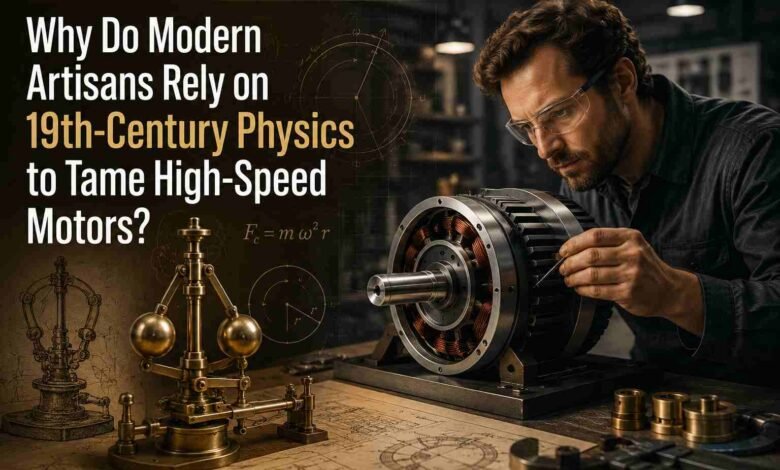
Why Do Modern Artisans Rely on 19th-Century Physics to Tame High-Speed Motors?

Industrial manufacturing is usually defined by a singular, relentless metric of success: speed. In garment factories around the world, commercial sewing machines run at blistering paces, often exceeding three or four thousand stitches per minute. For lightweight textiles like cotton and polyester, this rapid-fire approach is highly efficient. However, when you shift focus from fast fashion to the preservation of heavy heritage crafts like saddle making, custom footwear, and dense canvas upholstery, speed becomes an absolute liability.
Working with dense, unforgiving materials like quarter-inch vegetable-tanned cowhide presents a unique physical challenge. Unlike cotton or linen, leather does not forgive a misplaced needle punch. Every single hole is permanent. If a stitch line veers even a millimeter off course around a curved wallet edge, the entire expensive piece of leather is permanently ruined. To achieve absolute perfection, bespoke artisans must sew at a deliberate, agonizingly slow crawl, sometimes pausing to place a single stitch at a time.
This creates a massive mechanical paradox in the workshop. The electric motors bolted under heavy-duty sewing tables are inherently designed to spin fast. Traditional clutch motors, and even modern electronic servo motors, struggle to deliver smooth, consistent power at incredibly low revolutions per minute. If a leatherworker tries to feather the foot pedal to sew slowly, the motor often lacks the rotational force to push the thick steel needle through the dense hide. The needle stalls. Frustrated, the operator presses the pedal just a fraction harder. The motor suddenly catches, surging forward with a burst of uncontrollable speed, ruining the seam and potentially snapping the needle entirely.
The artisan is trapped between two conflicting physical needs. They need immense punching power, known as torque, to penetrate the leather, but they need the machine to move at a fraction of its designed speed to maintain absolute steering control.
To solve this modern manufacturing dilemma, engineers did not invent a complex digital microchip. Instead, they looked backward to the foundational laws of 19th-century physics. By utilizing the simple mechanical advantage of a compound pulley system, artisans can completely manipulate the relationship between motor speed and needle torque.
This transformation is achieved by installing an industrial sewing machine speed reducer beneath the work table. Rather than connecting the electric motor directly to the sewing machine head with a single drive belt, the mechanical power is routed through an intermediate set of varying-sized metal wheels.
The physics behind this intervention are beautifully simple. The motor features a very small drive wheel, which is connected by a belt to a massive wheel on the reduction unit. Because of the sheer size difference, the electric motor has to spin multiple times just to turn the large wheel one full revolution. This immediately and drastically cuts the velocity of the operation. The power is then transferred from a smaller wheel on the same reduction unit up to the large handwheel of the sewing machine itself.
The result of this stepped-down ratio is a mathematical exchange of velocity for pure, unadulterated torque. The sewing machine now operates at half or even one-third of its original top speed, but the needle punches downward with two or three times the amount of physical force.
For the leatherworker, this mechanical intervention is nothing short of revolutionary. The machine no longer stalls when it encounters a thick seam or a dense layer of specialized adhesives. The artisan can press the foot pedal completely to the floor, knowing the machine will only crawl forward at a manageable, rhythmic pace. They can navigate tight corners, pivot around heavy brass hardware, and execute flawless, decorative topstitching without the constant anxiety of a motor surge.
Furthermore, reducing the speed creates a significantly safer working environment. Heavy-duty needles snapping under pressure can act like dangerous shrapnel in a small workshop. By eliminating sudden surges and drastically reducing the friction heat that builds up on the thick thread during sewing, the equipment operates safely, smoothly, and predictably.
In an era obsessed with doing everything faster, the heavy textile industry proves that true precision often requires us to manipulate the laws of physics to slow down. By embracing the simple, quiet genius of mechanical pulleys, today’s artisans can tame high-powered industrial equipment, ensuring that the legacy of meticulous craftsmanship survives in a mechanized world.