
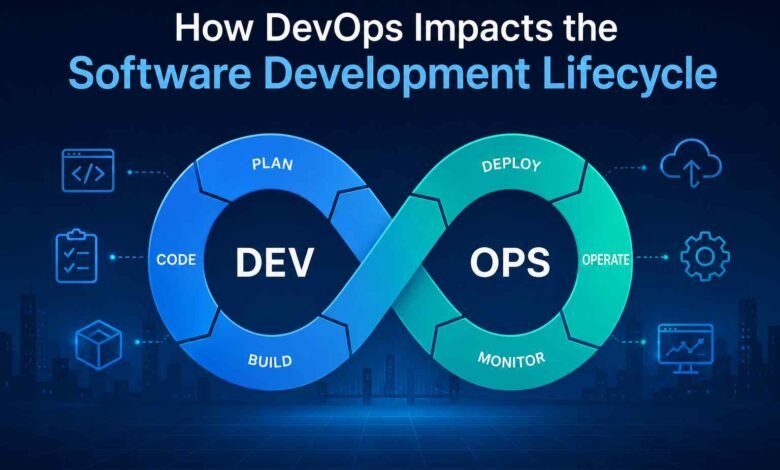
Modern software development moves at high speed. Markets demand rapid releases. Additionally, users expect seamless performance and constant updates. Traditional development models create silos between teams. Developers write code. Operations manages infrastructure separately. This separation slows progress and increases risk. Therefore, organizations adopt DevOps to transform the Software Development Lifecycle.
Many enterprises also collaborate with an Offshore software development company to scale delivery capacity. However, distributed teams require structured coordination. DevOps bridges development and operations under one unified workflow. It integrates automation, monitoring, and collaboration across every stage. This guide explains how DevOps reshapes the Software Development Lifecycle and creates measurable enterprise value.
Transform Planning and Requirement Analysis
The Software Development Lifecycle begins with planning. Teams gather requirements. Additionally, stakeholders define the scope and timelines. In traditional models, operations join later. This delay creates misalignment. DevOps integrates operations early in the planning stages.
Teams evaluate infrastructure needs from day one. They define deployment strategies alongside feature design. Furthermore, they assess scalability and security before coding starts. DevOps encourages cross-functional collaboration during requirement analysis.
Shared planning reduces future rework. Additionally, teams align business goals with technical feasibility. Risk identification happens earlier in the process. DevOps brings operational awareness into strategic decisions. Enterprises gain clarity before execution begins. Planning becomes proactive rather than reactive.
Improve Development Through Continuous Integration
Development remains the core phase of the lifecycle. Developers write code. Additionally, they push updates frequently. Without structure, integration conflicts increase. DevOps introduces Continuous Integration practices to streamline this phase.
Teams merge code into shared repositories daily. Automated systems run tests immediately. Therefore, errors surface early. Furthermore, version control maintains transparency across contributors.
Continuous feedback reduce debugging time. Developers identify issues before escalation. Additionally, standardized build environments prevent compatibility problems. DevOps create repeatable processes that improve coding quality.
Collaboration tools support distributed teams. Developers coordinate across regions efficiently. Mid-sized enterprises often partner with Techstack digital to implement structured DevOps pipelines that enhance integration discipline. Continuous Integration ensure that development remain stable and efficient throughout the lifecycle.
Streamline Testing and Quality Assurance
Testing validate functionality and performance. In traditional models, testing occur late. This approach delay releases and increase risk. DevOps shift testing left within the lifecycle.
Teams automate unit, integration, and performance tests. Additionally, automated pipelines execute tests during every code change. This method identify defects early. Furthermore, standardized testing environments improve accuracy.
Quality assurance become continuous rather than periodic. DevOps reduce manual intervention and human error. Automated test reports provide instant feedback to developers.
Early validation lower remediation costs. Enterprises release stable builds confidently. Additionally, teams reduce production failures significantly. DevOps integrate testing as a core activity rather than an afterthought. The lifecycle become faster and more reliable.
Accelerate Deployment and Release Management
Deployment often create bottlenecks. Manual releases increase downtime. Additionally, configuration mismatch cause unexpected errors. DevOps automate deployment through Continuous Delivery and Continuous Deployment pipelines.
Teams package applications in containers. They deploy through scripted pipelines. Therefore, releases become predictable. Furthermore, Infrastructure as Code ensure consistent environments across development, staging, and production.
Blue-green deployments and canary releases reduce risk. Additionally, rollback mechanisms activate instantly if failure occurs. DevOps eliminate last-minute release chaos.
Enterprises achieve faster time-to-market. Customers receive updates without disruption. Deployment evolves from stressful events into structured workflows. DevOps embed automation into release management and improve lifecycle velocity.
Enhance Monitoring and Feedback Loops
The lifecycle does not end at deployment. Monitoring maintain system health. Traditional models separate operations from development. This separation slows incident response. DevOps integrate monitoring directly into development workflows.
Teams track application performance metrics continuously. Additionally, they monitor server health and user experience indicators. Automated alerts notify teams instantly when anomalies appear.
Feedback loops shorten dramatically. Developers receive real-time insights from production. Furthermore, structured logging simplifies root cause analysis.
Proactive monitoring prevents downtime. Enterprises identify issues before customers notice them. DevOps transform operations into collaborative problem-solving environments. Continuous feedback strengthens the entire lifecycle and supports iterative improvement.
Improve Security Integration Across Stages
Security often becomes a final checkpoint. However, late security reviews increase vulnerability exposure. DevOps integrates security practices across the lifecycle through DevSecOps principles.
Teams automate vulnerability scanning during development. Additionally, they enforce compliance checks in CI/CD pipelines. This proactive approach reduces security gaps.
Infrastructure as Code maintains consistent security configurations. Furthermore, access controls follow standardized policies. DevOps reduce dependency on manual approvals and minimize human error.
Security awareness extends to all teams. Developers adopt secure coding practices early. Enterprises meet regulatory requirements without delaying releases. DevOps embed security as a continuous process rather than a reactive fix.
Support Collaboration in Distributed Environments
Modern software teams often operate globally. Distributed models increase flexibility. However, coordination challenges arise without structure. DevOps create standardized workflows that unify teams.
Shared dashboards provide transparency into progress. Additionally, automated pipelines ensure consistent builds regardless of location. Version-controlled repositories keep environments synchronized.
Teams can also follow a clear DevOps practice test to keep coding standards, deployment steps, and operational responsibilities consistent across different locations.
Enterprises that partner with global talent pools benefit from disciplined DevOps frameworks. Structured processes eliminate miscommunication and duplication.
DevOps promote accountability and shared ownership. Teams collaborate in real time despite geographic distance. The Software Development Lifecycle remains cohesive and efficient across regions. Distributed execution succeeds when automation and visibility guide operations.
Conclusion
The Software Development Lifecycle continues to evolve. Market demands require speed, reliability, and adaptability. Traditional siloed approaches struggle to meet these expectations. DevOps transforms every stage of the lifecycle.
It integrates planning, development, testing, deployment, and monitoring into one unified system. Furthermore, it automates workflows and strengthens collaboration. Enterprises benefit from reduced risk, faster releases, and improved quality.
DevOps also embed security and scalability into core processes. Additionally, it supports distributed teams and global partnerships. The impact extends beyond tools. It reshapes culture and accountability.
Organizations that embrace DevOps build resilient and adaptive software ecosystems. They innovate rapidly without sacrificing stability. In competitive environments, structured automation and collaboration define sustainable software success.