Warwick Ward Construction Firm Collapse: What Happened and Why It Matters

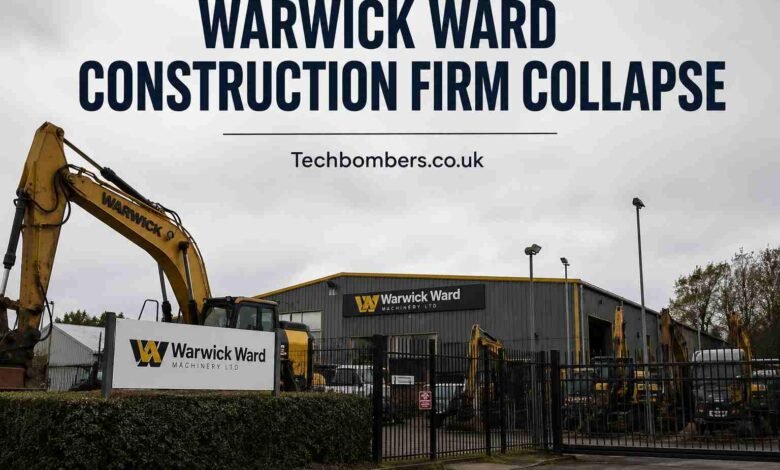
The collapse of Warwick Ward shocked many people connected to the construction and heavy equipment industry. The company had been operating for decades and built a strong name in machinery sales, plant equipment, and recycling machinery. Businesses that survive for more than fifty years are usually seen as stable, experienced, and trusted. That is why the news of administration surprised contractors, suppliers, workers, and customers across the UK construction sector.
This was not just the story of one company failing. It also reflected the growing pressure inside the construction equipment market. Rising costs, weak demand, financing pressure, and changing business conditions have made survival harder for many firms. Warwick Ward became one of the latest examples of how even long-established companies can face serious financial trouble when market conditions become difficult for a long period.
The company worked closely with construction contractors, recycling operators, machinery buyers, and businesses that relied on heavy equipment every day. Its collapse created uncertainty for employees, customers, and suppliers who depended on the company for machinery, servicing, parts, and business support.
Quick Bio Table
| Detail | Information |
| Company Name | Warwick Ward Machinery Ltd |
| Industry | Construction and plant machinery |
| Founded | 1970 |
| Main Sector | Earthmoving and recycling equipment |
| Country | United Kingdom |
| Headquarters | Yorkshire |
| Business Type | Machinery sales and equipment supply |
| Collapse Type | Administration |
| Employees Affected | Around 89 |
| Main Issues | Cashflow pressure, weak market demand, financial strain |
What Was Warwick Ward?
Warwick Ward was known as a construction machinery and equipment supplier serving customers across the UK. The company supplied heavy machines used in construction projects, demolition work, recycling operations, and earthmoving activities. Over the years, it built a strong reputation among contractors and plant operators looking for machinery solutions.
The company handled both new and used equipment. This helped Warwick Ward serve a wide range of customers, from large contractors to smaller businesses that needed affordable machinery options. Equipment supply businesses like Warwick Ward play an important role in construction because many firms rely on machinery providers instead of buying expensive equipment directly.
The company also became known for dealing in recycling machinery and waste management equipment. This sector had grown over recent years because recycling businesses needed specialised machines for sorting, crushing, handling, and processing materials. Warwick Ward expanded into this market to strengthen its business position and increase revenue opportunities.
Its long history helped build trust in the market. Customers often prefer dealing with established companies because they expect better support, servicing, and reliability. Warwick Ward benefited from that reputation for many years before financial problems started affecting operations.
What Led to the Warwick Ward Collapse?
The collapse did not happen because of one single problem. Like many business failures, several issues combined together over time. Weak trading conditions, cashflow pressure, operating costs, and financial obligations all created problems that became difficult to control.
One of the biggest issues was reduced activity in sectors connected to construction and recycling. When construction companies slow spending or delay projects, machinery suppliers often feel the impact quickly. Contractors avoid buying expensive equipment during uncertain periods, and that reduces sales for machinery dealers.
The recycling industry also faced pressure. Companies working in waste management and recycling became more cautious with spending. Demand for certain heavy equipment slowed, which affected suppliers connected to that market.
Cashflow pressure became another major issue. A business may still own valuable assets and equipment, but without healthy daily cashflow, operations become difficult. Staff wages, supplier payments, maintenance costs, transportation expenses, financing obligations, and inventory management all require consistent cash movement.
When revenue slows while expenses remain high, pressure builds quickly. Businesses can survive short difficult periods, but long-term weak trading creates serious financial stress.
The Construction Industry Has Become More Difficult
The Warwick Ward collapse also reflects wider problems inside the construction sector. Construction businesses across the UK have been facing rising costs, slower project approvals, financing problems, and uncertain economic conditions.
Fuel prices increased operating expenses for transport and heavy machinery businesses. Equipment maintenance costs also became more expensive. At the same time, inflation affected staffing costs, parts supply, and overall operational spending.
Construction firms became more careful with investments. Many companies delayed machinery purchases and focused only on essential spending. This directly affected businesses that relied on equipment sales.
Interest rates and financing costs also created pressure. Heavy equipment purchases usually involve financing agreements, leasing arrangements, or long-term repayment structures. When borrowing becomes expensive, companies reduce machinery spending, and suppliers experience lower demand.
Market competition also became stronger. Larger firms with stronger financial backing were better positioned to survive difficult trading periods. Smaller or mid-sized companies faced more pressure to maintain profit margins while competing for fewer sales opportunities.
Why Cashflow Problems Destroy Businesses
Cashflow problems are one of the most common reasons businesses collapse. Even experienced companies can fail if they cannot maintain enough working capital to manage operations.
In industries connected to construction machinery, large amounts of money are tied up in equipment, inventory, transportation, servicing, and financing. Machinery businesses often need strong cash reserves because equipment sales can fluctuate depending on market demand.
If sales slow while expenses continue, pressure builds very quickly. Businesses may start delaying payments, reducing operations, or searching for refinancing solutions. But if market conditions remain weak, recovery becomes difficult.
Cashflow issues are dangerous because they affect every part of the company at the same time. Suppliers may lose confidence, customers may become cautious, financing becomes harder to secure, and operational flexibility disappears.
Many companies survive temporary downturns. But when weak trading continues for a long period, financial recovery becomes far more difficult.
Employee Ownership Challenges
Warwick Ward reportedly became employee-owned before entering administration. Employee ownership structures can work successfully in some industries because they create stronger staff involvement and long-term business commitment.
However, ownership changes can also create financial pressure if the transition is not supported by strong trading conditions. Businesses already facing market difficulties may struggle to manage additional financial obligations connected to restructuring or ownership changes.
Employee-owned businesses still need strong revenue, healthy cashflow, stable market demand, and effective financial planning. Without those factors, ownership structure alone cannot protect a company from wider economic pressure.
The collapse became especially difficult for employees because workers are directly affected when long-established companies fail. Staff uncertainty, job losses, and career disruption become immediate realities after administration begins.
Impact on Workers and Families
The biggest impact of business collapse is usually felt by employees. Machinery, equipment, and offices can be replaced, but workers suddenly face uncertainty about income, careers, and financial stability.
Many employees spend years building experience inside one company. They develop customer relationships, technical knowledge, and long-term career plans. When administration happens, workers often lose stability overnight.
Families are also affected. Job losses create pressure on household finances, especially during periods of rising living costs. In industries like construction equipment and machinery supply, local economies can also feel the impact because related businesses depend on each other.
Long-established businesses often become important employers in their regions. When they collapse, the effects spread beyond the company itself.
Effects on Customers and Suppliers
The collapse also created uncertainty for customers and suppliers connected to Warwick Ward. Construction projects depend heavily on equipment availability, servicing support, maintenance, and parts supply.
Customers who relied on the company may have faced delays, uncertainty over orders, or difficulties accessing support services. Suppliers also face risk because unpaid invoices and disrupted business relationships can create financial losses.
Construction supply chains are closely connected. When one major company collapses, the effects often spread across contractors, transport firms, service providers, finance companies, and equipment partners.
Some customers quickly move toward competitors after a collapse because they need stable long-term support. Rival machinery suppliers may benefit by gaining new customers and increasing market share.
Warning Signs Before Business Collapse
Most business collapses do not happen suddenly. Financial pressure usually builds gradually over time. Weak sales, slower market activity, cost increases, and operational strain often appear months before administration becomes public.
One common warning sign is weak demand across the industry. When construction activity slows, equipment suppliers often experience declining revenue. Businesses may also face pressure from delayed payments, reduced profit margins, or rising financing costs.
Another warning sign is aggressive cost-cutting. Companies under pressure sometimes reduce staffing, delay expansion plans, or cut operational spending to preserve cashflow.
Market uncertainty can also make lenders and investors more cautious. Access to financing becomes harder during difficult economic periods, especially for businesses already facing weaker performance.
Lessons for the Construction Industry
The Warwick Ward collapse offers important lessons for businesses connected to construction, machinery supply, and industrial services.
One major lesson is the importance of strong financial management. Long business history alone does not guarantee stability. Companies must adapt quickly to changing market conditions and maintain healthy cash reserves during difficult periods.
Diversification is also important. Businesses heavily dependent on one market sector may struggle if demand falls sharply. Companies that operate across multiple industries often have better protection against market downturns.
Another lesson involves operational flexibility. Businesses that can reduce costs quickly, adapt services, and respond to market changes usually survive difficult periods more effectively.
The collapse also highlights how sensitive construction-related industries are to economic conditions. When infrastructure spending slows or financing becomes expensive, pressure spreads across suppliers, contractors, and equipment providers very quickly.
What Happens After Administration?
When a company enters administration, administrators take control of the business and attempt to recover value for creditors. This can involve selling assets, restructuring operations, or searching for buyers interested in parts of the company.
Some businesses continue operating temporarily during administration, while others shut down quickly depending on financial conditions and buyer interest.
Equipment, machinery stock, vehicles, offices, and other assets may eventually be sold. Customers, suppliers, employees, lenders, and creditors all become part of the wider administration process.
In some cases, parts of a business survive through asset sales or restructuring deals. In others, the company closes permanently.
Final Thoughts
The Warwick Ward construction firm collapse became one of the most discussed stories in the machinery and construction equipment sector because it involved a long-established business with decades of industry presence.
Its failure showed how difficult conditions have become for construction-related businesses dealing with weak demand, rising costs, financing pressure, and changing economic conditions. Even experienced companies with strong reputations can struggle when multiple financial pressures happen at the same time.
The collapse also serves as a reminder that construction and machinery industries remain highly sensitive to market changes. Businesses that survive long-term are usually those that adapt quickly, manage cashflow carefully, diversify revenue sources, and maintain financial flexibility during uncertain periods.
For workers, suppliers, customers, and industry professionals, the story of Warwick Ward is not only about one company failing. It is also about the wider challenges facing the construction equipment market today.
FAQs
Why did Warwick Ward collapse?
The company reportedly faced cashflow problems, weak market demand, and financial pressure linked to difficult conditions in construction and recycling sectors.
What industry was Warwick Ward part of?
Warwick Ward operated in the construction machinery and heavy equipment sector.
How many employees were affected?
Around 89 employees were reportedly affected by the administration process.
What does administration mean?
Administration is a legal process where external administrators take control of a company to manage debts, assets, and potential recovery options.
How does this affect the construction industry?
The collapse highlights financial pressure inside the construction equipment market and shows how difficult trading conditions can affect suppliers and contractors.