How 3PL Warehouse Management Billing Automation Transforms Logistics Efficiency

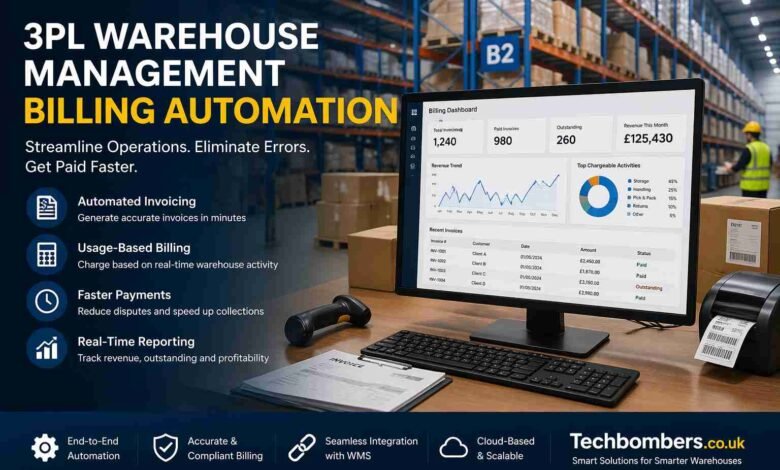
In today’s fast-paced world of logistics, businesses rely heavily on third-party logistics (3PL) providers to manage their warehousing, inventory, and distribution operations. As logistics operations scale, so does the complexity of billing, which can easily become a bottleneck if handled manually. 3PL warehouse management billing automation is emerging as a game-changer for logistics companies. By automating the billing process, 3PL providers can significantly improve accuracy, reduce operational costs, and boost client satisfaction.
In this blog, we will delve into the world of 3PL warehouse management billing automation, how it works, the benefits it offers, and the technologies powering this transformation.
What is 3PL Warehouse Management Billing Automation?
3PL Warehouse Management
A Third-Party Logistics (3PL) provider is a company that offers logistics services such as warehousing, transportation, and order fulfillment for other businesses. These services help businesses focus on their core functions, like product development and sales, while leaving the complexities of logistics management to a trusted third party.
In the context of warehouse management, 3PL providers manage the storage, inventory tracking, and dispatching of goods on behalf of their clients. However, one often overlooked aspect of 3PL operations is the billing process.
Billing Automation
Billing automation in 3PL warehouses refers to the use of technology to automate the invoicing and payment processes. Traditionally, 3PL providers manually track the services rendered to clients—such as the amount of space occupied in a warehouse, the number of items picked, packed, and shipped, etc.—and then generate invoices based on that information.
With billing automation, these processes are integrated with warehouse management systems (WMS), eliminating the need for manual data entry and reducing the chances of errors. Automated billing systems allow 3PL providers to generate invoices in real time, ensuring accurate, timely, and transparent billing practices.
Key Components of 3PL Billing Automation
Automated Data Collection
The foundation of 3PL billing automation lies in the accurate and timely collection of data. This data can include inventory transactions, order fulfillment details, shipping logs, and other essential information. Integration between Warehouse Management Systems (WMS) and Enterprise Resource Planning (ERP) systems ensures that every transaction is recorded automatically.
As inventory moves in and out of the warehouse, the WMS tracks these movements, logging everything from product receipt to final dispatch. This real-time data can be passed directly to the billing system, ensuring that all relevant charges are captured and invoiced correctly.
Dynamic Billing Rules
In a 3PL operation, billing rules are often complex and vary by client. Charges may depend on factors such as:
- Storage space: Billing based on the amount of space a product occupies in the warehouse.
- Order picking and packing: Charges for picking, packing, and preparing orders for shipping.
- Shipping: Fees based on shipping weights, distances, and delivery methods.
Automated billing systems are equipped to handle these dynamic rules. By programming the system to recognize specific charging criteria, 3PL providers can ensure that each client is billed according to their unique requirements, eliminating manual calculations and reducing the likelihood of errors.
Real-time Billing Adjustments
The ability to adjust billing in real time is one of the greatest advantages of billing automation. In traditional billing systems, adjustments might require manual intervention. For example, if a customer requires additional storage space or if there’s a delay in shipping, these changes must be recorded and billed accordingly.
In automated systems, these adjustments are made instantly. If an order is delayed, the system will automatically modify the charges for the client. If there’s a change in inventory levels, the system can update billing in real-time, reflecting accurate charges for storage and handling.
Invoice Generation and Distribution
Automated billing systems streamline the generation of invoices. Once the data is collected and billing rules are applied, the system automatically generates invoices and sends them to clients. This eliminates the need for manual invoice creation, ensuring that the billing process is both efficient and error-free.
Invoices can be generated and sent digitally, reducing paper usage and ensuring that they reach clients without delay. Furthermore, automated systems often allow clients to view detailed breakdowns of their charges, improving transparency and trust in the process.
Integration with Financial Systems
To further streamline the process, billing automation integrates with financial management systems such as ERP software. This integration ensures that billing data flows seamlessly into accounting and financial records. It eliminates the need for double data entry, ensuring that financial records are always up-to-date.
This integration also improves reporting accuracy. By connecting the billing data with financial systems, 3PL providers can quickly generate financial reports, analyze performance, and ensure accurate cash flow management.
Benefits of 3PL Billing Automation
Improved Operational Efficiency
Automating the billing process significantly reduces the time and effort spent on manual tasks like data entry, invoice generation, and issue resolution. This frees up valuable time for the accounting and operations teams, allowing them to focus on more strategic tasks.
Billing automation ensures that all data is captured accurately and consistently, reducing the time spent verifying charges and correcting errors. By eliminating manual processes, businesses can complete billing cycles faster and more efficiently.
Cost Reduction
Manual billing systems are not only time-consuming but also prone to errors. The need for rework and error correction can result in significant operational costs. Billing automation reduces the risk of human error, thus reducing the need for administrative resources to handle discrepancies.
Additionally, by streamlining the entire billing process, 3PL providers can reduce overhead costs. There’s no need to maintain large administrative teams focused solely on billing and invoicing.
Faster Cash Flow
Automated billing speeds up the invoicing process, leading to faster payment cycles. As invoices are generated in real-time and sent promptly to clients, there’s less delay in receiving payments. This improves cash flow, allowing 3PL providers to reinvest in operations and better serve their clients.
Automated systems can also send payment reminders, ensuring that clients don’t miss payment deadlines. This proactive approach minimizes late payments and helps maintain healthy cash flow.
Accuracy and Error Reduction
Billing errors can be costly. Mistakes in invoicing, such as missed charges or incorrect rates, can damage relationships with clients and cause financial discrepancies. Billing automation minimizes the risk of such errors by ensuring that all calculations are done according to predefined rules and data is accurately captured from the start.
Automated systems also reduce the chances of human errors in data entry, ensuring that all transactions are accurately reflected in the invoices. This leads to greater trust and fewer disputes between 3PL providers and their clients.
Enhanced Transparency and Customer Satisfaction
Clients appreciate transparency when it comes to billing. Automated systems can provide detailed reports and itemized breakdowns of charges, allowing clients to understand exactly what they’re paying for. This builds trust and ensures that both parties are on the same page when it comes to pricing and services rendered.
With real-time access to billing data and detailed reports, clients can also track their expenses more easily, leading to a better overall experience.
Technologies Powering 3PL Billing Automation
Warehouse Management Systems (WMS)
At the core of 3PL billing automation is the Warehouse Management System (WMS). These systems track inventory, shipments, and storage details in real time. They provide the data that forms the foundation for automated billing.
WMS platforms can integrate with other systems, such as ERP and financial software, to ensure smooth data transfer and accurate billing.
Enterprise Resource Planning (ERP) Systems
Enterprise Resource Planning (ERP) systems help manage and integrate the core aspects of business operations, from inventory management to financials. Integrating ERP with billing systems ensures that all data is centralized, making the billing process more accurate and efficient.
Cloud-Based Billing Software
Cloud-based billing platforms, such as SAP S/4HANA and Oracle Cloud ERP, enable automated billing across various 3PL operations. These platforms are accessible from anywhere, making it easier to manage and track invoices.
These cloud-based solutions also provide real-time updates and easy integration with other enterprise systems.
Robotic Process Automation (RPA)
Robotic Process Automation (RPA) helps automate repetitive tasks such as data entry and invoice generation. By using RPA, 3PL providers can streamline the billing process even further and reduce manual involvement.
Artificial Intelligence (AI) and Machine Learning (ML)
AI and Machine Learning (ML) technologies can be used to enhance the automation process. For example, predictive billing models can analyze historical data and trends to forecast future billing patterns. These insights help 3PL providers improve accuracy and manage client expectations.
Overcoming Challenges in 3PL Billing Automation
System Integration
Integrating different systems, such as WMS, ERP, and financial management software, can be challenging. Ensuring seamless data flow between systems is crucial for billing automation to work effectively. Proper planning and expert implementation are key to successful integration.
Customization
Many 3PL providers offer customized billing solutions for each client, making it difficult to implement a one-size-fits-all approach. However, with the right automation tools, it’s possible to accommodate different billing models while maintaining consistency and accuracy.
Data Security
Billing systems handle sensitive financial data, making security a top priority. It’s essential for 3PL providers to ensure that their billing automation systems are secure and comply with data protection regulations, such as GDPR.
Conclusion
3PL warehouse management billing automation is transforming the logistics industry. By automating the billing process, 3PL providers can increase operational efficiency, reduce costs, and improve client satisfaction. Automation also ensures that billing is more accurate, timely, and transparent, creating stronger relationships with clients.
As the logistics industry continues to grow and evolve, the adoption of automated billing systems will become increasingly essential for 3PL providers looking to stay competitive and deliver exceptional service.
For more insights, read our article on: What is a 3PL Warehouse Management System? Essential Insights