

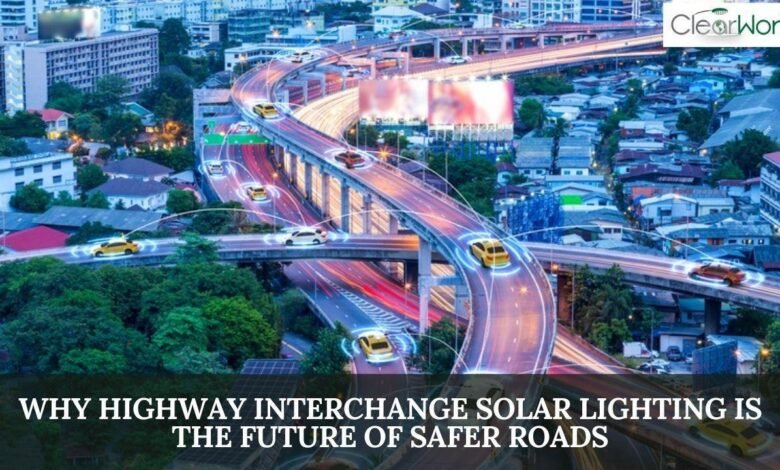
Highway interchanges are among the most complex and unforgiving stretches of road that drivers navigate every single day. Merging lanes, tight curves, and high-speed traffic demand visibility that never fails and never dims at the wrong moment. Highway Interchange Solar Lighting is emerging as the most practical answer to that demand, delivering reliable, off-grid illumination precisely where the consequences of poor visibility are measured not in inconvenience but in lives lost on roads that deserve better infrastructure.
Why Standard Lighting Keeps Failing at the Worst Possible Moments
Highway solar lighting systems were developed because conventional grid-tied fixtures have repeatedly proven inadequate for the specific, unforgiving demands of high-speed interchange environments across the country.
- Grid Vulnerability
Traditional interchange lighting draws from the same utility grid that fails during storms, accidents, and infrastructure events, leaving critical road sections completely dark when conditions are already dangerous. That dependency creates a compounding risk where the very events most likely to require careful navigation are also the events most likely to knock out the lighting drivers are counting on.
- Maintenance Burden
Conventional lighting along highways demands frequent bulb replacements, wiring inspections, and utility coordination that quietly drains resources from already stretched transportation department budgets year after year. Every hour a fixture sits dark waiting for a maintenance crew is real exposure for drivers who have absolutely no way of knowing that the light they are relying on is simply gone.
- Coverage Gaps
Highway interchanges span wide, complex geometries that standard pole spacing formulas were never designed to handle, leaving shadow zones in merging lanes and exit curves where accidents tend to cluster. Highway solar lighting systems offer the placement flexibility to address those specific dark patches directly, rather than defaulting to uniform spacing that pays no attention to how drivers actually use the road.
How Solar-Powered Roadway Lighting Changes the Safety Equation
Solar-powered roadway lighting removes the single biggest structural weakness of conventional systems by cutting the connection between road illumination and a centralized power grid that was never designed for true resilience.
- Energy Independence
Every solar lighting pole at an interchange operates on its own stored power, staying fully lit through outages, severe weather, and grid disruptions without any intervention from a maintenance crew. At a busy interchange where vehicles merge at highway speed, consistent light during a storm is not a nice-to-have feature. It is the difference between a close call and something far worse.
- Adaptive Brightness
Modern solar-powered roadway lighting includes motion-sensing and dimming technology that adjusts output based on actual traffic conditions, conserving energy in quiet hours while delivering full brightness when it genuinely counts. A system that responds to real traffic rather than a fixed timer is inherently smarter and more effective, putting the most light exactly where and when drivers need it rather than guessing.
- Rapid Deployment
Because solar roadway lighting requires no trenching or grid connection, new fixtures can be installed along interchange ramps and merge zones in a fraction of the time conventional systems typically demand from start to finish. For transportation departments responding to identified safety hotspots, that speed translates directly into less time between recognizing a dangerous problem and actually getting reliable light on the ground where it matters.
What Transportation Lighting Infrastructure Needs to Do Beyond Simply Glowing
Transportation lighting infrastructure at the interchange level carries a responsibility that goes well beyond marking road edges, and modern systems are finally being engineered to actually reflect that reality on the ground.
- Smart Integration
Transportation lighting infrastructure built on smart platforms can incorporate vehicle detection sensors, real-time traffic monitoring, and incident alert systems that communicate directly with traffic management centers without delay. When a stalled vehicle or debris appears in a merge zone, a connected lighting system can escalate brightness, trigger alerts, and support faster emergency response all at the same time, without waiting for a human to initiate anything.
- Weather Response
Advanced transportation lighting systems can automatically increase output during rain, fog, or snow events when visibility degrades and driver reaction time is already being compressed by difficult conditions on the road. That weather-responsive capability addresses one of the most predictable and dangerous patterns in highway safety by delivering a lighting response that actually matches the real risk level present on the road.
- Structural Longevity
Transportation lighting infrastructure at highway interchanges must hold up against vibration from heavy vehicle traffic, salt exposure from winter road treatment, and temperature cycling across extreme seasonal ranges year after year. Systems engineered specifically for these conditions, with sealed battery housings and corrosion-resistant pole construction, last meaningfully longer than fixtures adapted from applications that were simply never this demanding.
How Accident Prevention Lighting Targets the Specific Risks Interchanges Create
Accident prevention lighting is not a general concept spread uniformly across a highway network. It is a targeted discipline that maps illumination decisions directly onto the geometry and behaviour patterns of specific high-risk locations.
- Merge Zone Focus
Accident prevention lighting places its highest intensity coverage precisely in merge lanes and weave zones where speed differentials between vehicles create the collision risk that interchange geometry almost inevitably produces. Illuminating these zones at higher output than the surrounding roadway gives drivers the additional fraction of a second of visibility that consistently and measurably makes the difference in avoiding a dangerous merge conflict.
- Exit Ramp Clarity
Exit ramps present a distinct challenge because drivers are simultaneously decelerating, navigating a curve, and making lane decisions under time pressure that the interchange design itself creates without any margin for error. Targeted accident prevention lighting along exit ramps ensures that signage, pavement markings, and lane boundaries stay clearly visible through every phase of the exit maneuver, reducing the cognitive load on drivers at a critical moment.
- Incident Detection
Lighting poles equipped with cameras and motion sensors along accident-prone interchange segments can detect stopped vehicles, debris, or collision events and push alerts to emergency services in real time without waiting for a 911 call. That detection capability transforms what was a passive fixture into an active safety participant, closing the critical gap between when an incident occurs and when help actually starts moving toward the location.
Conclusion
The stakes at a highway interchange are too high for lighting that depends on a grid that fails or fixtures that cannot respond when conditions turn dangerous. Highway interchange solar lighting delivers energy independence, intelligent adaptive controls, and precisely targeted placement in a system built specifically for high-speed, high-consequence environments. For transportation agencies ready to match infrastructure to actual road risk, this is the most defensible and impactful investment available today.
For more insights, read our article on: Everything You Need to Know About Solar Panels