
How to Prevent Picking Errors in Your Warehouse: Small Guide

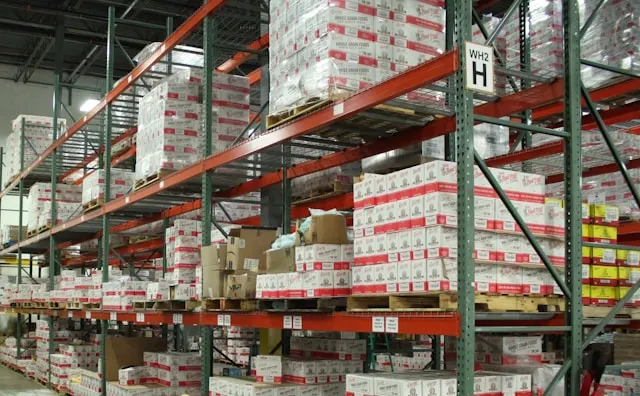
In the world of logistics, a picking error is far more than just a small mistake. It is a direct hit to your bottom line. When a worker grabs the wrong item, you don’t just lose the time it took to pick it; you trigger a nightmare of shipping the wrong product back, paying for return freight, and potentially losing a customer forever. To fix this, you have to stop blaming the staff and start fixing the system.
In 2026, a truly efficient warehouse is one where the process itself acts as a guardrail, making it nearly impossible for a human to make a mistake.
The Psychology of the Warehouse Floor
Most errors happen because of “blind spots.” When a picker has been walking the aisles for six hours, their brain starts to take shortcuts. If you have ten different types of black USB cables sitting right next to each other, the human eye eventually stops seeing the difference.
This is why the first step to accuracy isn’t a robot; it’s organization.
You need to physically separate items that look alike. If you have a “Small” and a “Large” version of the same product, put them in different aisles. This forces the picker to consciously move to a new location, which re-sets their focus and prevents them from grabbing the wrong box out of habit.
Validation at the Point of Action
The biggest mistake a warehouse can make is waiting until the packing station to check for errors. By that time, the picker has already moved on to twenty other tasks, and the mistake is already buried in a box. You need to catch the error at the “pick face”—the exact moment the hand touches the product. Using wearable ring scanners is the most effective way to do this. Instead of carrying a heavy handheld device, the picker has a small scanner on their finger. If they scan the wrong barcode, the ring vibrates or beeps immediately. This instant feedback loop ensures that no “bad picks” ever leave the aisle in the first place.
Building a Visual Safety Net
Lighting and labeling are the unsung heroes of accuracy. Many warehouses are dimly lit, which makes reading small SKU numbers an invitation for disaster. To solve this, you should move away from complicated alphanumeric codes and use high-contrast, large-font labels. Another powerful trick used by top firms is the “Check-Digit” system.
This is a large, random two-digit number printed on the bin label that has nothing to do with the SKU. The picker’s device asks them to verify this number before they pick. It’s a simple mental speed-bump that ensures the worker is at the correct physical coordinate before they even reach for the product.
The Final Check: Weight and Vision
Even with the best scanning technology, a final layer of defense is necessary at the dispatch stage. Integrating digital scales into your packing tables is a game-changer. The system knows exactly what the order should weigh down to the gram. If a box is supposed to have three items but only has two, the scale will detect the missing weight and stop the shipping label from printing.
This automated “double-check” catches quantity errors that a human might miss during a busy shift. When you combine this with a Warehouse Management System that shows a high-resolution photo of the item on the picker’s screen, you create a dual-layered verification system that human eyes alone cannot beat.
Moving Toward a Zero-Error Culture
At the end of the day, accuracy is about data and accountability. You should use your Digital Warehouse dashboard to track which zones or aisles are producing the most errors. Often, you’ll find that a specific area has a confusing layout or poor lighting that is causing the team to stumble.
By fixing these systemic issues, you turn your warehouse into a precision-tuned machine. Accuracy shouldn’t feel like a chore for your workers; it should be the natural result of a well-designed environment where every step is validated by technology.
You Can Also Check Our Guide on: How to Improve Warehouse Picking Speed and Accuracy in 2026
FAQs
Why is it so expensive to fix a picking error?
It’s not just the shipping. You have to pay for the customer service time to handle the complaint, the labor to receive the return, the cost of the “dead” inventory sitting in transit, and the discount you often have to give the customer to keep them happy. In 2026, one error can easily cost a firm $100 or more.
Can I improve accuracy without buying expensive robots?
Yes, definitely. Start by re-slotting your warehouse so similar items are far apart and improving your aisle lighting. Adding simple barcode scanning to your existing workflow is often enough to eliminate 80% of common errors without needing a fully automated robotic system.
Does focusing on accuracy slow down the picking speed?
Actually, it’s the opposite. When a warehouse is organized for accuracy—with clear labels and logical paths—pickers spend less time searching and second-guessing themselves. A more accurate warehouse is almost always a faster warehouse because you spend zero time fixing mistakes.