How Construction Tech Impacts Equipment Management in 2026?

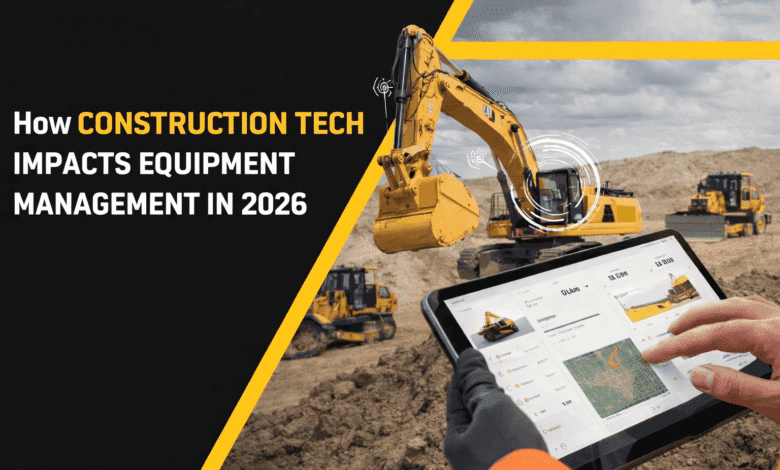
Construction technology impacts equipment management by fundamentally shifting operations from reactive repairs to data-driven maintenance. Instead of waiting for a breakdown to halt production, modern telematics and AI sensors allow managers to predict mechanical failures days in advance, drastically reduce fuel waste from idling, and diagnose system faults remotely. This transition ensures that your heavy machinery remains an asset that drives profit, rather than a liability that drains cash.
Let’s face the hard truth: If the “yellow iron” isn’t moving, the project isn’t making money.
For decades, fleet management relied on a mix of paper logs that went missing, scattered spreadsheets, and operator intuition. In the past, you often didn’t know a machine was in critical condition until it was already smoking on the job site.
But in 2026, that level of uncertainty is obsolete. Modern solutions—specifically Construction Telematics provide a real-time pulse on your entire fleet. Here is exactly how these tools are helping contractors protect their margins today.
Predictive Maintenance: Fix It Before It Smokes
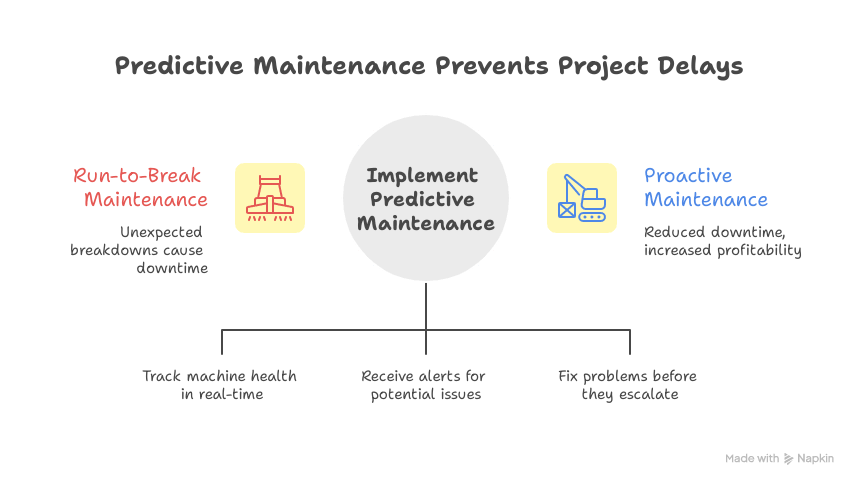
We have all been there. You are on a tight deadline, and suddenly your main excavator blows a hydraulic pump. Work stops, the crew stands around getting paid to do nothing, and you have to pay extra for emergency parts shipping.
This “run it until it breaks” method is the fastest way to kill your project’s profit.
Technology changes this with Predictive Maintenance. New machines come with sensors that monitor everything—heat, vibration, and pressure. Unlike standard GPS technology that just tracks location, these sensors track health.
Real-World Example: Instead of a surprise breakdown, you get a notification on your phone: “Check Hydraulic Pump B. Pressure is dropping.” You fix it during a shift change for $200, instead of replacing the whole system next week for $5,000. No drama, no downtime.
Stop Paying for Air (Idle Time Control)
Walking around a job site, you often see machines running while operators are checking their phones or waiting for a dump truck. That engine noise? That is the sound of your profit going up in smoke.
Industry data shows that on many sites, machines spend nearly 40% of their time idling. That means you are burning fuel and adding engine hours (which lowers resale value) for zero work.
Tech fixes this simply:
- The Tattletale: Software reports exactly which operator leaves the machine running the most, so you can train them.
- Auto-Kill: If a machine sits idle for more than 5 minutes, the system shuts the engine off automatically.
It’s an easy win. You save fuel, and your machines last longer.
Remote Diagnostics: The Virtual Mechanic
Sending a mechanic out to a remote site just to see “what’s wrong” is a huge waste of time and fuel. Half the time, they arrive, realize they don’t have the right part, and have to drive all the way back to the shop.
With remote diagnostics, your mechanic can log in from the office and see the exact fault code. They know it’s a “blocked fuel filter” before they even get in the truck. They grab the right part, drive out once, and fix it. One trip, job done.
Digital Logs & Resale Value
When it’s time to sell your old dozer, buyers want proof that you took care of it.
If you show them a greasy pile of paper receipts, they might not trust you. But if you show them a clean, digital history log that proves every oil change and service was done on time, the value goes up.
Digital logs store every maintenance record in the cloud. They can’t get lost, they can’t be faked, and they prove your machine is worth top dollar.
Conclusion: Stop Guessing
Managing equipment in 2026 isn’t about buying the most expensive software; it’s about stopping the leaks. It’s about using data to stop fuel theft, prevent breakdowns, and keep your fleet healthy.
The contractors who ignore this tech will keep paying for surprise repairs and wasted fuel. The ones who use it will keep their machines running—and their profits growing.
Quick FAQs
What is equipment management in construction technology?
In construction technology, equipment management means using digital tools—like GPS trackers and IoT sensors—to monitor the real-time health and location of your machinery. Instead of relying on manual paper logs, technology automates maintenance schedules and tracks usage hours, ensuring your fleet is always ready to work and not sitting idle in the shop.
What is the role of technology in construction management?
The main role of technology is to replace “guesswork” with hard data. It connects the office to the job site, allowing project managers to track progress, control budgets, and monitor safety without needing to be physically present. Tech ensures that decisions are based on accurate, real-time facts rather than outdated reports.
How do construction management software tools assist in equipment management?
Software tools act as the “central brain” for your fleet. They assist by automatically alerting you when a machine needs service (Predictive Maintenance), identifying which operators are wasting fuel through excessive idling, and storing digital service histories. This centralized data prevents expensive breakdowns and increases the resale value of your assets.
How does technology affect facility management?
Technology shifts facility management from reactive to proactive. By using smart sensors and building automation systems, managers can monitor energy usage, HVAC performance, and security in real-time. This helps detect small issues—like a water leak or a failing AC unit—before they become major, expensive disasters, significantly lowering operational costs.