3PL vs 4PL: Which One is Best for Warehouse Management?

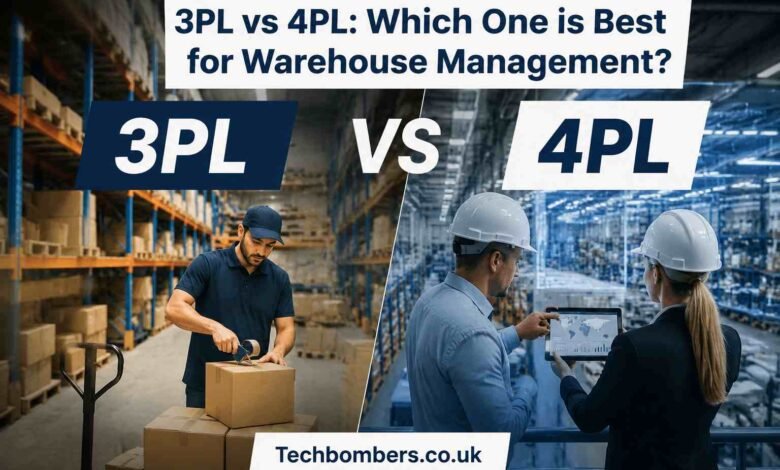
When it comes to warehouse management, the logistics solutions you choose can make or break your operations. 3PL (Third-Party Logistics) and 4PL (Fourth-Party Logistics) are two key terms in the logistics industry, and while they both offer benefits, they serve very different purposes.
So, which is better for your warehouse management needs? Let’s break it down: 3PL is typically the best choice for businesses focusing on warehousing, transportation, and day-to-day logistics management, whereas 4PL is ideal for businesses seeking a strategic, integrated approach to manage their entire supply chain.
Let’s dive into the details of both to help you decide which one aligns with your warehouse goals.
Quick Comparison: 3PL vs 4PL
| Feature | 3PL | 4PL |
| Role | Provides logistics services like warehousing, transportation, and inventory management. | Manages and integrates multiple 3PL providers, focusing on overall supply chain optimization. |
| Services | Warehousing, transportation, order fulfillment, pick and pack. | End-to-end supply chain management, strategic consulting, technology integration. |
| Level of Control | Focuses on logistics operations. | Manages the entire supply chain, including coordination of logistics providers. |
| Technology | Basic technology for operational efficiency. | Advanced technology for supply chain visibility and management. |
| Best For | Small to medium-sized businesses needing straightforward logistics management. | Large businesses with complex supply chain needs requiring strategic oversight. |
What is 3PL (Third-Party Logistics)?
A 3PL provider offers outsourced logistics services that manage critical supply chain functions like warehousing, transportation, inventory control, and order fulfillment. For businesses that don’t want to invest in their own logistics infrastructure or staff, 3PL services provide an efficient, cost-effective solution.
Core Services of 3PL
- Warehousing & Distribution: A 3PL typically operates and manages your warehouse, including receiving, storing, and shipping inventory.
- Transportation & Freight Management: They handle freight forwarding and manage transportation routes.
- Order Fulfillment: Packing, labeling, and shipping orders directly to customers.
- Inventory Management: Keeping track of inventory levels and ensuring stock availability.
Why Use 3PL in Warehouse Management?
3PL services are essential for businesses looking to streamline warehouse operations without the burden of managing every detail. Outsourcing to a 3PL provider allows businesses to:
- Save on Costs: 3PL providers typically offer economies of scale that make logistics cheaper than managing them in-house.
- Increase Efficiency: With years of expertise, 3PLs can optimize processes such as warehousing and transportation, improving delivery speed and reducing errors.
- Flexibility and Scalability: Whether you’re scaling up during peak seasons or need to reduce operations in quieter times, 3PLs allow for greater flexibility.
3PL providers focus purely on operations and are most effective for businesses that don’t require comprehensive strategic management of the entire supply chain. Their services are suitable for small to medium-sized enterprises (SMEs) or companies that need to focus on just the day-to-day logistics without worrying about the bigger picture.
What is 4PL (Fourth-Party Logistics)?
While 3PL focuses on logistics operations, 4PL takes a more comprehensive, strategic approach by managing your entire supply chain. A 4PL provider acts as a liaison between the company and multiple 3PL providers and other logistics partners, integrating the entire supply chain into a streamlined, optimized system.
Core Services of 4PL
- Supply Chain Integration: 4PLs handle the coordination of multiple 3PL providers, optimizing each link in the supply chain.
- Strategic Consulting: They offer high-level supply chain strategies to improve processes and cost-efficiency across your operations.
- Technology Solutions: Advanced tech solutions like warehouse management software (WMS) and transportation management systems (TMS) that provide complete visibility over the supply chain.
- End-to-End Management: From suppliers to customers, a 4PL integrates the entire supply chain, ensuring smooth operations from start to finish.
Why Use 4PL in Warehouse Management?
4PL is ideal for businesses that require high-level oversight and optimization of their entire supply chain, not just the logistics functions. Benefits of using a 4PL include:
- Holistic Supply Chain Management: 4PLs manage your entire supply chain, ensuring efficiency across every aspect of your logistics.
- Advanced Technology Integration: 4PLs often integrate complex software tools for complete transparency, enabling real-time tracking, monitoring, and decision-making.
- Strategic Insight: They provide valuable insights and strategic guidance to improve overall supply chain efficiency.
For large enterprises or companies with a complex supply chain, 4PL services allow businesses to take a hands-off approach and focus on growth, while the 4PL provider handles the logistics strategy.
Key Differences Between 3PL and 4PL
Operational Focus
The main difference between 3PL and 4PL lies in the scope of their operations:
- 3PL is focused on logistics functions like warehousing, transportation, and inventory control.
- 4PL goes beyond logistics and handles the integration, coordination, and overall strategy of the entire supply chain.
Level of Control
- 3PL providers typically take charge of day-to-day logistics operations but don’t oversee the broader supply chain.
- 4PL providers manage the entire supply chain, taking control of the coordination between suppliers, manufacturers, and logistics providers.
Technology Integration
- 3PLs use basic technology to manage their operations, such as WMS and TMS, but their focus is on logistics.
- 4PLs utilize advanced technology solutions for comprehensive supply chain visibility, including software for data analytics, performance tracking, and optimization.
Cost and Complexity
- 3PL is often less expensive and less complex, suitable for businesses that need cost-effective, operational solutions.
- 4PL is more expensive, reflecting its higher level of service and strategic oversight, but it offers an all-in-one supply chain management solution.
Which is Best for Your Warehouse Management?
The answer to whether 3PL or 4PL is best depends on the size of your business and the complexity of your supply chain.
3PL for Smaller Businesses or Simple Logistics
If you’re a small to mid-sized business or your warehouse operations don’t require complex integration, 3PL is often the best solution. It’s a cost-effective way to handle warehousing, shipping, and transportation needs without overcomplicating your operations.
4PL for Larger, More Complex Supply Chains
If your business operates on a larger scale with multiple suppliers, manufacturers, and third-party logistics providers, a 4PL might be the right choice. The ability to manage and optimize the entire supply chain through strategic oversight, technology integration, and continuous process improvement can significantly benefit larger enterprises.
Factors to Consider
- Size and Complexity of Your Business: Smaller businesses may benefit more from 3PL, while larger companies may need the strategic oversight provided by 4PL.
- Budget: 3PL is more affordable but may not provide the advanced tools and insights that 4PL offers.
- Long-Term Growth: Consider if your business is scaling and whether the integration and strategic approach of 4PL might be needed in the future.
Conclusion
Choosing between 3PL and 4PL ultimately depends on the scale and complexity of your warehouse and supply chain operations. For small businesses or those with basic logistics needs, 3PL offers a cost-effective, straightforward solution. For larger, more complex supply chains that require strategic oversight, 4PL is the optimal choice.
Evaluate your business needs, consider your future growth, and choose the logistics partner that aligns with your objectives.
FAQs
What does 3PL include in warehouse management?
3PL includes services like warehousing, inventory management, order fulfillment, freight management, and transportation. It allows businesses to outsource their logistics operations.
Can a 3PL also handle my company’s supply chain strategy?
No, a 3PL focuses primarily on logistics operations. If you need someone to manage your entire supply chain strategy, a 4PL is a better choice.
Is 4PL always more expensive than 3PL?
Yes, 4PL is typically more expensive because it offers integrated, strategic supply chain management, along with advanced technology and consultancy services.
Can I use both 3PL and 4PL?
Yes, some companies use both. A 4PL may oversee and manage multiple 3PL providers to optimize the entire supply chain, ensuring seamless operations from start to finish.
What industries benefit most from 4PL services?
Industries with complex supply chains, such as automotive, technology, retail, and manufacturing, benefit most from 4PL services because they require comprehensive oversight and coordination across multiple vendors.