
In recent years, businesses have generated more data than ever before. The speed at which data flows into organizations continues to increase, and managing this vast ocean of information has become more complex. For companies to remain competitive, they need to leverage data in real-time, optimize decision-making, and implement robust data operations that are both fast and reliable.
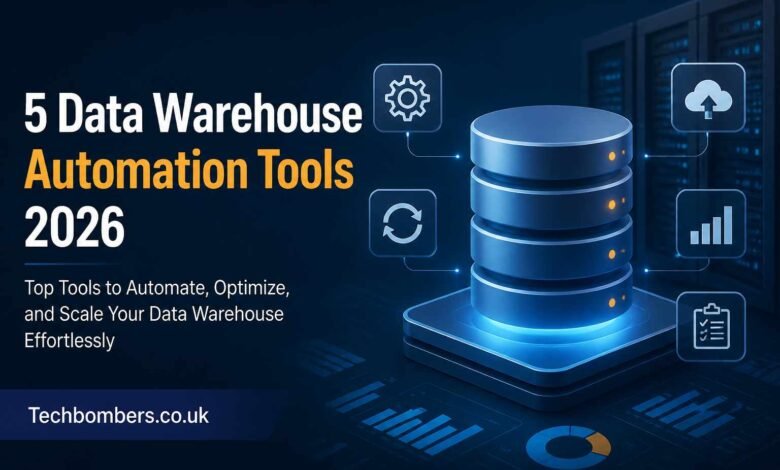
This is where data warehouse automation (DWA) comes into play. With automation tools designed to manage, clean, integrate, and analyze data, organizations can eliminate the laborious processes involved in data warehousing. As we move further into 2026, these automation tools will play a central role in transforming data management, saving time, and improving data accuracy. Let’s take a look at the top 5 tools that will dominate this space in the coming year.
Disclaimer
This article is not intended for promotional purposes; it is written solely to provide information to our users and is based on thorough research.
What is Data Warehouse Automation?
Data warehouse automation refers to the use of software tools and technologies to automate the creation, management, and operation of data warehouses. These tools handle tasks like data extraction, transformation, and loading (ETL), as well as orchestrating complex data workflows, integrating disparate data sources, and maintaining metadata.
By automating many of the manual processes involved in setting up and managing a data warehouse, organizations can significantly reduce the time and effort needed to process and analyze data. The result is faster insights, more accurate reports, and reduced costs.
Why Automation in Data Warehousing is More Important Than Ever
Increasing Volume of Data
As businesses continue to generate massive amounts of data from various sources like customer interactions, IoT devices, and social media, it becomes increasingly difficult to manage manually. The scale of data requires efficient systems that can handle a high volume and velocity of information seamlessly.
Cloud Adoption
More companies are moving their operations to the cloud. Cloud data warehousing platforms like Snowflake, Google BigQuery, and Amazon Redshift allow for scalability and faster data processing, but managing them manually can be cumbersome. Automation simplifies the deployment and management of these cloud-based systems, enabling organizations to benefit from their flexibility without getting bogged down by operational complexities.
Business Agility
The pace of business has accelerated. Companies need to make decisions faster, and this means they need quicker access to relevant data. Data warehouse automation tools enable real-time data processing and analysis, providing businesses with the agility they need to stay competitive.
The Top 5 Data Warehouse Automation Tools for 2026
WhereScape
WhereScape is an industry leader in data warehouse automation. Known for its metadata-driven approach, this tool streamlines the entire data warehouse lifecycle, from design and build to deployment and operations.
Key Features
- Metadata-Driven Automation: WhereScape uses metadata to create templates that automate repetitive tasks. This helps speed up data warehouse development by reusing pre-configured templates.
- Cross-Platform Compatibility: It works with a range of cloud platforms like AWS, Azure, and Google Cloud. WhereScape also supports on-premise environments.
- Data Integration: The tool integrates seamlessly with a variety of data sources, including SQL Server, Oracle, and others.
Pros
- Accelerated Development: Developers can use pre-built templates to quickly set up data pipelines and automate data workflows.
- End-to-End Automation: From design to deployment, WhereScape handles all stages of the data warehouse lifecycle.
Cons
- Learning Curve: While powerful, the platform can take some time to learn and may require specialized knowledge to use effectively.
Ideal Users
WhereScape is ideal for large enterprises that have complex data needs and require a tool that can scale with the business.
TimeXtender
TimeXtender is a low-code data automation platform designed to simplify the process of creating and managing data warehouses. It’s particularly useful for organizations with limited technical resources.
Key Features
- Low-Code Interface: TimeXtender’s drag-and-drop functionality allows users to design and deploy data workflows with minimal coding experience.
- Cloud and On-Premise Support: TimeXtender works seamlessly across both cloud-based and on-premise environments.
- Built-in Data Governance: The platform ensures that data is clean, accurate, and compliant with data governance policies.
Pros
- User-Friendly: Its low-code design makes it accessible to users with limited coding knowledge, making it a great choice for smaller teams or businesses without dedicated data engineers.
- Integration with Cloud: TimeXtender works effortlessly with cloud platforms like Azure, Amazon Web Services, and others.
Cons
- Limited Customization: While the low-code interface is a major strength, it may not be flexible enough for users who require highly customized solutions.
Ideal Users
Best for mid-sized businesses or those looking for an easy-to-use, cost-effective solution for building data warehouses with limited coding resources.
VaultSpeed
VaultSpeed is a unique platform designed for organizations that follow Data Vault 2.0 methodology, a popular approach to building scalable and agile data warehouses.
Key Features
- Data Vault 2.0 Automation: VaultSpeed automates the implementation of Data Vault 2.0 methodology, allowing teams to focus on higher-level tasks like analytics rather than manual data processing.
- Cloud-Native: The tool is optimized for cloud environments, supporting platforms like Snowflake and Databricks.
- Automated Code Generation: VaultSpeed automatically generates the necessary code to create data models and data pipelines.
Pros
- Designed for Complex Data: The platform excels in environments that require complex, large-scale data vaults.
- Quick Deployment: With automation features, VaultSpeed allows organizations to set up their data vaults in a fraction of the time it would take manually.
Cons
- Niche: VaultSpeed is best suited for organizations that are already committed to Data Vault 2.0 methodology, so it might not be suitable for teams unfamiliar with this approach.
Ideal Users
VaultSpeed is perfect for large data-driven enterprises that are using or plan to use Data Vault 2.0 for modeling and building their data warehouses.
Datavault Builder
Datavault Builder is another automation tool that specifically supports Data Vault 2.0 and focuses on model-driven data warehouse automation.
Key Features
- Visual Business Modeling: This tool includes visual design capabilities that allow users to easily model their data warehouse architecture.
- Integrated DevOps Support: Datavault Builder provides integration with DevOps tools, supporting CI/CD processes for seamless updates and deployments.
- Code Generation: The platform automates the generation of the code required for implementing and maintaining a Data Vault architecture.
Pros
- High-Level Automation: It automates the entire process, from design to deployment, saving significant time and effort.
- Business Model Focused: It allows users to design data models visually, making it easier to manage and understand complex data architectures.
Cons
- Technical Knowledge Required: While the tool simplifies many aspects of data warehouse automation, a strong understanding of Data Vault 2.0 is still essential for effective use.
Ideal Users
Organizations that use Data Vault 2.0 and want to streamline the process of creating and managing their data models. It’s best suited for large enterprises with dedicated data teams.
Qlik Compose for Data Warehouses
Qlik Compose is a widely used tool for automating the ETL processes and data integration within data warehouses. It integrates well with both traditional and modern cloud-based platforms.
Key Features
- Metadata-Driven Automation: Qlik Compose uses metadata to automate data processing tasks, ensuring consistency and reducing errors.
- Real-Time Data Integration: Supports both batch and real-time data processing, ensuring that data is always up-to-date.
- Support for Multiple Cloud Platforms: It integrates with cloud data platforms such as AWS, Google Cloud, and Azure.
Pros
- Real-Time Processing: Great for businesses that need real-time data insights.
- Comprehensive Integration: Works with a broad set of data sources, making it flexible and versatile.
Cons
- Complexity for Beginners: The interface can be overwhelming for new users, and it might take some time to get used to.
Ideal Users
Qlik Compose is best suited for large enterprises and businesses that need real-time data integration across multiple platforms.
How to Choose the Right Data Warehouse Automation Tool
Scalability
Consider the volume of data your organization manages. For businesses with high data volumes, a tool that offers scalability and flexibility to adapt to future growth is crucial.
Ease of Use
For teams without dedicated data engineers, user-friendly tools with low-code or no-code interfaces (like TimeXtender) can be a game-changer.
Cloud Compatibility
Ensure the tool integrates well with your preferred cloud platform (AWS, Azure, Google Cloud, etc.), as cloud-based data warehouses are becoming the standard.
Customization Needs
If your business has specific data requirements, you might need a more customizable solution. Tools like VaultSpeed and Datavault Builder offer this flexibility.
Cost
While automation tools can reduce long-term operational costs, consider the initial investment and compare it to the value it provides in terms of time savings and operational efficiency.
Conclusion
The rise of data warehouse automation tools has transformed the way organizations manage and analyze data. In 2026, these tools will continue to evolve, offering greater scalability, ease of use, and integration with cloud-based platforms. Whether you’re a small business looking for a simple low-code tool or a large enterprise with complex data needs, there’s a data warehouse automation solution for you.
By embracing automation, businesses can significantly cut down on manual tasks, reduce human error, and gain quicker, more accurate insights, ultimately enabling smarter, faster decision-making.
Choosing the right tool depends on your specific needs, whether you’re focused on cloud integration, ease of use, or advanced features like Data Vault methodology. Regardless of the tool, the future of data management lies in automation, and it’s time to take advantage of it.
For more insights, read our article on: The Role of AI and Machine Learning in 3PL Warehouse Automation