Industrial Power Station vs Traditional Generators: A Better Choice for Construction Projects

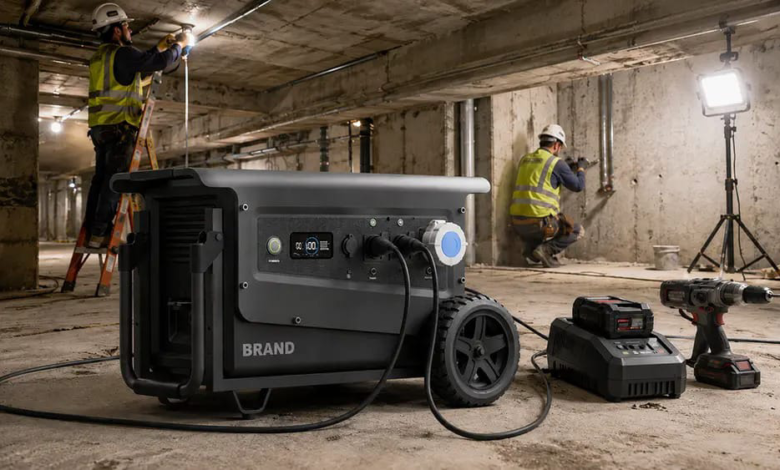
For decades, construction companies have only had one option when it came to power diesel or gasoline generators. This loud, fuel-guzzling equipment has become synonymous with the worksite, the growling of its engine accepted as an unavoidable part of outdoor work. But this long-held understanding is being turned on its head by innovative companies that recognize the value of a more versatile power source. A Waterproof Industrial Power Station is so much more than a standard generator that it’s almost not worth comparing the two. But to understand why industrial power stations are quickly replacing heavy machinery at construction sites, it’s important to look at the real-world benefits they provide.
The Hidden Costs of Generator Dependence
Traditional generators can be considered as creating a false economy. Their initial purchase price seems attractive, as many construction companies opt for them, but the ongoing costs are significantly high and remain virtually hidden until the commissioning of the site.
First of all, fuel, a major source of expenditure, is completely eliminated when using industrial power stations. Depending on the power of the generator, its fuel consumption per day varies from two to ten gallons. Considering that one gallon of fuel costs several dollars, the total fuel consumption for the year will be significantly higher than the cost of the generator itself. Moreover, the generator requires periodic maintenance, which is also a significant expense. It involves changing the oil and oil filters, cleaning or replacing the air filter, and special maintenance to prevent the formation of stale fuel. Finally, generators usually fail at the most unexpected times. Having waited for the right time to use the device, the site manager cannot call for service and technicians to fix the faulty generator immediately. Using industrial power stations eliminates all these problems and expenses, as well as significant accounting and bookkeeping difficulties.
The Noise Problem That Affects Everyone
Construction site managers probably do not complain about one of the generators’ main disadvantages that is associated with the incredible level of noise they produce. The noise generated by a typical electric generator reaches 85-100+ decibels, comparable to lawnmowers and chainsaws at a close range – creating numerous adverse effects for construction site workers. These effects are particularly notable for construction companies that have to work with generators in the vicinity of residential areas, hospitals, and other sensitive sites.
Firstly, the noise level of over 85 decibels implies that workers are at risk of developing hearing impairments, subjecting employers to obligations to ensure that all possible measures are taken to prevent it. Secondly, the generator’s noise is generally intolerable for the surrounding community, potentially resulting in lawsuits and various legal complications. For example, if a construction company has to work near a hospital, a school, or a residential area, the generator’s noise might be a deal-breaker for the project if it is prohibited in the area or generally unacceptable for the local administration. Finally, a construction site with a generator is characterized by adverse working conditions for the crew, resulting in the loss of productivity and extra organizational overhead. Since the noise produced by the generator makes verbal communication with the crew ineffective, the construction managers lose precious minutes and hours attempting to make the workers hear them, instead of working on the site. Additionally, the constant noise of the generator affects the workers’ psyche, often making it hard to concentrate on the task at hand. Construction managers then have to raise their voice and shout to make the workers hear them.
Environmental Impact and Community Relations
Environmental considerations are an increasingly crucial aspect of any construction site, as clients, regulatory agencies, and even communities demand reduced emissions-intensive practices. Diesel and gasoline powered generators emit carbon dioxide, nitrogen oxides, particulate matter, and volatile organic compounds, which are hazardous to the environment and human health; a worksite generator is likely to emit far more greenhouse gases than are permitted for indoor sources, and the cumulative impact of such emissions over the course of a single season is substantial.
Spilled fuel presents another environmental hazard, as generators must keep fuel reserves on-site, and large spills during the transfer process are both likely and potentially extremely damaging to the local ecosystem. Diesel and gasoline spills constitute a threat to natural aquifers and would require an expensive cleanup operation, which no responsible construction company would be willing to perform.
Industrial power plants which use large banks of rechargeable batteries as an energy storage unit do not produce emissions when in use, and when charged using solar power, constitute a zero-emission power source for the construction site. This is an extremely compelling argument for clients who must report directly to regulatory agencies, as well as local communities which might object to the presence of a power station which produces emissions.
Reliability in Challenging Conditions
Traditional generators have one major weakness which is exactly what you need when working in remote areas and when the weather takes a turn for the worse. Heavy rain leads to shorted circuits, very cold temperatures make starting the engine and maintaining the necessary pressure challenging, and generators simply do not function well at high altitudes due to the lack of oxygen. A dusty environment suffocates engines, coating critical parts in a film of grime.
The ability to provide electricity during the adverse weather conditions is the competitive differentiator you need to stay ahead of the game. While the worksite is forced to halt due to stormy weather, you can keep working with a power station that will not be compromised by rain, dust, high temperatures, or extreme cold.
Operational Flexibility and Scalability
Construction can be unpredictable. Early on, they may not need much power, but later, they could need thousands of watts more than they started with. With traditional generators, you are either paying for a generator that is too big by using the same one for its entire lifespan, or you buy smaller ones that will quickly max out and not provide enough power.
With industrial power stations, there is a middle ground. You can buy what you need now, and then additional batteries that increase the power of your station. These power stations can scale with you, instead of you having to always guess at how much power you may need in the future and buying something even bigger than you need.
The amount you buy can even be used elsewhere. You can utilize the equipment you purchased on new projects as well. This does away with some of the waste and sunk cost fallacy that comes with renting or buying a traditional power generator.
The Power Quality Advantage
Here is the technical difference between these two variants that may be of significance from the practical perspective. Generators are able to provide unstable voltage and frequency, whereas the industry sources offer the possibility to supply the equipment with a stable current. The unstable voltage and frequency may lead to malfunctioning of many electronic devices and components.
Such devices as power equipment with electronic regulators, computers, LED lamps with drivers, and battery chargers need stable electricity to function properly. The voltage and frequency provided by the industry will ensure these devices are working correctly and will not harm their sensitive electronics. This factor should be taken into account when choosing the equipment for the workplace, since it will reduce the failure rate and increase productivity and profit.
Transition Reliability During Power Transfers
When the grid goes down at a jobsite, the brief but necessary switch to backup generators can take precious time and cause serious problems. That means lights go out, systems are powered down, and delicate systems and equipment are vulnerable to damage. But with an industrial power station that offers seamless backup, there’s no transition period to worry about. The switch takes place in milliseconds, not minutes. In this way, the safety-critical systems remain powered up, and production equipment stays running like normal. The generator just can’t make that kind of difference.
Intelligent Management and Visibility
Modern construction requires more than generators could provide. Power plants with advanced control systems allow site managers to view the status of electrical energy, get information about its level, and determine its rational use for different needs.
Thanks to this technology, the manager can ensure the quality of energy use and take measures to prevent its unexpected depletion. In addition, this system helps in finding ways to optimize the current expenditures. Using generators, it is impossible to know the current state of electricity; the manager only assumes that the generators are working fine until the opposite is established.
Total Cost of Ownership Over Project Lifecycles
When calculating the real total cost of ownership over time, industrial power stations have proven to be more economical than generators. Not only do fuel costs tend to be significantly lower, but the lack of required maintenance, repairs, and even noise pollution makes them hard to beat from a value perspective. In addition, the power stations’ reliability, silence, and overall environmental friendliness, compared to generators, are impossible to ignore.
The Professional Standard Emerges
Construction has always been integrated with technologies that make the process more effective and profitable. Industrial power stations are the best choice for power plants since they are the most optimal solution in terms of cost, reliability, ecology, noise, versatility, and sophistication.
Leading construction companies are actively opting out of using generators and instead, choose the modern approach using the Power Station 5000w. With its reliable battery, smart management, water resistance, and expandability, the power station has become the most demanded among progressive companies that want to stay ahead of the competitors.
Thus, construction companies have two options, remain outdated and continue using generators or step into the future and implement the latest technologies such as industrial power stations.