
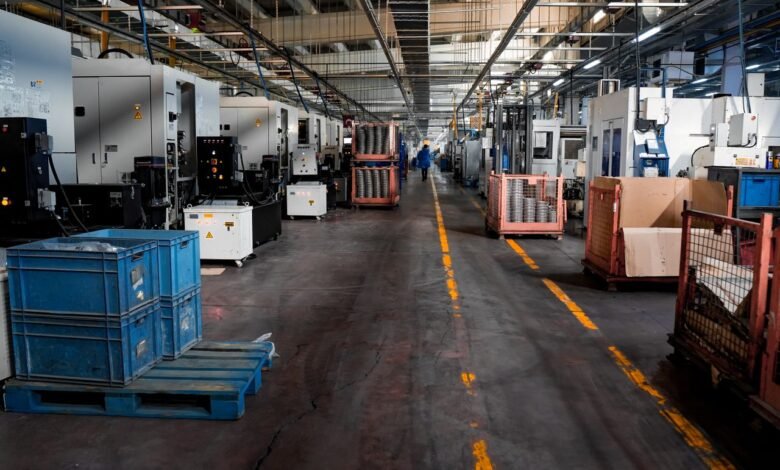
Think about the tools you rely on daily. When did you last stop to wonder how they’re actually built? Most people picture innovation as something that happens under fluorescent lights in some lab — whiteboards, prototypes, eureka moments. But that’s only half the story. The real work happens on the shop floor. Manufacturing is where drawings become things you can hold, and without skilled production behind them, even brilliant designs stay stuck on paper. Across industries — automotive, aerospace, firearms — precision manufacturing is what determines whether a product performs or fails. Engineering and production aren’t separate phases. They’re inseparable.
How Precision Manufacturing Drives Product Excellence
Tolerances matter. Full stop. When engineers spec out a product, they’re defining exact dimensions and material properties that cannot be fudged. A pistol optic mounting plate, for instance, must hit tight specs so the optic stays zeroed across thousands of rounds. Let that mounting surface drift by a few thousandths of an inch? The optic shifts. Accuracy disappears. The whole point of adding sighting equipment to a firearm gets undermined by a gap you can barely measure. Modern CNC machining holds these tolerances batch after batch — every unit matching the same standard, consistently.
Materials aren’t interchangeable either. Hardened, heat-treated steel outperforms aluminum and standard steel alternatives in applications where mounting plates absorb repeated recoil impulses. Without proper hardening, micro-deformations accumulate. Small at first, then suddenly the connection between optic and slide is loose and your zero is gone. Heat treatment creates a material structure that resists those stresses. Manufacturers who cut that step save money once — then watch their reputation erode when products fail in actual use.
Engineering Compatibility Through Manufacturing Precision
Different platforms play by different rules. A Glock slide carries different dimensions and thread specs than a Sig Sauer or a Smith & Wesson. The Trijicon RMR, Holosun 509T, and Aimpoint Acro each demand their own footprints and mounting geometry. A plate cut for the RMR needs completely different hole locations and depths than one built for the Holosun EPS. That’s not a small difference — it’s the difference between a system that works and one that doesn’t fit at all. Manufacturers who invest in quality CNC programming can run multiple variants at the same precision level, getting the fitment right every time.
Thread integrity is just as critical. Poorly cut threads, worn tooling, material that’s too soft — any of these lets fasteners walk loose under recoil. Quality shops verify thread pitch and depth, use proper tooling, and often apply threadlocking compounds to keep everything tight through extended shooting. For competitive shooters and armorers running thousands of rounds a year, a S&W red dot adapter plate machined from hardened steel means thread engagement and mounting surfaces hold zero reliably — round after round. Reliable mounting isn’t just a performance issue. It’s a safety one.
Real-World Performance Validates Manufacturing Standards
The gap between good and poor manufacturing shows up fast in the field. A concealed carrier needs their optic-equipped pistol to work every single time — no exceptions. Competitive shooters pushing gear to its limits find out quickly when mounting systems fail. Law enforcement and military personnel? They have zero tolerance for equipment that folds under pressure. When an adapter plate is machined from hardened steel to proper specs, users get reliable zero maintenance, minimal drift, and genuine confidence that their gear won’t quit.
Domestic manufacturing adds another layer of accountability. U.S.-based manufacturers operate under established regulatory frameworks, follow industry standards, and typically back their products with warranties — because they actually know what went into making them. That warranty only means something when production consistently delivers. Companies that can’t hold that standard don’t last. It’s a natural filter. Quality manufacturers survive; sloppy ones disappear.
Advancing Technology Through Manufacturing Innovation
Modern machining keeps expanding what’s possible. Advanced CNC capabilities produce features and tolerances that were unattainable even a decade ago. Hybrid manufacturing approaches are opening design possibilities that older methods couldn’t touch — while still hitting the precision standards demanding applications require. Optic adapter plates designed to accommodate multiple footprints benefit directly from these advances; designers can now create internal geometries that simply weren’t feasible before. Manufacturers who invest in current equipment and training don’t just cut costs. They gain the ability to solve harder engineering problems more elegantly.
The relationship between design and manufacturing has grown tighter, too. Today’s manufacturers get involved during the design phase — flagging potential production problems before drawings are finalized. A slide milling operation for a Holosun EPS footprint, for example, goes better when firearms designers and manufacturing experts are talking early, working through the constraints and possibilities of the milling process together. Fewer downstream problems. Better products reaching end users.
Conclusion
Ideas without quality production are theoretical exercises. Nothing more. In fields like firearms — where safety and reliability aren’t optional — manufacturing quality translates directly into performance that people stake their lives on. Tight tolerances, proper materials, advanced machining: these aren’t buzzwords. They’re what makes optic mounting systems and adapter plates function as designed through years of hard use. Whether you’re a competitive shooter, a concealed carrier, or a firearms professional, your equipment’s reliability traces back to one thing — the manufacturer’s actual commitment to doing the work right. In a world judged by real-world results, manufacturing quality is what separates gear that performs from gear that just photographs well.