
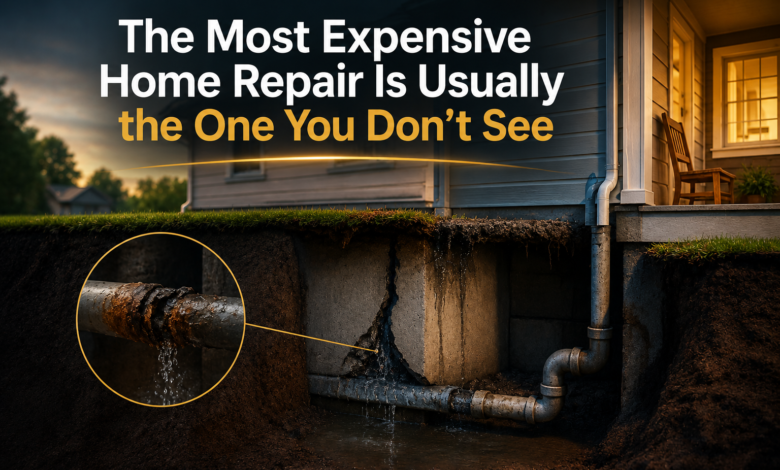
Right now, something could be quietly eating through your walls. Most homeowners chase the obvious stuff — cracked tile, peeling paint, a gutter pulling away from the fascia. Understandable. But the repairs that truly gut a budget? Invisible ones. Water intrusion. Structural rot. Pest colonies. Mold spreading through insulation. None of it announces itself. By the time you notice, the bill is already enormous — and the window for a cheap fix has long closed.
Understanding Hidden Water Damage
Water doesn’t rush. It seeps through a pinhole in a pipe fitting, saturates insulation across weeks, then quietly starts working on the framing behind it. A ceiling stain? That’s the late-stage warning. By then, the damage underneath is usually far worse than it looks. Roof leaks behave the same way — slow, silent, destructive. Check under sinks regularly. Press on cabinet floors; soft spots are a red flag. Watch your water meter for any uptick that doesn’t match your usage. Ten minutes, maybe. Compare that to the cost of replacing water-damaged subflooring or a rotted structural beam. The math is brutal.
Structural Issues That Develop Slowly
Foundations carry enormous load. Even minor soil movement beneath a slab translates into real structural stress over time. The early clues are easy to dismiss — a door that suddenly sticks, hairline drywall cracks that keep coming back after you patch them, a floor with a faint new sag. None of it screams emergency. But each one is worth a second look. A professional foundation inspection catches poor drainage, soil erosion, and improper grading before those conditions compromise the whole structure. Waiting is expensive. Tens of thousands of dollars expensive. Catching problems while the signs are still subtle is almost always the cheaper path — by a wide margin.
Pest Infestations and Wood Destroying Organisms
Termites don’t knock. Carpenter ants don’t leave notes. These insects work inside walls and floor joists for years — hollowing out the wood holding a house together — and they’re typically discovered only after serious structural damage has already set in. Treatment alone gets costly. But when an infestation has progressed far enough, entire sections of framing may need full replacement. That combination frequently exceeds almost any other single repair on the list. Annual pest inspections are cheap by comparison. So is sealing foundation entry points, clearing wood debris from the perimeter, and keeping grading correct so moisture doesn’t accumulate against the structure.
Mold Growth in Hidden Spaces
Mold needs two things. Moisture and darkness. Attics, wall cavities, basement corners — it finds all of them. The mold on shower grout is annoying but manageable. Mold growing behind drywall or through a batt of insulation is a different problem entirely. It damages materials and creates health concerns that demand professional remediation — removal, disposal, full replacement. None of it is cheap. Prevention, though, is straightforward: cut off moisture sources, improve ventilation in humid spaces, keep gutters clear so water doesn’t pool against the foundation. Stop the moisture. You largely stop the mold.
Early Detection Saves Money
Every hidden problem here shares one trait — it gets dramatically more expensive the longer it goes unnoticed. A leak caught within days might mean new drywall and a coat of paint. The same leak found six months later could mean structural repairs. The cost gap isn’t marginal; it’s often tenfold or worse. Homeowners in storm-prone regions frequently schedule professional roof inspections after severe weather, relying on a Wichita roofing company to spot vulnerabilities before water infiltration reaches the interior and triggers the chain of hidden damage that proves most costly. Keep a maintenance log. Note changes — even small ones. Moisture detectors, pest monitoring services, and periodic professional assessments cost a fraction of what deferred problems eventually demand.
Conclusion
The damage you can’t see is the damage most likely to wreck your budget. Water, structural movement, insects, mold — they all operate quietly, building toward an expensive reveal. Regular inspections of attics, crawl spaces, basements, and other vulnerable areas give you a real shot at intercepting these problems while they’re still manageable. Proactive maintenance isn’t just about fixing things. It’s about making sure the worst repairs never happen at all.