
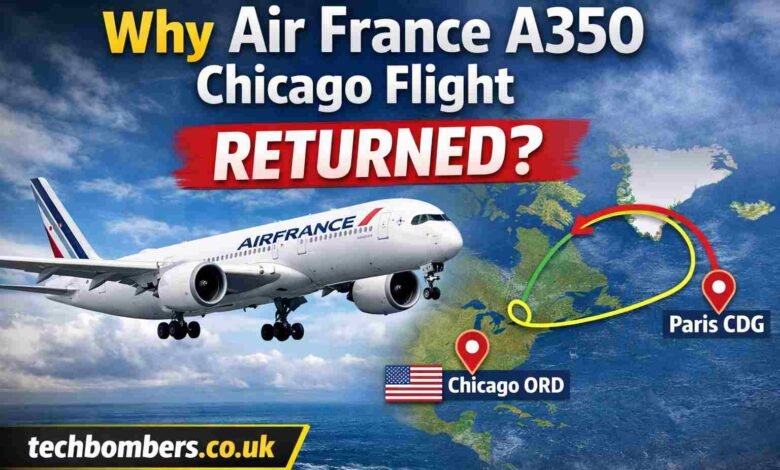
On June 28, 2025, an Air France flight made headlines for all the wrong reasons. Flight AF136, a direct route from Paris-Charles de Gaulle Airport (CDG) to Chicago O’Hare (ORD), turned around mid-flight, leaving passengers baffled and aviation enthusiasts curious. After being airborne for several hours, the Airbus A350-900 was forced to return to Paris, sparking a range of questions. Why did it happen? Was it a technical malfunction, or were there other factors at play? Let’s break down the mystery behind the return of this Air France flight.
The Flight’s Journey: From Paris to Chicago
Air France flight AF136 was expected to be another routine transatlantic flight, a connection between the cosmopolitan city of Paris and the vibrant Chicago skyline.
The flight took off from Paris-Charles de Gaulle Airport on June 28, 2025, around 12:49 CEST. On board were hundreds of passengers, eager to embark on their journey across the Atlantic. The Airbus A350, renowned for its fuel efficiency and advanced technology, was the aircraft chosen for this long-haul route. With a flight duration of approximately 8 to 9 hours, the passengers were ready for the transatlantic journey. But, as they would soon discover, things were not going as planned.
As the plane soared over the Atlantic Ocean, somewhere near the Iceland/Greenland region, the flight experienced a sudden and unexpected change of course. The aircraft, instead of continuing its route to Chicago, began to circle back toward Paris. The reason for this mid-air decision remained unclear at the time.
What Happened Mid-Air? The Turnaround Decision
It wasn’t until later that the mystery began to unravel. Air France issued an official statement, citing “operational reasons” as the cause of the turnaround. While this may sound like a standard explanation, it did little to clarify the situation. The public and passengers alike were left wondering: Was there a technical fault with the aircraft? Was there an emergency on board? Or was something else at play?
In reality, the issue was not related to the Airbus A350 itself. The aircraft, one of the newest in Air France’s fleet, was equipped with cutting-edge technology and was running smoothly. The problem wasn’t mechanical—it was operational.
What Were the Possible Causes?
The likely cause of the flight’s return was linked to regulatory clearance issues. When a flight travels from one country to another, there are numerous checks and balances that must be in place. These checks ensure that the aircraft complies with all international aviation regulations, including immigration, security, and customs clearances. If any of these checks are missed, or if the necessary paperwork isn’t in order, the flight cannot legally land at its intended destination.
In this case, it seems that Air France’s Airbus A350 wasn’t cleared for landing in Chicago. There were reports that the plane’s clearance for entry into the United States had not been fully processed or confirmed by U.S. Customs and Border Protection (CBP). This meant the flight could not proceed to Chicago.
The Role of U.S. Regulations
To understand why this happened, it’s important to consider the regulations governing international flights to the U.S. Airlines must obtain landing permissions for all incoming international flights. These permissions include ensuring that all required documentation, including customs and security checks, are in place well before the flight departs. In many cases, this paperwork must be filed a minimum of 24 hours before the flight.
If these steps aren’t completed in time, the aircraft may not be permitted to land at its destination. This issue was likely compounded by the fact that Air France’s new Airbus A350 might not have been fully registered for U.S. operations at that time. This left the airline with no choice but to return to Paris rather than risk being denied entry into Chicago after arriving.
You May Also Check: United Flight UA967 Diverted: What Happened and Why?
The Passenger Experience
As you can imagine, being told that your flight is turning around after hours in the air isn’t something that happens every day. Passengers on flight AF136 were understandably surprised by the sudden change of course. Reports from passengers indicate that many were confused and frustrated, unsure of what was happening or why the flight was turning back.
Air France, as expected, took steps to ensure that passengers were re-accommodated and that any delays were handled smoothly. After the aircraft returned to Paris-Charles de Gaulle Airport, passengers were provided with options to either rebook their flights or receive compensation for the inconvenience.
Despite the frustration of having to turn back, most passengers seemed understanding, recognizing that regulatory issues were at play rather than a fault with the aircraft itself.
Why Turnarounds Like This Are Rare
Incidents like the one involving Air France flight AF136 are incredibly rare. Turning back mid-flight is generally considered a last resort. Commercial airlines prioritize the safety and comfort of their passengers, and turning around mid-journey requires careful consideration of several factors, including fuel consumption, crew workload, and the operational costs involved.
However, when it comes to regulatory clearance, airlines have no choice but to comply. The safety and legality of the flight must always come first. If that means returning to the airport of origin, then so be it.
Airline Response: Handling a Crisis
After the flight returned to Paris, Air France provided updates to both the passengers on board and the public. The airline acknowledged the inconvenience caused by the situation and emphasized that the issue was operational, not technical.
The Air France response highlighted that such issues are part of international aviation and that regulatory compliance is a critical part of their operations. The airline assured passengers that it was working to rectify the situation and make sure such incidents don’t happen again.
For those who were delayed, Air France arranged alternate travel options, including flights to Chicago on other dates, and offered compensation for the inconvenience.
Regulatory and Operational Factors at Play
So, what lessons can be learned from this incident? First, it’s clear that U.S. aviation regulations are strict, particularly when it comes to international flights. Airlines must comply with multiple layers of regulations, from immigration and security checks to customs clearances, before a flight can enter U.S. airspace.
The incident also highlights the complexity of modern aviation. Aircraft like the Airbus A350 are designed to be high-tech marvels, but even the most advanced aircraft are subject to the whims of international regulatory frameworks. Airlines, while technologically advanced, still depend on human factors and meticulous coordination to ensure smooth operations.
Conclusion: A Rare Incident with Valuable Lessons
In conclusion, the mystery of Air France flight AF136 turning back mid-flight isn’t as mysterious as it first seemed. While passengers may have been disappointed by the turn of events, the airline’s quick response and transparency helped minimize the fallout. The incident serves as a reminder of the intricacies of international aviation regulations and the importance of timely paperwork and clearances.
Ultimately, the return of AF136 was caused by operational issues rather than any fault with the aircraft itself. It also showed the resilience of passengers and the efficiency of Air France in managing a challenging situation. While this incident is certainly rare, it serves as a valuable lesson for both airlines and passengers alike about the importance of regulatory compliance in the modern aviation world.
You May Also Check: Delta Flight DL275 Diverted to LAX: What Really Happened