

You have probably tried something before. A meditation app. A productivity system. Maybe a journal that sat half filled on your nightstand. And on your actual worst days none of it helped because those tools assume you already have some energy left to spend.
So it makes sense to wonder whether an Anti-Burnout App can genuinely help when you have nothing left in the tank or if that is just another promise wellness marketing likes to make.
The honest answer is it depends entirely on what the app is actually built around. Most are not built for your worst day. They are built for a slightly tired version of you who still has the will to sit through a twenty minute session.
Burnout Is Not The Same As Depression
This distinction gets blurred constantly in casual conversation but it matters for figuring out what kind of help actually fits. Burnout is tied specifically to a person’s relationship with their work or role. Depression tends to spread across every part of life regardless of the trigger. Someone experiencing burnout might still feel genuine joy in other parts of their life such as time with family or a hobby outside of work while feeling completely drained by their job specifically. Someone experiencing depression more often carries that flatness everywhere.
This does not mean the two never overlap. Long enough unmanaged burnout can contribute to depression developing. It simply means the starting point tends to look different. Burnout usually calls for structural change plus daily recovery practices. Depression usually calls for clinical treatment. If you are unsure which one describes your situation, a conversation with a doctor or therapist is the right next step rather than guessing based on a symptom checklist alone.
What A Genuinely Useful Anti-Burnout App Needs To Get Right
Given what burnout actually is here is what separates a real option from a marketing wrapper.
- Works with almost no energy input since exhaustion is the core symptom not a side effect
- Does not rely on guilt or streaks since burnout already involves feeling like you are failing
- Offers some personalization since a generic script ignores where a person actually is
- Is shaped by people with real clinical grounding rather than generic content writers
- Offers more than a single repeated exercise so it does not go stale
How One App Tries To Answer This
Tuun is one option worth looking at closely because its structure was built directly around these constraints rather than around a general wellness theme.
The Daily Card
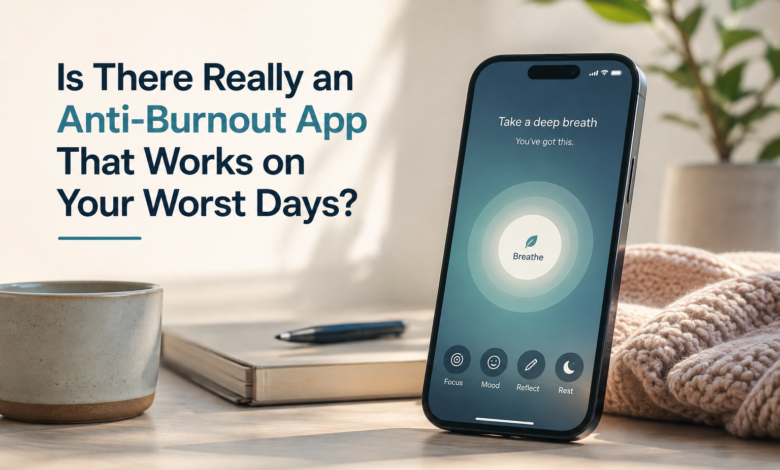
Every session runs five to seven minutes. It starts with a small physical step such as slow breathing followed by one tiny action. Nothing longer because a longer ask is exactly what burnout makes impossible to follow through on.
The Two Minute Starting Quiz
Before your first card appears you answer a short quiz about how you have been feeling. Your plan gets built from that rather than handed to you as a generic default everyone receives regardless of their actual state.
No Streaks No Guilt
Missing a day changes nothing here. There is no streak counter and no shaming notification waiting for you when you come back. A rough stretch gets treated as part of the plan rather than a failure that needs fixing.
Built By People With Real Training
More than fifteen therapists, somatic practitioners and coaches shaped the daily card system including a clinical psychologist and a licensed therapist on the core team. That clinical grounding is a meaningful difference from apps built purely around generic self help content.
The Numbers Worth Checking Yourself
More than eighty thousand daily cards have been completed through the Anti-Burnout App. It holds a 4.7 rating on Trustpilot and a 4.8 average across the App Store and Google Play with more than ten thousand active members. These are figures you can verify directly rather than take on faith from marketing copy.
What This Kind Of App Is Not
It is worth being honest about the limits here too. This is not therapy and it does not claim to replace a doctor or a licensed provider. Since the WHO frames burnout as coming from workplace conditions rather than an individual failing, no app can fix a job that is structurally unsustainable. What it can realistically do is give your nervous system small daily recovery signals while you work on the larger pieces whether that means a conversation with a manager, a change in workload or in some cases a bigger decision about the role itself.
Who This Actually Helps
You do not need a formal diagnosis to benefit from something like this. Most people experiencing burnout never sit down and think in terms of the three official ICD-11 symptoms. They just know they feel drained and cynical about work that used to matter to them and less effective than they used to be. If that description feels familiar a low effort daily practice is a reasonable place to start even while you sort out the bigger picture.
So Is There Really One That Works
There is no app that undoes burnout overnight and any product claiming that should raise your suspicion rather than your hope. What genuinely helps is a tool built around the real shape of the problem. Something that asks almost nothing of you on your worst day treats a missed day as normal rather than a failure and is shaped by people who actually understand what chronic depletion does to a person’s ability to start anything at all. Judged against that bar, an app like this is not a miracle cure. It is simply built for the days everything else assumes you can already push through.