
Understanding the fundamentals of large format printing
Selecting the right material for outdoor signage is a decision that balances aesthetics, longevity, and safety. In the world of large format printing, the two primary contenders for outdoor dominance are PVC and Mesh. While they might look similar from a distance, their structural properties are vastly different, leading to distinct performance outcomes in various environments.
When companies look to invest in high impact advertising, they often turn to professional printing services to ensure their brand is represented accurately. HelloPrint provides a wide array of options for businesses seeking these durable solutions, helping bridge the gap between creative design and technical execution. Understanding the nuances of these materials is the first step in ensuring your outdoor campaign survives the elements.
The physical composition of PVC banners
PVC, or polyvinyl chloride, is the industry standard for traditional outdoor banners. This material is essentially a high strength polyester fabric sandwiched between two layers of PVC vinyl. The result is a smooth, solid surface that offers incredible vibrancy for printed graphics.
1. Frontlit PVC: This is the most common type, designed for light to hit the front of the banner. It is opaque and prevents light from passing through from the back.
2. Blockout PVC: This version contains a black internal layer that ensures zero light transparency, making it ideal for double sided printing.
3. Backlit PVC: Used primarily for lightboxes, this material is engineered to allow light to diffuse evenly from behind the graphic.
The solid nature of PVC makes it an excellent canvas for high resolution imagery. Because there are no holes in the substrate, every drop of ink stays on the surface, resulting in deep blacks and vivid colors that pop. This makes it the preferred choice for events where the audience will be viewing the banner from a close distance.
The engineering behind mesh banner breathability
Mesh banners are a specialized evolution of the standard vinyl sign. They are manufactured with thousands of tiny perforations, creating a screen like effect. This design is not merely aesthetic; it is a functional requirement for specific high wind environments.
The mesh structure typically follows a 70/30 or 90/10 ratio. In a 70/30 mesh, seventy percent of the surface area is printable material, while thirty percent consists of small holes. This allows air to flow directly through the banner rather than pushing against it. For large scale building wraps or fence advertisements, this breathability is essential to prevent the banner from acting like a giant sail.
Weather resistance and environmental stressors
Outdoor durability is measured by how well a material stands up to ultraviolet radiation, precipitation, and temperature fluctuations. Both Mesh and PVC are treated with UV inhibitors to prevent the ink from fading and the material from becoming brittle.
1. UV Exposure: Over time, intense sunlight can break down the chemical bonds in vinyl. High quality PVC is often coated to reflect a portion of this radiation.
2. Moisture Management: PVC is naturally waterproof. Rain simply slides off the surface. Mesh also handles moisture well, as the holes allow water to pass through and the material dries quickly due to increased airflow.
3. Temperature Fluctuations: In extreme cold, PVC can become stiff, whereas mesh tends to remain more flexible. Conversely, in extreme heat, PVC may expand slightly, which requires careful tensioning during installation.
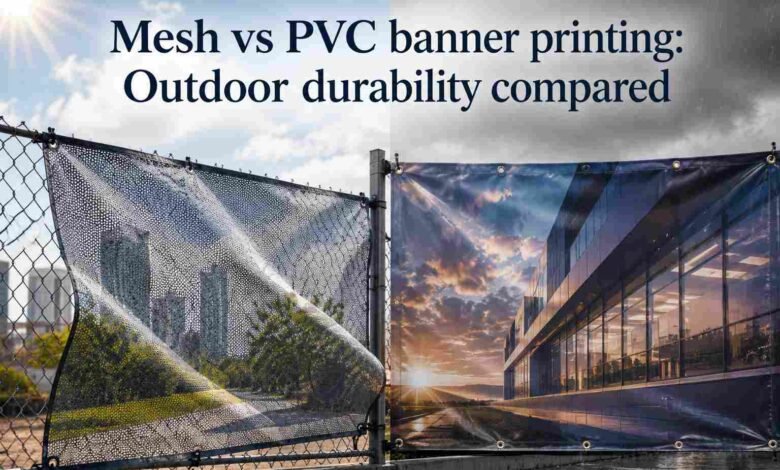
When considering Mesh vs PVC banner printing: Outdoor durability compared, it is clear that HelloPrint offers products designed to withstand these specific environmental pressures. The choice often comes down to the specific microclimate of the installation site.
Wind load calculations and safety considerations
Wind is the single greatest threat to outdoor signage. When wind hits a solid PVC banner, it creates immense pressure on the eyelets, the frame, and the structure behind it. This is known as wind loading. In urban canyons or open fields, a solid banner can easily rip out of its fixings or even cause structural damage to a fence.
Mesh banners significantly reduce this risk. By allowing a portion of the wind to pass through the fabric, the physical load on the mounting points is reduced by approximately thirty percent. This makes mesh the mandatory choice for scaffolding, bridges, and high rise building wraps. Using a solid PVC banner on a temporary construction fence during a storm is a recipe for a collapsed fence line.
Print quality and visual impact across distances
One of the most significant differences between these two materials is how they look to the human eye. Because mesh is full of holes, the colors will always appear slightly less saturated than they would on solid PVC. The light passing through the back of a mesh banner can wash out the image if it is not placed against a dark background.
1. Viewing Distance: From ten meters away, the holes in a mesh banner become invisible to the naked eye, and the image looks solid.
2. Color Depth: PVC offers the best color reproduction. If your brand guidelines require an exact Pantone match with deep saturation, PVC is the superior choice.
3. Transparency: Mesh allows people inside a building to see out through a window wrap, while those outside see the printed graphic. This dual functionality is something solid PVC cannot offer.
For retail displays where customers are walking right past the sign, the high fidelity of PVC is usually preferred. Many businesses utilize HelloPrint to source high resolution PVC banners for storefronts where visual crispness is the top priority.
Installation techniques for maximum longevity
Even the highest quality material will fail if installed incorrectly. Durability is as much about the hardware as it is about the fabric.
1. Hemming: Always ensure your banners have heat welded or stitched hems. This doubles the thickness of the material at the edges where the tension is highest.
2. Eyelets: Nickel plated or brass eyelets should be placed every thirty to fifty centimeters. For very large banners, reinforced corner tabs are a necessity.
3. Tensioning: Banners should be taut but not overstretched. Using bungee cords allows for a small amount of movement, which can absorb the shock of sudden wind gusts.
4. Cable Ties vs Bungee: While cable ties are cheap, they are rigid and prone to snapping. Elasticated bungees are much better for long term outdoor use as they move with the banner.
Cost efficiency and long term value analysis
When analyzing the budget for an outdoor campaign, the initial purchase price is only one part of the equation. PVC is generally more affordable to produce because the manufacturing process for solid vinyl is less complex than creating a perforated mesh.
However, the long term value of mesh becomes apparent in high wind areas. If a PVC banner rips after two weeks because of a storm, the cost per day of that advertisement skyrockets. Mesh acts as an insurance policy against the weather. For long term installations lasting six months or more, the durability of mesh often justifies the slightly higher upfront cost.
Many marketing managers find that HelloPrint provides competitive pricing structures that make the jump from PVC to mesh more accessible for large scale projects. By evaluating the expected lifespan of the campaign, you can determine which material offers the best return on investment.
Choosing the right material for your specific location
To make the final decision, you must audit the specific location where the banner will live. A banner tucked away in a sheltered alleyway has very different requirements than one mounted on a coastal pier.
1. For Scaffolding and Fences: Always choose mesh. The safety risks of wind loading are too high to ignore.
2. For Wall Mounts: If the banner is being flushed mounted against a solid brick wall, PVC is perfect. There is no air behind it to cause a sail effect, and you get the benefit of better color.
3. For Short Term Events: If you are hosting a weekend festival in a sheltered park, PVC is the most cost effective and visually striking option.
4. For Building Wraps: Mesh is the only viable option for covering large sections of a building facade.
By partnering with an experienced provider like HelloPrint, you can ensure that regardless of the material chosen, the finishing and print quality will meet professional standards. The debate between mesh and PVC isn’t about which material is better in a vacuum, but which material is better for your specific environment.
Navigating the future of outdoor displays
As printing technology continues to advance, the gap between mesh and PVC is narrowing. New ink formulations are allowing for even better adhesion on perforated surfaces, and recycled PVC options are becoming more prevalent for eco conscious brands. The durability of your outdoor signage depends on a holistic approach that considers wind, light, and installation method.
When you weigh the benefits of a solid surface against the aerodynamic advantages of a perforated one, the choice becomes a matter of engineering. By prioritizing the structural integrity of your display, you ensure that your message remains visible and vibrant long after the installation day. Whether you prioritize the photographic punch of PVC or the rugged resilience of mesh, selecting the right substrate is the foundation of any successful outdoor marketing strategy.