


An RFI (Request for Information) is a formal document used to clarify gaps, errors, or missing details in construction plans. It acts as a bridge between the contractor on-site and the architects or engineers in the office. Without a clear RFI process, small mistakes on paper can turn into expensive disasters in the field.
I’ve seen projects come to a dead stop because a drawing didn’t show where a pipe should go. An RFI is how you get that answer in writing. It’s not just a question; it’s a tool to keep the project moving.
Why is an RFI necessary on your jobsite?
An RFI is necessary because it protects you from liability and ensures every worker is following the same updated plan. Construction blueprints are rarely perfect and often contain conflicting information. A formal RFI creates a legal paper trail that proves you asked for clarification before moving forward.
If you guess the answer instead of asking, you might have to tear down hours of work later. I believe the RFI is your best insurance policy against “re-work” and wasted materials. It keeps the responsibility on the designers to provide clear instructions.
How does the RFI process actually work?
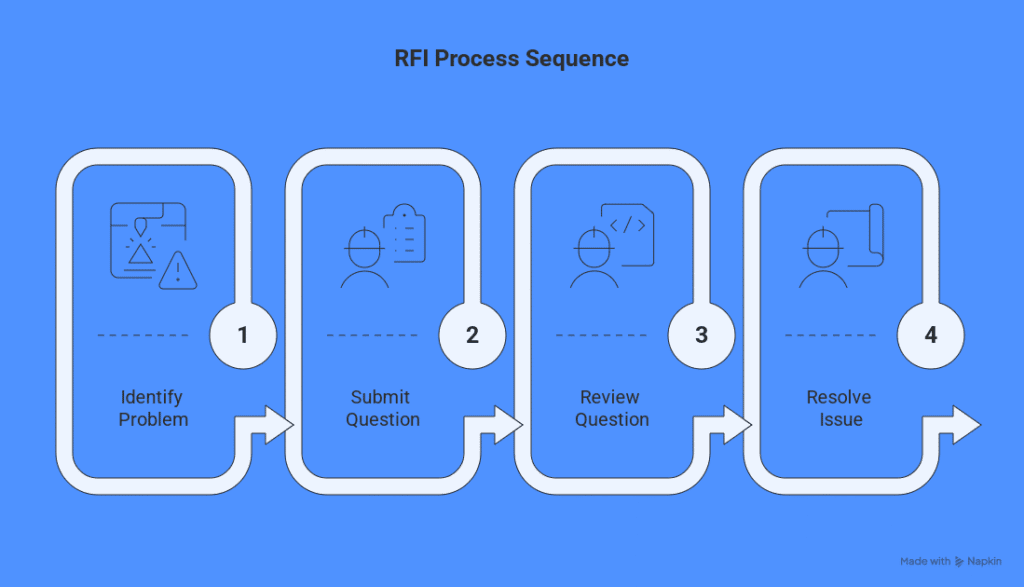
The RFI process works in a simple four-step cycle: Identify, Submit, Review, and Resolve. First, the field crew finds a problem. Next, the contractor sends a formal question to the architect. Once the architect provides a solution, that answer is shared with the entire team to update the site work.
- Identify: You find a missing measurement, often while using GPS tools to check the site layout.
- Submit: You write down the specific question and attach a photo.
- Review: The engineer checks the code and the design.
- Resolve: The answer is sent back, and the work continues.
What are the positive impacts of a digital RFI?
The positive impacts of a digital RFI include faster response times, better team accountability, and a searchable history of all site decisions. When you move away from paper RFIs, you eliminate the risk of lost emails or forgotten phone calls. Modern software ensures the right person gets notified instantly so the project stays on schedule.
- Time Savings: No more waiting days for a callback.
- Cost Control: Catching errors early stops expensive change orders.
- Clear History: If a dispute happens later, you have the proof in your system.
What are the different types of RFIs?
The different types of RFIs usually focus on design clarifications, material substitutions, or site conditions that don’t match the plans. Sometimes an RFI is sent to suggest a better way to do something, or to report that a specific material is out of stock. Categorizing your RFIs helps you track which part of the project has the most issues.
I always recommend tagging your RFIs. Is it an “Urgent” design flaw or just a “Minor” material change? This helps the architect know what to answer first.
Common RFI mistakes to avoid
Common RFI mistakes to avoid include asking vague questions, sending too many at once, or not including photos from the field. A bad RFI is just as useless as no RFI at all because it leads to more confusion. Be specific, attach evidence, and always suggest a possible solution to speed up the response.
Don’t just say “The wall is wrong.” Say “The wall at Grid A-1 clashes with the HVAC duct,” and attach a photo. This saves everyone’s time.
Final Thoughts: Your RFI Action Plan
I think the biggest mistake is treating RFIs like a chore. They are your shield. If you want to rank as a top-tier contractor, you need to master this process. Start by moving your RFIs from paper to a digital system so nothing ever gets lost in the shuffle again.
FAQs
How long should an RFI response take?
In a healthy project, you should expect an answer within 3 to 7 days. If it takes longer, it can delay the whole schedule.
Is an RFI a contract change?
No. An RFI is just a clarification. If the answer changes the cost or the time of the project, you then need a formal “Change Order.”
What is the difference between RFI and RFQ?
An RFI (Request for Information) is used to get technical clarity or solve a problem on-site. In contrast, an RFQ (Request for Quotation) is strictly about money and pricing. You send an RFI when you need an answer, and you send an RFQ when you need a price for materials or a subcontractor’s services.
How do I write an RFI?
To write a professional RFI, you should follow a clear format:
start with a specific subject line, describe the problem clearly, and reference the exact blueprint or drawing number. Always include a photo or sketch of the issue and suggest a potential solution to help the architect respond faster.