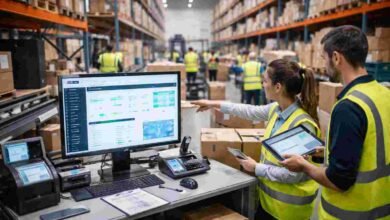

The 3D machine vision system has revolutionized how industries approach automation and object detection. In modern warehouses, it’s a game-changer that optimizes workflows, improves accuracy, and drives efficiency.
This advanced technology allows machines to “see” in three dimensions, offering deeper insights into objects’ sizes, shapes, and positions, making it an invaluable tool for tasks like sorting, picking, and inspection.
In this blog post, we’ll explore what a 3D vision system is, how it operates in modern warehouses, its benefits, and how to implement it effectively to enhance your operations.
What is a 3D Vision System?
A 3D vision system is an advanced form of machine vision that enables a machine or robot to capture and process visual information in three dimensions. Unlike traditional 2D systems, which only offer a flat view of the world, 3D vision systems incorporate depth perception to understand the spatial characteristics of objects.
These systems use specialized cameras and sensors to create depth maps, allowing machines to detect the shape, volume, and position of objects with a level of accuracy that 2D systems simply cannot achieve.
At the core of these systems are techniques such as laser triangulation, stereo vision, and structured light, which generate 3D data from the environment. This technology is crucial in industries like manufacturing, logistics, and robotics, where precise measurements and automation are essential.
By using 3D vision, machines can make better-informed decisions, which leads to more efficient workflows and improved quality control.
How Does it Work in Modern Warehouses?
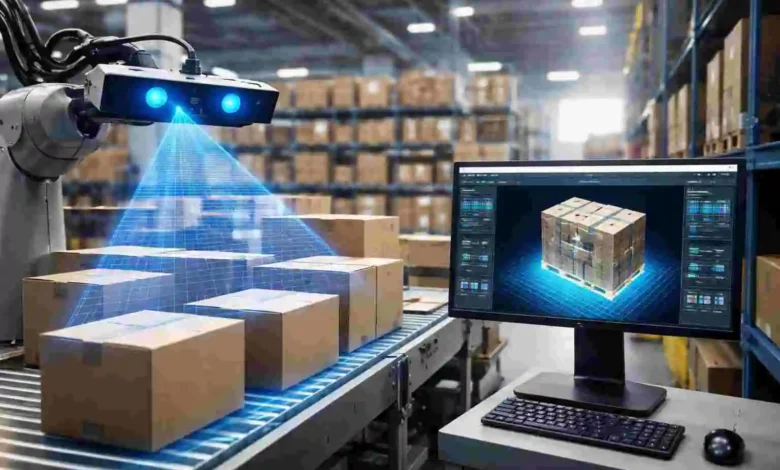
In the context of modern warehouses, the 3D vision system plays a pivotal role in enhancing automation. It captures real-time data of items in a warehouse through its specialized cameras and sensors. These cameras emit a structured light pattern, which is then reflected back by the objects. The system measures how the light is reflected, calculating the exact depth and dimensions of the objects.
This data is processed by sophisticated algorithms to create a detailed 3D model, allowing the system to accurately assess the volume, shape, and position of each item. The 3D vision system is integrated with the warehouse management system (WMS), which helps in making critical decisions. It can direct robotic arms to pick items, sort packages based on size and shape, and even detect defects in products on production lines.
With real-time processing, the system ensures that tasks are carried out quickly, with minimal human intervention, making warehouse operations more streamlined and efficient.
Top 8 Benefits of 3D Vision Technology
The adoption of 3D vision technology in warehouses brings numerous benefits, making it an indispensable tool for modern automation. Here’s how this technology transforms warehouse operations:
Increased Accuracy in Operations
One of the most significant advantages of 3D vision systems is their ability to provide highly accurate measurements. This precision ensures that objects are correctly identified, sorted, and picked, reducing errors in inventory management and order fulfillment. As a result, companies experience fewer mistakes in shipping, which leads to improved customer satisfaction.
Faster Process Speed
With the ability to quickly assess an object’s dimensions, position, and volume, 3D vision technology speeds up processes such as sorting and picking. Automated systems equipped with 3D vision can perform these tasks in seconds, significantly reducing the time it takes to process orders and handle inventory.
Improved Workplace Safety
3D vision technology also plays a crucial role in enhancing safety in warehouses. By automating hazardous tasks, such as lifting heavy objects or navigating through cluttered spaces, 3D vision systems reduce the risk of worker injuries. Additionally, these systems can identify potential safety hazards in real-time, prompting preventive measures before accidents happen.
Enhanced Inventory Management
Managing stock in real-time is another area where 3D vision systems excel. These systems track and monitor inventory with a high level of accuracy, helping businesses maintain optimal stock levels and avoid overstocking or understocking. The precise tracking capabilities also ensure that items are easily located within the warehouse, making the whole operation more efficient.
Support for Advanced Automation
3D vision systems are integral to the automation processes in warehouses. They seamlessly integrate with robotic systems, enabling them to perform tasks like product sorting, packaging, and palletizing with minimal human intervention. This support for automation improves productivity and frees up employees for more value-added tasks.
Better Quality Control
Ensuring the quality of products before they leave the warehouse is essential for maintaining customer trust. 3D vision technology can automatically inspect items for defects and irregularities, flagging any issues before products are shipped out. This level of automated quality control minimizes the risk of defective products reaching customers.
Cost-Effectiveness in the Long Run
Although the initial setup of 3D vision systems can be costly, the long-term benefits far outweigh the investment. With improved efficiency, fewer errors, and less manual labor required, businesses can see a significant reduction in operational costs over time. The technology’s ability to optimize warehouse processes ensures a higher return on investment.
Scalability and Flexibility
Another key benefit of 3D vision systems is their scalability. Whether you’re running a small warehouse or a large distribution center, these systems can be adjusted to meet your needs. As your business grows, the system can easily scale to handle increased workload and adapt to new types of products.
How to Use 3D Vision in Warehouses Carefully
While 3D vision systems offer significant advantages, implementing them in your warehouse requires careful planning and execution. Here’s how to use this technology effectively:
Start by selecting the right 3D vision system for your warehouse. Consider the types of objects you’ll be scanning, the required level of precision, and the size of your operation. Not all 3D vision systems are created equal, so make sure the one you choose is suited for your specific needs.
Installation is another critical step. Proper placement of cameras and sensors is necessary to maximize coverage and minimize errors. Calibration is key to ensuring that your system delivers accurate measurements, so take the time to set it up correctly.
Training your staff to operate and maintain the system is also essential. Even though 3D vision technology is largely automated, it’s important for your team to understand how it works and how to troubleshoot issues when they arise. Regular system maintenance and updates will keep the technology functioning smoothly and prevent disruptions in operations.
Comparison Between 2D vs 3D Vision Technology Systems
When choosing between 2D and 3D vision systems, it’s important to understand the key differences. 2D vision systems are typically faster and more cost-effective, but they lack the depth perception capabilities of 3D systems. While 2D systems are suitable for basic applications, 3D vision systems provide far greater accuracy, especially when dealing with complex tasks like object positioning and defect detection.
In a warehouse setting, 2D systems may suffice for simpler tasks like barcode scanning, but for more advanced needs such as robotic picking or sorting based on shape, size, and volume, 3D vision systems are the clear choice. Their ability to assess depth and create 3D models makes them ideal for automating complex workflows with higher precision.
Conclusion
The 3D machine vision system is transforming warehouse operations by improving accuracy, enhancing safety, and supporting automation. With its ability to capture and process 3D data, this technology is helping businesses streamline processes, reduce errors, and cut costs. As the demand for automation and efficiency continues to grow, adopting 3D vision technology will be key to staying competitive in the ever-evolving logistics industry.
You Can Also Read: What are Automated Guided Vehicles (AGVs)?
FAQs
How much does a 3D machine vision system cost?
The cost of a 3D vision system depends on the complexity of the setup and the size of your warehouse. While the initial investment can be significant, the long-term savings in efficiency and reduced labor costs make it a worthwhile investment.
Can 3D vision systems integrate with existing warehouse systems?
Yes, 3D vision systems can easily integrate with warehouse management systems (WMS) and other automation tools to streamline operations.
Are 3D vision systems scalable for small warehouses?
Absolutely. 3D vision systems are highly scalable and can be tailored to fit the needs of warehouses of all sizes, from small operations to large distribution centers.
How does 3D vision technology improve safety in warehouses?
By automating dangerous tasks and providing real-time hazard detection, 3D vision systems reduce the risk of workplace injuries and help maintain a safe working environment.