How to Choose an Automation System for Warehouse Efficiency: A 5-Step Strategic Framework

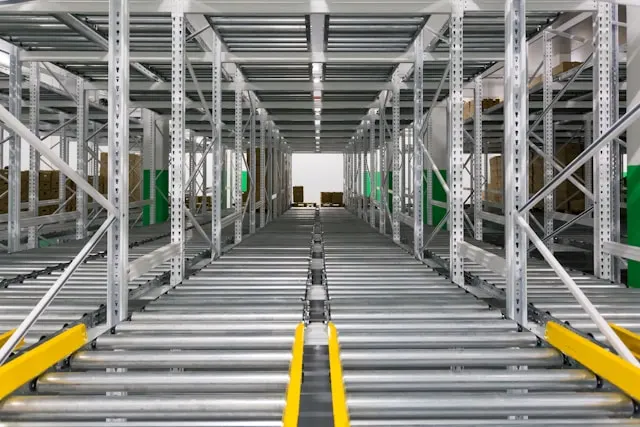
To choose the right warehouse automation system, you must align your specific operational bottlenecks with a technology that offers a high ROI and seamless integration with your existing workflow. In 2026, efficiency is no longer about working harder, but about deploying the right “mechanical muscle” to handle repetitive tasks.
This guide simplifies the complex decision-making process into five actionable steps: identifying your data-driven needs, balancing flexibility with fixed infrastructure, ensuring software compatibility, calculating the total cost of ownership, and future-proofing for scalability.
Step 1: Conduct a Bottleneck Audit and Data Analysis
The first and most critical step is to avoid “automation for the sake of automation.” You must identify exactly where your facility is losing time or money. Is the delay occurring during the long walks pickers take (travel time), or is it a congestion issue at the sorting and packing stations?
By analyzing your historical order data, you can pinpoint the “Point of Friction.” For instance, if your data shows that picking takes 60% of your cycle time, you should look into Autonomous Mobile Robots (AMRs). If sorting is your primary hurdle, high-speed automated conveyors are the logical answer. An automation system should never be a blanket solution; it must be a surgical strike against your most significant operational bottleneck.
Step 2: Balance Fixed vs. Flexible Automation
One of the biggest decisions you will face is choosing between fixed infrastructure and flexible robotics. In 2026, the trend is shifting toward flexibility, but both have their place depending on your facility’s layout and volume.
- Fixed Automation (Conveyors, ASRS): These systems are built into the warehouse structure. They offer incredible speed and are best for very high-volume, consistent operations. However, they are difficult to move if your business model changes.
- Flexible Automation (AMRs, Cobots): These systems, such as robotic carts that follow pickers, are “infrastructure-light.” They can be scaled up during peak seasons (like Black Friday) by simply adding more units to the floor. For growing firms, flexible automation offers a much lower risk and a faster path to ROI.
Step 3: Ensure Seamless WMS and Hardware Integration
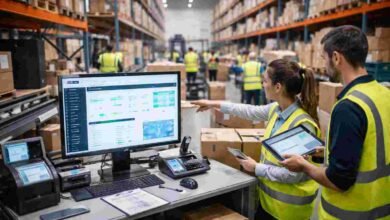
Your automation system is the “muscle,” but it requires a “brain” to function. This is where many firms fail; they purchase high-end hardware only to realize it doesn’t communicate with their existing Warehouse Management System (WMS).
Before signing any contract, you must verify the integration protocols. The automation software must be able to receive real-time instructions from your WMS and send back performance data instantly. A seamless “handshake” between your software and your robots ensures that as soon as an item is picked, the system updates your inventory accuracy records and triggers the next step in the fulfillment chain without human intervention.
Step 4: Calculate the True Total Cost of Ownership (TCO)
The initial purchase price of a robotic arm or a conveyor belt is only a fraction of the total investment. To choose the right system, you must look at the long-term financial commitment. An organically successful automation plan accounts for:
- Maintenance and Downtime: What is the cost of a system failure? Does the vendor provide 24/7 support and local spare parts?
- Energy and Utility Consumption: High-speed mechanical systems can significantly increase your facility’s energy bills.
- Re-training Costs: Your human staff must be trained to work with the machines (Cobotics). This transition period is a cost that must be factored into your payback period calculation.
Step 5: Prioritize Scalability and Future-Proofing
A common mistake is buying a system that fits your needs today but becomes obsolete by next year. Your automation choice should be modular. This means you can start small—perhaps by automating just one picking zone—and add more modules or robots as your revenue grows.
In 2026, the most successful firms are those that choose systems with open APIs and “Plug-and-Play” capabilities. This allows you to integrate newer technologies, such as AI-driven packing sensors or advanced dispatch software updates, as they become available. Future-proofing ensures that your capital investment remains an asset rather than becoming a legacy burden.
Expert Verdict: Start Small, Think Big
The journey toward a fully automated warehouse does not have to happen overnight. For most firms, the best approach is to automate the most repetitive and physically demanding tasks first. By choosing a system that is flexible, integrated, and modular, you create a foundation for continuous growth. Remember: Automation is not about replacing humans; it is about elevating your workforce to focus on high-value tasks while the machines handle the heavy lifting.
You Can Also Read Our Guide On: How RFID Works in Warehouse Management
FAQs
Is warehouse automation too expensive for small businesses?
Not anymore. With the rise of “RaaS” (Robots as a Service), many firms can now rent or lease automation systems on a monthly basis, avoiding the massive upfront capital expenditure. Small warehouses can see significant gains by simply automating their labeling or sorting processes first.
How long does it take to see a Return on Investment (ROI) from automation?
On average, most mid-sized warehouses see a full ROI within 18 to 36 months. This depends on labor cost savings, increased throughput, and the reduction of errors that previously led to costly returns.
What happens to my current staff when I introduce robots?
The most effective warehouses use “Collaborative Automation.” Instead of replacing staff, robots handle the walking and heavy lifting, while humans focus on complex picking, quality control, and management. This usually leads to a safer work environment and higher employee retention.
Can I automate my warehouse without changing my current layout?
Yes. Modern Autonomous Mobile Robots (AMRs) are designed to navigate existing aisles and work alongside human pickers without requiring fixed tracks or major structural changes to your facility.