

Smart home technology is set to revolutionize the way we live, work, and interact with our homes in 2026. From making daily routines more efficient to providing improved security and better energy management, smart homes offer more than just convenience. With advancements in AI, 5G connectivity, and sustainable living, smart homes are no longer a distant dream but an essential part of modern living.
What is Smart Home Technology?
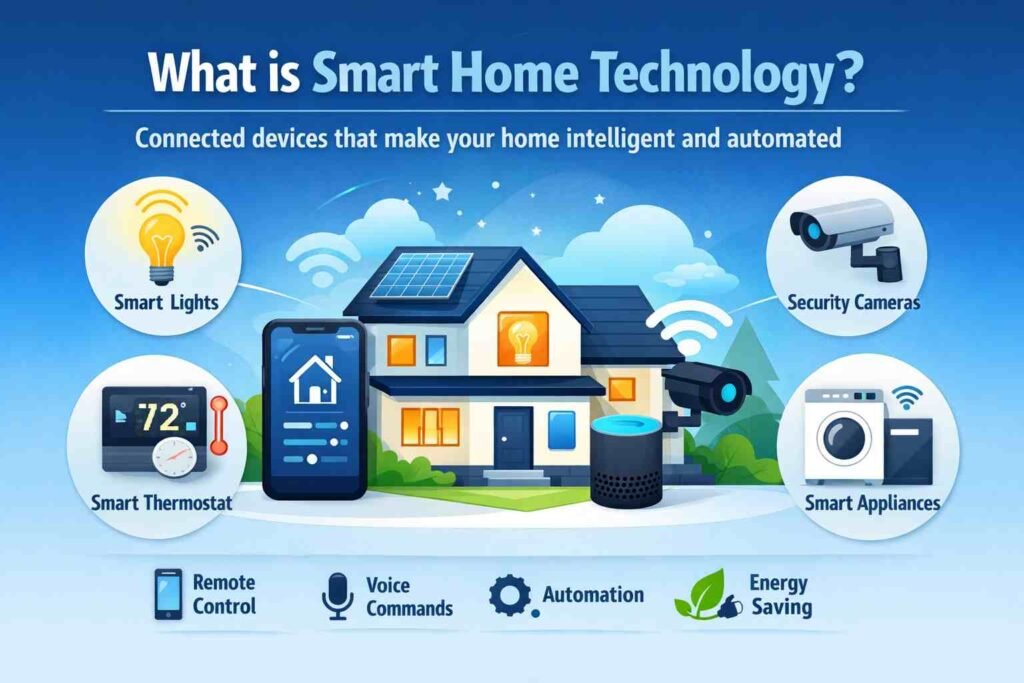
Smart home technology refers to the integration of devices and systems in your home that can be controlled remotely via apps, voice assistants, or automated schedules. These devices include everything from smart lights and thermostats to security cameras and appliances. The goal is to enhance convenience, safety, energy efficiency, and comfort.
In 2026, smart homes are evolving beyond simple automation and now include predictive systems that learn from user behavior, adapt to environmental changes, and offer real-time control. With the growth of 5G and AI, smart home devices are becoming more intelligent, faster, and more energy-efficient than ever before.
What’s New in Smart Home Technology in 2026?
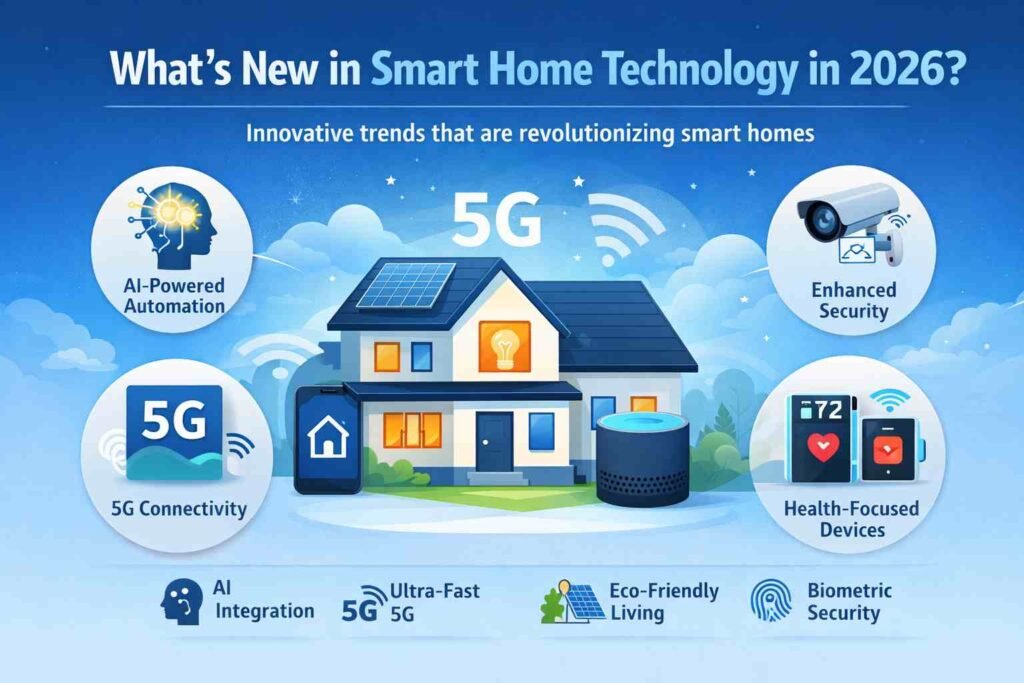
AI-Powered Automation
In 2026, AI is playing a significant role in transforming smart homes. These homes aren’t just reacting to commands but predicting your needs. AI learns from daily activities and adapts accordingly. For instance, your home might adjust the lighting based on the time of day or your preferences, and smart thermostats will automatically adjust the temperature to your ideal setting without needing manual input.
5G Connectivity for Seamless Control
5G connectivity is changing the game for smart homes. The faster speeds and more reliable connections of 5G mean that smart home devices can communicate with each other almost instantaneously. This results in seamless integration of devices, which allows users to control their entire home from their smartphones, voice assistants, or even through gestures, without experiencing lag or delays.
Sustainability and Smart Homes
With sustainability becoming more crucial in 2026, smart homes are adopting eco-friendly solutions. Devices are now more energy-efficient, and systems are built to manage energy consumption intelligently. Solar-powered homes with integrated smart grids will allow homeowners to monitor and optimize energy use, reducing their carbon footprint while lowering energy bills.
Advanced Security Features
Smart homes are becoming more secure with features such as facial recognition, biometric scanning, and AI-driven monitoring. In 2026, security systems will not only detect intrusions but also predict potential threats. For example, AI can analyze visitor patterns and send alerts if something unusual is detected, offering a higher level of protection than current systems.
Health-Centric Smart Homes
Health-focused devices are on the rise. Smart homes in 2026 will feature air purifiers with real-time pollution monitoring, smart sleep systems that track and optimize your sleep quality, and even kitchens that can track your nutritional intake. Additionally, the rise of health monitoring systems means smart homes will be able to track medical data and notify homeowners or healthcare providers about any concerning health patterns.
You May Also Read: What’s New in Construction Telematics Technology in 2026
How Smart Homes Are Improving Daily Life
Convenience and Control
One of the most significant advantages of smart homes is convenience. With smart home technology, you can control virtually every aspect of your home remotely. From adjusting your thermostat while you’re on your way home to turning off the lights when you’re in bed, everything can be automated or controlled with a simple voice command or app. This convenience extends to tasks like ordering groceries through voice assistants or getting reminders to lock your doors or close the windows.
Enhanced Comfort
Smart homes adapt to your lifestyle, ensuring comfort is always a priority. In 2026, homes will know when you’re away, adjusting lighting, heating, or cooling to save energy. They will also monitor environmental factors like humidity and adjust accordingly. Smart homes will even provide personalized experiences by adjusting lighting, temperature, and entertainment to suit individual preferences, making life easier and more enjoyable.
Security and Peace of Mind
Security is another area where smart home technology shines. With smart locks, cameras, and motion detectors, homeowners can monitor their properties from anywhere in the world. AI-enhanced systems can analyze visitor data and notify you about any unusual activity. The integration of facial recognition, voice recognition, and geofencing will further enhance security, ensuring that your home remains safe from intruders.
Energy Efficiency and Cost Savings
In 2026, smart homes will continue to focus on reducing energy consumption. With devices like smart thermostats, lights, and appliances that adjust automatically based on your routine, you’ll use less energy and save money. Furthermore, the integration of renewable energy sources, such as solar panels, will make it easier for homeowners to manage their energy consumption and even sell excess power back to the grid.
Challenges of Smart Home Technology in 2026
Despite the many benefits, there are still some challenges with smart home technology in 2026.
Privacy Concerns
As smart homes become more integrated with AI and IoT devices, privacy concerns continue to rise. With so much personal data being collected by these devices, there are concerns about how that data is being stored and used. It’s essential for manufacturers to prioritize data security and transparency, ensuring that users have full control over their information.
Compatibility Issues
With so many manufacturers and technologies in the market, compatibility can be an issue. While major tech companies are working on standardizing smart home devices, some devices still don’t work well together. Ensuring that all devices in your home can communicate seamlessly requires careful planning, especially when mixing and matching products from different brands.
Cost of Initial Setup
While the long-term savings from energy efficiency and convenience are significant, the initial cost of setting up a smart home can be expensive. However, as technology advances, prices are expected to decrease, making smart homes more accessible to a wider range of people.
How to Build a Smart Home in 2026
Starting with a smart home can feel overwhelming, but it doesn’t have to be. Here’s how you can begin:
- Start Small: Begin with a smart assistant (Amazon Alexa, Google Assistant) to control basic tasks like lighting and music.
- Add Smart Thermostats and Lighting: These are some of the most cost-effective ways to save energy and enhance convenience.
- Integrate Security Systems: Install smart cameras, smart locks, and motion detectors for added security.
- Use Health and Wellness Devices: Add smart health monitoring devices like air purifiers, sleep trackers, and fitness trackers to improve well-being.
- Expand Gradually: As you get used to the system, add other devices, such as smart fridges, ovens, or even smart furniture.
The Future of Smart Homes: What’s Next?
Looking beyond 2026, the future of smart homes will only become more integrated and intelligent. Here are a few trends to look forward to:
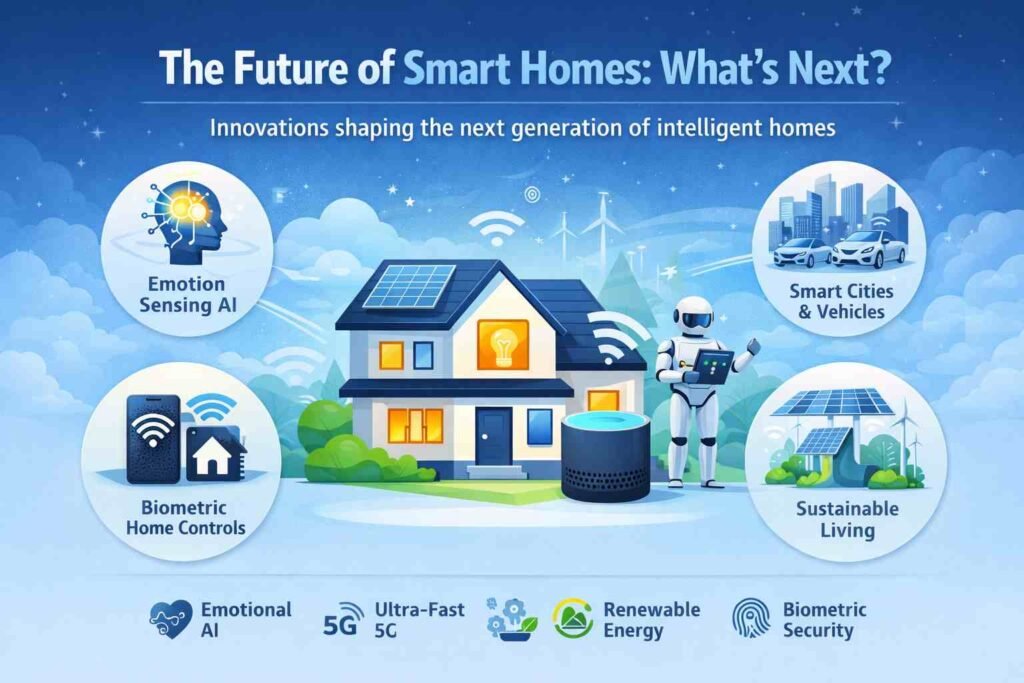
- 5G-Enhanced Smart Cities: As 5G connectivity expands, smart homes will seamlessly integrate into smart cities, offering smarter traffic management, more energy-efficient public spaces, and better communication between buildings.
- Emotion-Sensing AI: Future AI may recognize not just physical patterns but emotional ones, adjusting the home environment based on your mood.
- Biometric Home Controls: Imagine unlocking your home with your fingerprint or voice or even a retinal scan. The future of home security may rely on more advanced biometric systems.
- Sustainable Homes: Smart homes will integrate further with sustainable technologies, such as advanced solar panels, smart grid systems, and green roofing, contributing to a more eco-friendly future.
Conclusion
Smart home technology is not just a passing trend; it’s the future of how we live. In 2026 and beyond, homes will be more connected, smarter, and environmentally conscious. From convenience and energy savings to enhanced security and comfort, smart homes will continue to evolve and become an integral part of daily life. The future is now, and it’s time to embrace the smart home revolution.
