The Future of Warehouse Management with AR & VR Applications: A Complete Guide

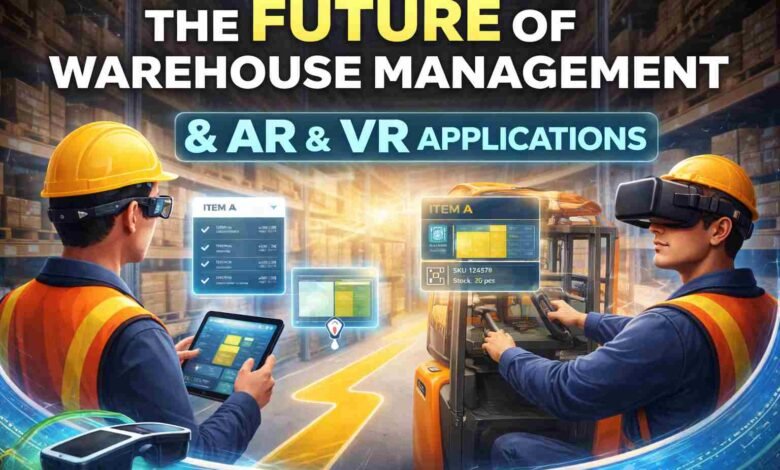
Warehouse management has entered a new era with the introduction of cutting-edge technologies like Augmented Reality (AR) and Virtual Reality (VR). These technologies are revolutionizing warehouse operations, making them more efficient, accurate, and cost-effective.
In essence:
- AR enhances the real-world experience by overlaying digital information onto physical spaces, providing real-time data that helps workers perform tasks more effectively.
- VR creates a simulated environment where workers can train, plan, and test warehouse operations in a risk-free, controlled space.
In this article, we’ll explore how AR and VR are shaping the future of warehouse management, highlighting key applications, challenges, and benefits.
What is Augmented Reality (AR)?
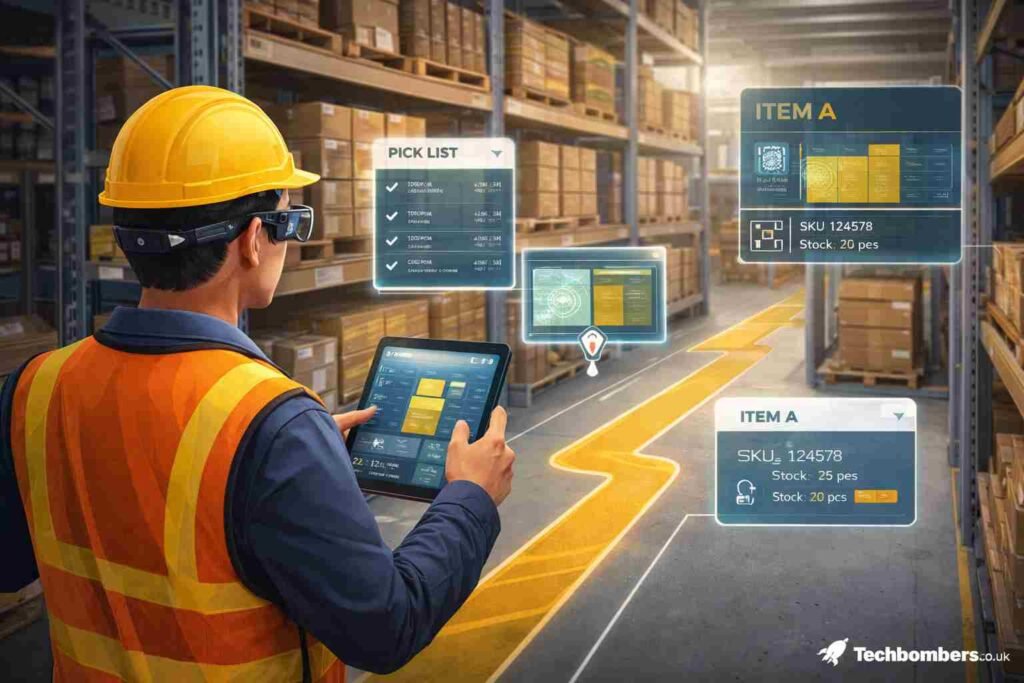
Augmented Reality (AR) is a technology that overlays digital information, such as images, sounds, or other data, onto the real world. Using devices like smartphones, tablets, or smart glasses, AR allows users to see and interact with computer-generated content in their physical environment.
In warehouses, AR can provide:
- Real-time location tracking of items within the warehouse
- Guided picking and sorting of inventory
- Instant access to data like product specifications or storage locations, without needing to consult a separate device or screen.
You Might Also Check: What are Autonomous Mobile Robots in Modern Warehouses?
What is Virtual Reality (VR)?
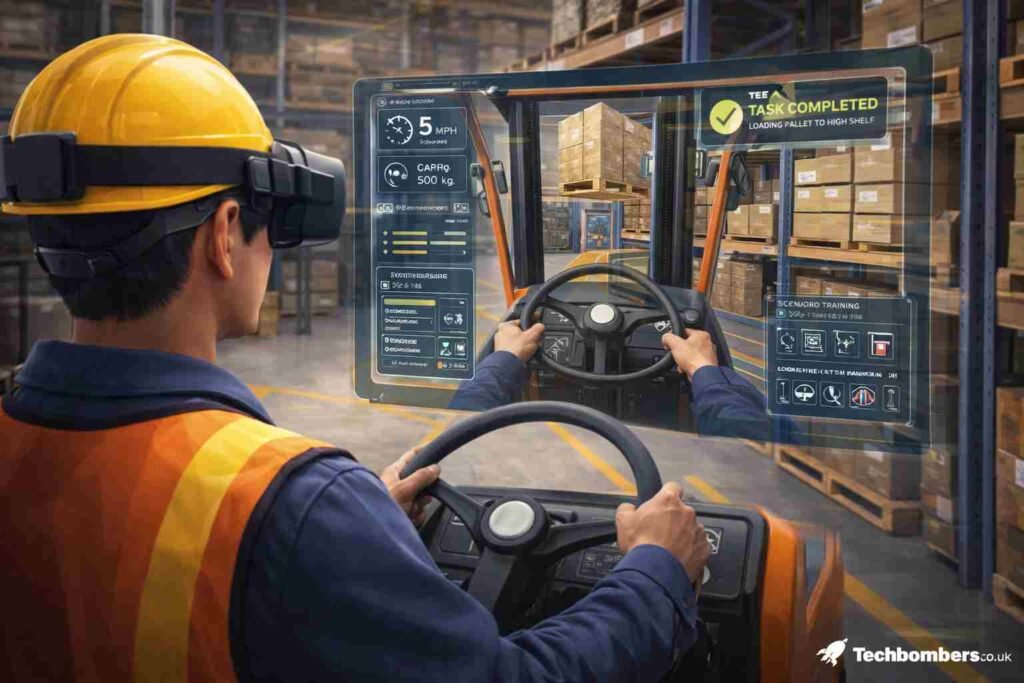
Virtual Reality (VR), on the other hand, immerses users in a fully simulated environment, cutting them off from the physical world. With VR headsets, users can experience a digital environment that replicates real-world scenarios. In warehouse management, VR is mainly used for:
- Training employees without the risks or costs associated with real-world training
- Simulating complex warehouse operations before implementing them in reality
- Testing new warehouse layouts to see how they might work in practice without physically rearranging anything.
You Might Also Check: What are Automated Guided Vehicles (AGVs)?
How AR and VR Are Enhancing Warehouse Operations
Improved Inventory Management
One of the major advantages of AR is its ability to improve inventory management. With AR glasses or mobile devices, warehouse workers can receive live, real-time data about the location of products within the warehouse. This leads to faster retrieval times and significantly reduces errors in picking.
- Key Benefits:
- Real-time stock updates
- Faster, more accurate order picking
- Reduced human errors and misplacements
- Real-time stock updates
Enhanced Employee Training with VR
Training warehouse employees can be a lengthy and costly process, especially for tasks that require hands-on practice with heavy machinery or hazardous materials. VR training programs eliminate these risks by offering a safe, simulated environment. Employees can practice tasks like operating forklifts or using other machinery without any real-world consequences.
- Key Benefits:
- No risk of injury during training
- Faster training cycles
- Realistic, hands-on learning experience
- No risk of injury during training
Optimizing Warehouse Layouts with AR
AR is also instrumental in optimizing warehouse layouts. Warehouse managers can use AR to visualize different shelving arrangements or other storage solutions in real time. By overlaying digital models on the warehouse floor, they can make more informed decisions on layout changes, saving time and reducing operational inefficiencies.
- Key Benefits:
- Visualize and test layouts before physical implementation
- Maximize space utilization
- Save on trial-and-error costs of reworking layouts
- Visualize and test layouts before physical implementation
The Business Impact of AR and VR in Warehouse Management
Boosting Productivity
The integration of AR and VR into warehouse operations has a profound impact on productivity. With AR providing real-time data and VR offering immersive training, employees can complete tasks faster and with fewer mistakes. As a result, the time it takes to process orders, ship products, and stock inventory is reduced.
Cost Reduction
Although the initial investment in AR and VR technologies can be high, the long-term savings are substantial. With faster training, fewer errors, and more efficient warehouse layouts, businesses can save on operational costs. Moreover, AR’s ability to help employees retrieve stock quickly reduces the need for large staffing teams.
Improved Accuracy and Reduced Errors
Both AR and VR help reduce human error, which is one of the biggest challenges in warehouse operations. With AR-guided picking, workers can ensure they’re retrieving the right items, and with VR training, employees can practice tasks until they’re perfect. The result is a more accurate warehouse with fewer costly mistakes.
Challenges of Implementing AR and VR in Warehouse Operations
Initial Setup and Costs
The initial investment in AR and VR technology can be substantial. From hardware like smart glasses and VR headsets to the software development required to integrate these technologies into existing systems, costs can quickly add up. However, the return on investment often justifies the initial outlay, especially when considering long-term savings and operational efficiencies.
Employee Resistance and Adaptability
Not all employees may be eager to adopt new technologies. Some warehouse staff may feel overwhelmed by the changes or skeptical of the benefits of AR and VR. It’s important for businesses to invest in proper training and provide adequate support to help employees transition smoothly to the new systems.
Technology Integration and Maintenance
As with any new technology, the integration of AR and VR into existing warehouse management systems can be challenging. Companies must ensure compatibility with their current inventory management systems, and regular maintenance and software updates will be needed to keep everything running smoothly.
The Future of AR and VR in Warehouse Management
Wearable AR Devices
While today, many warehouses use AR on smartphones or tablets, the future of AR in warehouses lies in wearable devices like smart glasses. These devices will allow workers to access data without needing to hold or look at a screen, enabling a hands-free experience. The convenience of smart glasses will make AR even more seamless in day-to-day warehouse operations.
The Role of AI in Enhancing AR and VR
In the future, AR and VR will work in tandem with artificial intelligence (AI) to make warehouse management even more efficient. For example, AI could predict stock levels or forecast demand, with AR and VR then providing real-time insights and simulations based on these predictions. This synergy will further enhance decision-making and operational efficiency.
Remote Assistance with AR
As businesses scale, remote assistance via AR will become a game-changer. Warehouse managers can troubleshoot issues from anywhere in the world by connecting with workers through AR devices. Experts can guide workers in real-time, offering support and solutions, even when they are miles away.
Conclusion
AR and VR are not just trends—they are powerful tools transforming warehouse management for the better. By improving inventory management, enhancing training programs, and optimizing warehouse layouts, these technologies are reshaping how warehouses operate. While the initial cost and implementation challenges exist, the long-term benefits, including increased productivity, reduced errors, and cost savings, make AR and VR essential technologies for the future.
As these technologies continue to evolve, their role in warehouse operations will only grow, making the future of warehouse management smarter, more efficient, and more immersive than ever before.
For more insights, read our article on: What is ASRS? The Ultimate Guide to Warehouse Automation
FAQs
How does AR help in warehouse operations?
AR improves warehouse efficiency by overlaying real-time data on physical spaces, guiding workers through tasks like inventory management, order picking, and stock tracking, all while reducing errors and saving time.
Can VR be used for training in warehouses?
Yes! VR allows warehouse workers to practice tasks like forklift operation or inventory management in a virtual environment, offering safe and efficient training without real-world risks.
What are the benefits of using AR and VR in warehouse management?
The main benefits include increased productivity, reduced errors, cost savings on training, and the ability to optimize warehouse layouts and processes, leading to a smoother, more efficient operation.