

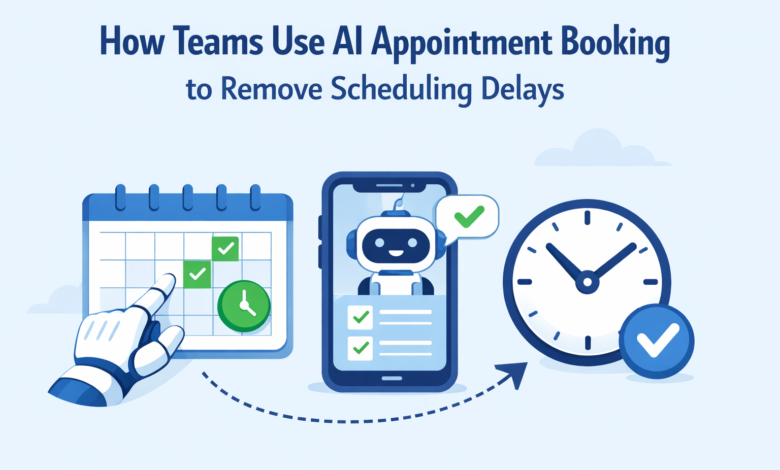
Most teams don’t notice how much time they lose before a meeting even begins.
A quick discussion turns into multiple messages. Someone asks for availability. Others reply late. A few options are shared. Then someone cannot make it. The process repeats. It looks small, but it slows everything down. Scheduling is treated like a simple step. Open a calendar. Pick a time. Send a link.
But inside real teams, it is not that simple. There are multiple people involved, shifting priorities, and constant interruptions. The real problem is not the calendar. It is the coordination around it. This is why more teams are starting to look at AI appointment booking differently. Not as a feature, but as a way to remove delays that happen before work even starts.
What Is AI Appointment Booking?
AI appointment booking is a system that uses artificial intelligence to schedule meetings automatically through conversations. Instead of manually checking calendars, sharing links, and waiting for replies, an AI scheduling assistant understands requests, checks availability, and confirms meetings instantly.
It works across chat, email, or websites, allowing users to book appointments without leaving the conversation. This removes delays and simplifies the entire scheduling process.
Why Scheduling Slows Teams Down More Than Expected
Most scheduling problems come from communication gaps, not missing tools.
A calendar only shows availability. It does not help people agree faster. That is where the delay begins. One person asks. Another responds hours later. Someone else misses the message. Even simple meetings take longer than they should.
This delay has a ripple effect. When a meeting is not scheduled on time, decisions are pushed. When decisions are pushed, work slows down. Teams end up reacting instead of moving forward.
There is also the issue of context switching. Each time someone stops working to check availability or reply to scheduling messages, their focus breaks. When this keeps happening across a team, the overall impact becomes easy to notice.
Even with booking links, the process is not fully solved. Someone still has to open the link, check options, and confirm manually. If the timing does not work, the cycle repeats. Instead of waiting for responses, teams can move from request to confirmation in one step with AI appointment scheduling, without breaking their workflow.
Where teams lose time the most:
- Waiting for replies across time zones
- Repeating the same availability questions
- Switching between chat, email, and calendar tools
- Rescheduling meetings from scratch
- Losing context during back-and-forth coordination
These are small delays individually, but together they slow down execution.
Why Calendars Alone Are Not Enough in 2026
Calendars were designed to organize time, not to manage coordination between people.
They work well when one person is booking for themselves. But internal team scheduling is different. It involves multiple participants, dependencies, and quick decisions. A static view of availability does not solve that.
Even modern tools still rely on user action. Someone has to share a link. Someone else has to check it. If the timing is not right, the process resets. This creates a gap between intent and action.
That gap is where most delays happen. This is why artificial intelligence scheduling is becoming more relevant. It connects scheduling directly with conversations instead of treating it as a separate step.
The Problem With “Check and Share” Scheduling
- Someone wants to set a meeting.
- They check their calendar. Then they ask others. Then they wait.
- If one person cannot make it, the process starts again.
This loop is the real problem.
How Conversation-Based Scheduling Works
Now compare that to a system powered by an appointment chatbot.
- Someone says, “Let’s meet tomorrow afternoon.”
- The system reads the request. Checks availability. Suggests slots.
No link sharing. No manual checking. No waiting.
Why This Matters
- The faster a meeting gets scheduled, the faster work moves.
- Delays between messages are removed. Decisions happen earlier.
- Scheduling becomes part of the conversation, not a separate task.
How AI Is Changing Scheduling from Task to Action
The biggest shift is not automation. It is timing. Scheduling now happens at the moment intent appears.
When someone wants to meet, they do not need to pause, check tools, or wait for replies. An AI booking assistant can handle everything in real time. It checks calendars, resolves conflicts, and suggests the best available slots.
This removes the need for back-and-forth communication. It also improves speed. What used to take multiple messages can now happen in seconds. That speed matters, especially in situations where decisions depend on quick alignment.
An AI appointment scheduler learns how teams manage their time. It checks availability across all participants, keeps schedules balanced, and updates meetings when needed without making users go through the process again.
This is not just about saving time. It changes how teams operate. Meetings are no longer delayed because of coordination. They happen when needed. An ai booking system goes a step further by learning patterns. It can suggest better meeting times based on team behavior, making scheduling smoother over time.
What actually improves with AI scheduling:
- Meetings get confirmed instantly
- Fewer messages are needed to coordinate
- Rescheduling becomes quick and simple
- Teams spend less time checking availability
- Workflows stay uninterrupted
This is how scheduling moves from being a task to becoming an action.
How Modern Teams Are Adopting AI for Scheduling
This shift is already happening across teams that want to move faster.
Instead of relying only on calendars, they are using AI platforms for scheduling appointments that connect conversations with scheduling logic. This removes the need to switch between tools and reduces manual effort.
For example, there are modern AI agent platforms like GetMyAI that work with tools like Calendly. This allows teams to schedule meetings directly through conversations, while calendar systems stay active and updated in the background.
The goal is not to replace existing tools, but to improve how they connect and work together in real situations.
Teams that start using this approach begin to see a clear shift. Scheduling no longer feels like a separate step. It becomes part of the normal flow of work.
They spend less time coordinating and more time executing.
And that is the real shift.
How Different Teams Use AI Appointment Booking
Different teams use AI scheduling in different ways, depending on their workflows:
Sales Teams
Sales teams use AI to instantly book demos when a lead shows interest. Instead of back-and-forth emails, meetings are confirmed on the spot, increasing conversion speed.
Customer Support Teams
Support teams use AI to schedule calls based on issue type and urgency. This helps route customers faster to the right person.
Healthcare Teams
Healthcare providers use AI to manage patient appointments, send reminders, and reduce missed visits.
Service-Based Businesses
Agencies and consultants use AI to book consultations without manual coordination, saving time and improving client experience.
This flexibility is what makes AI scheduling useful across industries.
AI Appointment Booking vs Traditional Scheduling
The difference between AI scheduling and traditional methods is clear:
- Speed – AI confirms meetings instantly, while manual scheduling takes time
- Effort – No need for repeated messages or link sharing
- Accuracy – Reduces errors like double bookings
- User Experience – Smooth and conversation-driven instead of fragmented
Traditional scheduling depends on people responding. AI scheduling removes that dependency.
Scheduling Should Not Slow Work Down
Most teams do not struggle with tools. They struggle with timing. Meetings take too long to schedule. Decisions get delayed. Work slows down. This is not a small problem. It affects how fast teams move. AI is changing that. By bringing scheduling into conversations, it removes the delays between intent and action. Teams no longer need to coordinate step by step. They can move forward instantly. Because in most cases, the difference between progress and delay is all about how quickly a meeting gets scheduled.
You Might Also Check: How are AI Dash Cams Integrated into Construction Technology Systems?