
Applied Intelligence: How Shared Services Are Evolving Into Intelligent Business Functions

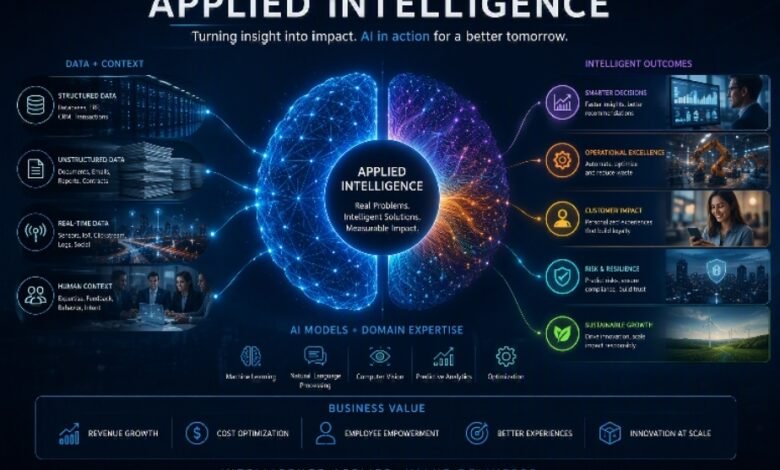
Organizations are under constant pressure to improve efficiency, reduce operating costs and deliver better business outcomes. Traditional shared services have helped centralize business functions such as finance, human resources, procurement and IT, but today’s business environment demands more than standardized processes and cost optimization. To remain competitive, organizations are increasingly adopting Applied Intelligence to transform Shared Services into data-driven, AI-enabled operations that deliver strategic value.
By combining artificial intelligence (AI), automation, analytics and enterprise data, Applied Intelligence enables shared services organizations to improve decision-making, automate complex processes and enhance service delivery. Rather than simply executing transactional activities, modern Shared Services are becoming intelligent business partners that support enterprise-wide transformation.
This article explores how Applied Intelligence is reshaping Shared Services, its business benefits, key use cases, implementation best practices and future trends.
What Is Applied Intelligence?
Applied Intelligence is the practical application of artificial intelligence, machine learning, advanced analytics, automation and enterprise data to improve business processes, decision-making and operational performance. Unlike standalone AI tools, Applied Intelligence integrates intelligent technologies into existing business operations to solve real-world business challenges and deliver measurable value.
Organizations use Applied Intelligence to optimize workflows, improve forecasting, identify opportunities, automate repetitive tasks and generate actionable insights that support strategic decisions.
Within Shared Services, Applied Intelligence enables organizations to move beyond transactional processing toward predictive, intelligent and outcome-focused service delivery.
Why Shared Services Need Applied Intelligence
Modern Shared Services organizations support multiple business functions across regions, business units and operating models. As workloads increase and customer expectations evolve, traditional manual processes often struggle to keep pace.
Implementing Applied Intelligence enables Shared Services to:
- Automate repetitive administrative activities.
- Improve service quality and consistency.
- Reduce processing times.
- Enhance compliance and governance.
- Improve workforce productivity.
- Generate real-time business insights.
- Support data-driven decision-making.
These capabilities allow Shared Services to create value beyond cost efficiency by supporting enterprise growth, resilience and innovation.
How Applied Intelligence Transforms Shared Services
Organizations are embedding Applied Intelligence across multiple Shared Services functions to improve efficiency and business performance.
Finance Shared Services
Applied Intelligence automates invoice processing, expense management, account reconciliations, financial reporting and forecasting while improving accuracy and compliance.
HR Shared Services
AI-powered solutions streamline employee onboarding, payroll administration, case management, workforce analytics and employee self-service support.
Procurement Shared Services
Intelligent procurement capabilities improve spend analysis, supplier management, contract intelligence and purchasing automation while reducing procurement cycle times.
IT Shared Services
Applied Intelligence enhances IT service management through predictive incident management, intelligent ticket routing, knowledge management and automated support.
Customer and Business Support
AI-powered virtual assistants, intelligent document processing and conversational AI improve response times while delivering consistent customer experiences.
Key Benefits of Applied Intelligence in Shared Services
Organizations adopting Applied Intelligence across Shared Services experience measurable improvements across operational, financial and strategic dimensions.
Greater Operational Efficiency
Automation eliminates repetitive manual work, allowing employees to focus on higher-value activities such as problem-solving, business partnering and continuous improvement.
Better Decision-Making
AI analyzes large volumes of operational data and provides actionable insights that support faster, evidence-based business decisions.
Improved Service Quality
Intelligent workflows reduce processing errors, improve consistency and help organizations meet service-level agreements more effectively.
Enhanced Employee Experience
Employees spend less time on administrative tasks and gain access to intelligent tools that improve productivity and collaboration.
Lower Operating Costs
Automation, analytics and optimized workflows reduce administrative costs while increasing process efficiency.
Stronger Compliance
Applied Intelligence continuously monitors business processes, identifies exceptions and helps ensure adherence to organizational policies and regulatory requirements.
Best Practices for Implementing Applied Intelligence
Successful adoption of Applied Intelligence requires a strategic approach that aligns technology investments with business objectives.
Assess current operations. Evaluate Shared Services processes to identify manual activities, bottlenecks and opportunities for automation.
Build a strong data foundation. AI depends on accurate, standardized and well-governed enterprise data.
Prioritize high-value use cases. Begin with processes that offer measurable improvements in efficiency, quality or customer experience.
Integrate enterprise systems. Connect AI capabilities with ERP, HR, finance, procurement and customer service platforms for end-to-end visibility.
Develop workforce capabilities. Train employees to interpret AI-generated insights, manage intelligent workflows and support continuous improvement.
Measure business outcomes. Track KPIs such as process cycle time, service quality, productivity, automation rates, customer satisfaction and cost efficiency.
Common Challenges
Although Applied Intelligence delivers significant benefits, organizations should prepare for several implementation challenges.
Legacy technology environments may limit AI integration and automation capabilities.
Poor-quality or fragmented enterprise data can reduce AI performance and decision accuracy.
Organizations must establish governance frameworks covering data privacy, AI transparency, security and regulatory compliance.
Change management is equally important, as employees need confidence and training to effectively adopt AI-enabled workflows.
Addressing these challenges through structured planning helps organizations maximize the long-term value of Applied Intelligence.
The Future of Applied Intelligence in Shared Services
The future of Shared Services lies in intelligent, autonomous and data-driven operations. AI agents, predictive analytics, generative AI and intelligent automation will increasingly manage routine service requests, recommend actions, optimize workflows and support business decisions in real time.
Rather than functioning solely as centralized service delivery organizations, Shared Services will evolve into strategic business partners that enable enterprise agility, innovation and continuous performance improvement.
Organizations that invest in Applied Intelligence today will be better positioned to build resilient, scalable and future-ready Shared Services capable of supporting long-term business growth.
Conclusion
Applied Intelligence is redefining the role of Shared Services by combining artificial intelligence, automation, analytics and enterprise data to improve operational performance and business outcomes. By embedding intelligent capabilities across finance, HR, procurement, IT and customer support, organizations can streamline processes, enhance decision-making and deliver higher-quality services at lower cost.
As organizations continue their digital transformation journey, integrating Applied Intelligence into Shared Services will become a critical capability for improving efficiency, enabling innovation and creating sustainable competitive advantage.