
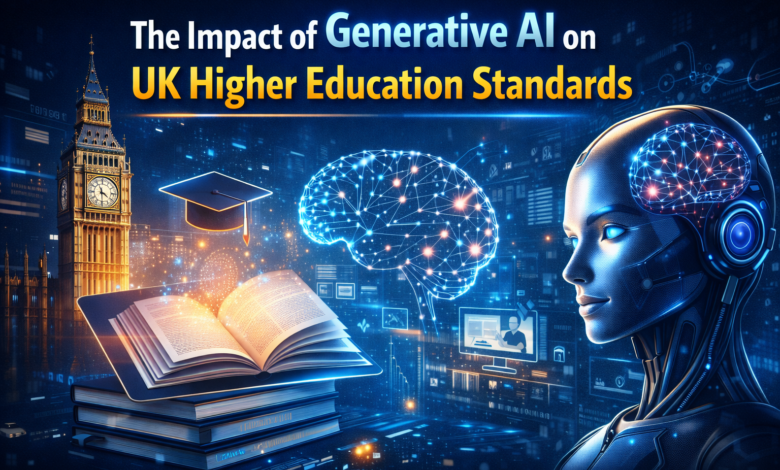
The landscape of British higher education is undergoing a massive shift. With the rise of advanced neural networks and large language models, the way students approach research and writing has changed almost overnight. This evolution brings both incredible opportunities for innovation and significant challenges for maintaining the high academic standards that UK universities are known for globally.
The New Digital Frontier in UK Universities
Walking through a campus in London, Manchester, or Edinburgh today looks different than it did five years ago. Students no longer rely solely on physical library stacks or basic search engines. Instead, they interact with sophisticated tools capable of summarizing complex papers or generating code snippets in seconds. This shift is not just about speed; it is about how information is processed.
While these tools offer a way to manage heavy workloads, they also raise questions about the depth of understanding. Educators are now tasked with distinguishing between a student’s genuine grasp of a subject and a response produced by a machine. To bridge this gap, many students turn to assignment help services to ensure their work meets the rigorous analytical requirements set by their professors while navigating these new technologies.
Maintaining Academic Integrity
Academic honesty is the cornerstone of the UK education system. The introduction of Generative AI has forced institutions to rethink what “original work” actually means. Many universities have updated their honor codes to include specific guidelines on machine-generated content. The focus has shifted from banning the tech to teaching students how to use it ethically.
The goal is to move toward a model where AI acts as a starting point—a way to brainstorm or structure thoughts—rather than a final producer of content. This requires a high level of critical thinking. A student must be able to verify facts, check for biases in the data, and add their own unique voice to the narrative. Without these steps, the standard of education could slip into a cycle of surface-level learning.
The Technical Complexity of Modern Degrees
In fields such as engineering and tech, the impact of AI is even more pronounced. For instance, students tackling complex hardware and software systems find that while AI can assist, it cannot replace fundamental knowledge. Understanding how a processor functions or how memory is managed requires deep study. Many students struggling with these intricate topics find that specialized computer architecture assignment help provides the clarity needed to master the curriculum.
This highlights a broader trend: as technology becomes more complex, the need for human-led, expert guidance becomes more vital. AI might provide a quick answer, but a human expert provides the “why” behind the logic. This distinction is what keeps UK degrees prestigious and valuable in the global job market.
Evolution of Assessment Methods
Because AI can now write essays that pass basic plagiarism checks, UK examiners are looking at new ways to test knowledge. We are seeing a return to more traditional methods, such as:
- In-person invigilated exams: Moving away from take-home essays to ensure the work is done in real-time.
- Viva Voce (Oral Exams): Asking students to defend their thesis or explain their methodology out loud.
- Reflective Logs: Requiring students to document their writing process, including how they used digital tools.
These methods ensure that the individual remains the primary creator. It pushes students to engage more deeply with their coursework, ensuring that the “experience” part of their education is genuine.
Preparing for a Post-AI Workforce
The ultimate goal of higher education is to prepare individuals for the professional world. In the UK, employers are increasingly looking for “AI-literate” graduates. This means someone who knows how to use these tools to increase productivity without sacrificing accuracy or ethics.
Universities are now integrating AI literacy into their core modules. They are teaching students how to prompt effectively and, more importantly, how to audit the output. By doing so, they are maintaining high standards by evolving with the times rather than resisting change. The focus remains on producing graduates who are experts in their field, capable of using every tool at their disposal to solve real-world problems.
Conclusion
The integration of Generative AI into UK higher education is inevitable. The key to maintaining standards lies in balance. By embracing the efficiency of technology while doubling down on human critical thinking and expert support, the UK remains at the forefront of global education. Whether through traditional study or utilizing professional support systems, the aim is clear: preserving the value of the degree and the integrity of the learner.
Stay connected with our educational page for more such tech education information