

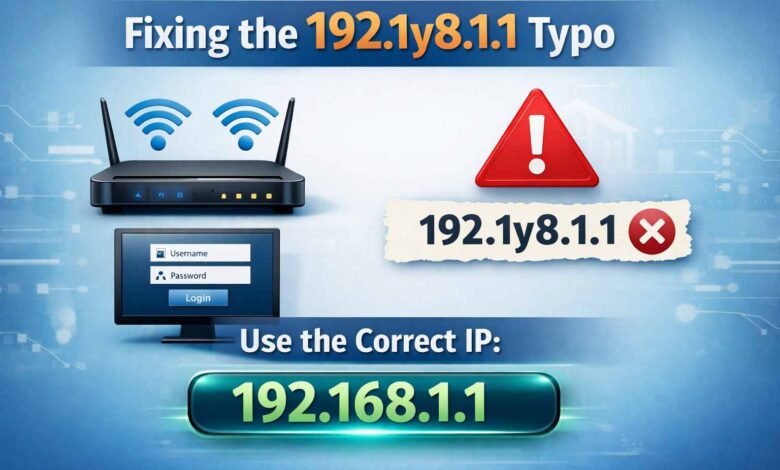
If you’ve ever typed in 192.1y8.1.1 into your browser’s address bar, hoping to access your router’s settings, you may have encountered an issue. That’s because 192.1y8.1.1 is not a valid IP address. But why does this happen, and how can you fix it? In this guide, we’ll explain what 192.1y8.1.1 really is, why it’s a typo, and how to correctly access your router settings using the right IP address. Plus, we’ll cover troubleshooting tips to ensure a smooth login experience.
Understanding the Mistake: Why 192.1y8.1.1 is Not a Valid IP Address
What Is an IP Address?
Before diving into the mistake, it’s important to understand what an IP address is. IP stands for Internet Protocol, and an IP address is a unique string of numbers separated by periods (dots). It’s used to identify devices on a network, such as your router, computer, or phone. The most common IP addresses you’ll encounter are IPv4 addresses, which follow a four-number format like 192.168.1.1.
The Mistake: 192.1y8.1.1
The issue with 192.1y8.1.1 is that it contains the letter “y,” which is not valid in an IP address. IP addresses consist solely of numbers and dots. So, when you type 192.1y8.1.1, the browser doesn’t recognize it as a valid address, leading to a connection error.
This mistake often arises when people are trying to access their router’s settings. Instead of typing 192.168.1.1, a common default router IP, they end up typing 192.1y8.1.1 by mistake.
The Correct IP Address: 192.168.1.1
What Is 192.168.1.1?
The correct IP address you should be using is 192.168.1.1. This is a default IP address used by many home routers, including brands like TP-Link, Netgear, and Linksys. This address allows you to access your router’s admin page, where you can configure settings like Wi-Fi password, network security, port forwarding, and more.
192.168.1.1 is part of the private IP address range, meaning it’s not publicly accessible from the internet. It’s specifically used within private networks, like your home or office network.
Why 192.168.1.1 is Used for Routers
Routers typically come with a default IP address like 192.168.1.1 or 192.168.0.1. These addresses allow you to log into the router’s admin panel to make changes. The reason 192.168.1.1 is used so frequently is due to its popularity and ease of access.
How to Access Your Router Using 192.168.1.1
Now that you know 192.168.1.1 is the correct address, let’s walk through the steps to access your router settings.
Step 1: Connect to Your Router
Before accessing your router settings, make sure you’re connected to the router either through Wi-Fi or an Ethernet cable.
Step 2: Open Your Browser
Open any browser on your device, such as Google Chrome, Mozilla Firefox, or Safari.
Step 3: Type 192.168.1.1 in the Address Bar
In the browser’s address bar, type http://192.168.1.1 and press Enter. This will take you to your router’s login page.
Step 4: Enter Your Username and Password
Most routers have a default username and password. For many models, this is often something like:
- Username: admin
- Password: admin
If you’ve changed these credentials before, use the custom login information you set up. If you haven’t changed it yet, the default details can usually be found on the back of your router or in the user manual.
Step 5: Access Your Router Settings
Once logged in, you’ll be able to modify settings such as:
- Wi-Fi settings: Change your Wi-Fi name (SSID) and password.
- Security settings: Adjust firewall settings, enable VPN, and more.
- Port forwarding: Set up port forwarding for gaming or remote access.
Troubleshooting: What to Do if 192.1y8.1.1 Doesn’t Work
If you mistakenly typed 192.1y8.1.1 or are having trouble accessing your router settings, here are some troubleshooting tips.
1. Double-Check the IP Address
Make sure you’re typing the correct IP address: 192.168.1.1. A simple typo like 192.1y8.1.1 will prevent you from accessing the router’s settings.
2. Try a Different IP Address
If 192.168.1.1 doesn’t work, your router might use a different IP address. Common alternatives include:
- 192.168.0.1
- 10.0.0.1
Try entering these IP addresses in your browser to see if one works.
3. Reset Your Router
If you’ve forgotten the login credentials or are still having issues, you may need to reset your router. Most routers have a reset button that you can press and hold for about 10-30 seconds to restore the router to its factory settings. After the reset, you can log in with the default username and password.
4. Check Your Network Connection
Make sure your device is properly connected to the router. If you’re using Wi-Fi, ensure you’re on the correct network. If using Ethernet, check that the cable is securely plugged in.
Why the Typo Matters: Security Concerns
Login Attempts and Security Risks
When you try to log into your router’s admin page with an incorrect IP address like 192.1y8.1.1, your router may generate multiple failed login attempts. This could raise a security flag and potentially lock you out of your router for a period of time.
Tips to Improve Router Security
- Change Default Credentials: If you’re still using the default admin/admin login, it’s time to change it to something more secure. Use a strong password that’s hard to guess.
- Enable WPA3 Encryption: Ensure your Wi-Fi is protected with the latest encryption standard, WPA3.
- Update Firmware: Regularly check for firmware updates for your router to ensure it’s protected against known vulnerabilities.
- Use a Firewall: Enable the router’s firewall for an added layer of protection.
How to Avoid Typos in the Future
1. Bookmark 192.168.1.1
To avoid future typos, you can bookmark the router login page directly in your browser. This way, you can easily access the page without worrying about typing mistakes.
2. Use Router Manufacturer Apps
Many router manufacturers provide mobile apps that allow you to access your router settings directly from your smartphone. For example, TP-Link and Netgear offer apps that can help you manage your router settings without typing in the IP address.
3. Save Your Login Credentials
If you frequently log into your router settings, consider saving your login credentials in your browser’s password manager for quick access.
Conclusion
192.1y8.1.1 is a common typo that can confuse many people when trying to access their router settings. The correct IP address is 192.168.1.1, and it’s the gateway to managing your network settings. If you ever encounter issues, double-check your IP address, and remember the common alternatives like 192.168.0.1.
By following the steps outlined in this guide, you can easily log into your router, troubleshoot any login issues, and secure your network. Don’t forget to bookmark the correct IP address, change your default login credentials, and enable strong encryption to keep your router secure.
FAQs
What is the default password for 192.168.1.1?
The default password is often admin for many routers, but it may vary depending on your router model.
Why can’t I access my router login page?
Double-check the IP address and make sure you’re connected to the router. If the issue persists, try resetting the router to factory settings.
Can I change my router’s IP address to something else?
Yes, most routers allow you to change the IP address from 192.168.1.1 to another address for better network management.